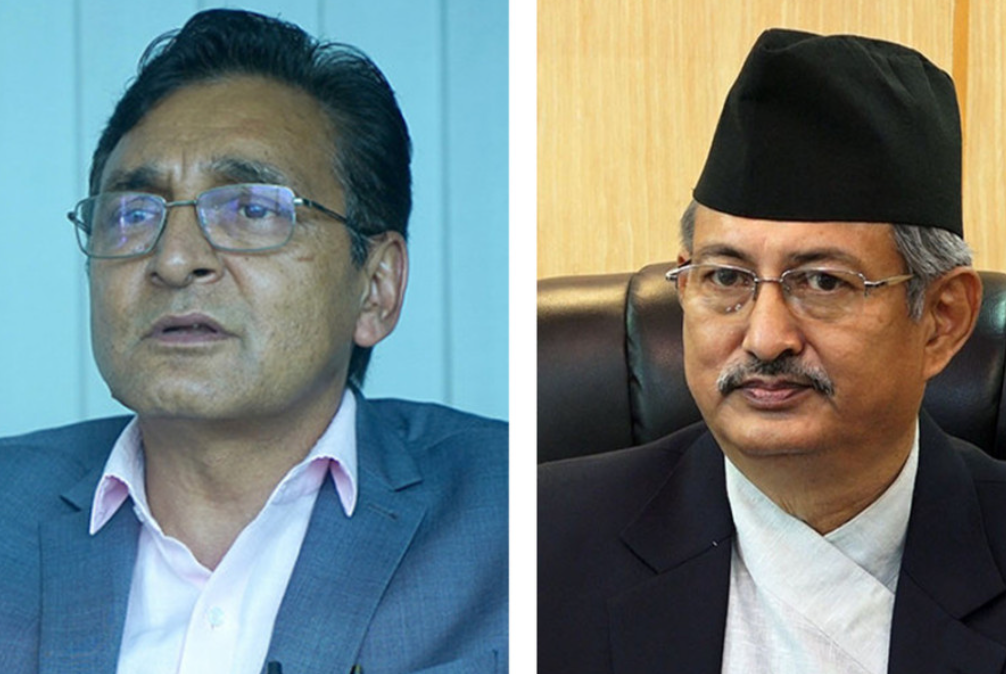
A court in Nepal has delivered guilty verdicts against two senior former government ministers for their roles in an elaborate document forgery scheme that sought to resettle Nepali nationals in the United States under false pretences as Bhutanese refugees. The Kathmandu district court handed down the sentences late on Tuesday, with former Deputy Prime Minister and Energy Minister Top Bahadur Rayamajhi receiving a four-year prison term for offences including fraud, crimes against the state, and involvement in organised crime. His co-conspirator, former Home Minister Bal Krishna Khand, received a shorter two-year sentence as an accomplice to the scheme. Rayamajhi currently remains in custody while Khand is out on bail pending appeal proceedings.
Beyond the two prominent figures, the court also convicted fourteen additional defendants in connection with the scandal. These co-conspirators included a former senior bureaucrat from the home ministry and a former leader within the Bhutanese refugee community, all of whom received jail sentences of up to four years depending on their level of involvement in the scheme. The breadth of the convictions suggests the conspiracy reached across multiple institutional layers, implicating government officials, community leaders, and other actors who facilitated the forged documentation that underpinned the fraudulent resettlement applications.
The scandal emerged into public view during 2023, well after both Rayamajhi and Khand had already departed from their ministerial positions. The timing raises questions about how long the scheme operated undetected and suggests that the two former ministers may have exploited their official positions while still in government to establish networks and processes that continued functioning after their departure from office. The delayed discovery meant that investigators faced significant challenges in reconstructing the timeline of the conspiracy and gathering evidence, factors that likely influenced the court's sentencing decisions.
Neither Rayamajhi nor Khand has been available for substantive comment following the court's decision, though their legal representatives have signalled their intention to mount appellate challenges. Dharma Raj Regmi, representing Rayamajhi, contended that his client bore no responsibility for refugee policy formulation and maintained his innocence regarding the broader scheme. Similarly, Khand's lawyer Pankaj Karna announced plans to file an appeal, suggesting the case may face further legal proceedings in higher courts.
The immediate impact on actual US resettlement of fraudulently documented individuals remains unclear. Authorities have not yet confirmed whether any Nepali nationals were ultimately successfully resettled in the United States using forged Bhutanese refugee credentials. This ambiguity is significant because it affects the true scale of the security and administrative breach; if individuals were successfully placed in third countries based on fraudulent documents, it would represent a serious breach of international migration protocols and could trigger diplomatic complications.
The refugee dimension of this scandal adds substantial context. Since the early 1990s, approximately 120,000 people of Nepali ethnic origin have fled Bhutan, a Buddhist-majority Himalayan nation with a population beneath 800,000. These individuals sought asylum because of perceived political discrimination and restricted freedoms in their country of origin. Rather than finding resolution through bilateral negotiations between Nepal and Bhutan, nearly 113,000 of these refugees were eventually absorbed by Western nations through third-country resettlement programmes, with the United States accepting roughly 100,000 people.
Several thousand Bhutanese refugees remain encamped in eastern Nepal, expressing a preference to return home rather than resettle abroad. This ongoing presence demonstrates that the refugee crisis remains unresolved despite decades of displacement. For some individuals within these camps, the fraudulent resettlement scheme may have represented an alternative pathway to Western relocation when official channels moved slowly or appeared inaccessible. The conspiracy thus operated within a complex humanitarian and geopolitical context where legitimate refugee pathways coexisted with desperation and opportunity for exploitation.
The convictions arrive as Nepal undergoes significant political transformation. The previous administration collapsed following fierce youth-led protests in September of the previous year, when 76 people lost their lives during demonstrations demanding accountability for government corruption. These demonstrations reflected broader societal frustration with institutional malfeasance and official misconduct. The anti-corruption movement subsequently catalysed the election of a new administration headed by Balendra Shah, a 36-year-old former musician-turned-politician whose government secured office through elections held in March.
Shah has established anti-corruption measures as a central pillar of his administration's agenda, explicitly committing to investigating and prosecuting alleged corrupt practices by preceding governments. The refugee scam prosecutions align with this stated priority and demonstrate that Shah's government is following through on campaign promises to hold previous administrations accountable. For Malaysian observers, the case illustrates how refugee systems can become vulnerable to exploitation when oversight mechanisms are inadequate and when migration brokers identify opportunities within genuine humanitarian crises. The scale of the Bhutanese refugee resettlement programme—one of the largest coordinated third-country resettlement efforts globally—meant that vulnerabilities in document verification and applicant vetting could affect thousands of individuals across multiple Western countries.
The broader implications extend beyond Nepal's borders. Southeast Asian nations hosting refugee populations or involved in regional migration arrangements must consider whether comparable vulnerabilities exist within their own systems. The case demonstrates that even established resettlement programmes administered by experienced governments and international organisations can become subject to systematic fraud when officials act in concert to falsify documentation. Malaysia, which hosts one of the region's largest refugee populations despite not being a signatory to international refugee conventions, faces particular pressure to ensure that its own admission and documentation procedures remain robust against similar schemes.

