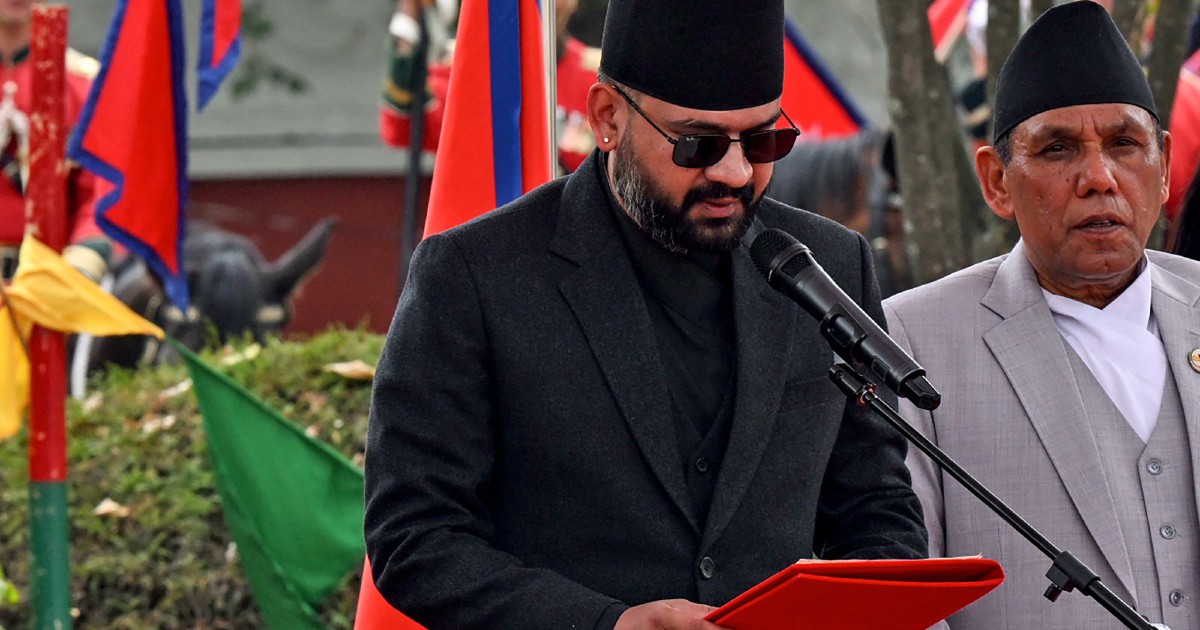
Nepal's Prime Minister Balendra Shah has been granted official permission to continue wearing his trademark dark sunglasses within the halls of parliament, a decision made on medical grounds after the parliament speaker had previously discouraged the practice. An official confirmed the exemption on Tuesday, resolving what might have otherwise become a minor constitutional friction between parliamentary protocol and the leader's health needs.
The parliament speaker had initially advised against the prime minister keeping his sunglasses on during legislative proceedings, citing parliamentary decorum and tradition. In many Westminster-style democracies and parliamentary systems across Asia, including those in Malaysia and India, dress codes and appearance standards have long been enforced as part of institutional formality. Such conventions underscore the dignity of the legislature and maintain visual uniformity expected of members during official business.
However, the allowance of medical exceptions represents a pragmatic recognition that rigid protocols must sometimes accommodate genuine health circumstances. Officials in Kathmandu determined that Shah's continued use of the eyewear during parliamentary sessions was medically necessary, placing health considerations above strict adherence to aesthetic or traditional standards. This approach aligns with modern governance practices that balance institutional norms with individual wellbeing.
The incident reflects broader international discussions about parliamentary flexibility and inclusivity. Many legislatures worldwide have begun revisiting archaic dress codes in recent years, recognising that strict formality should not impede lawmakers' ability to function effectively or comfortably. Countries like the United Kingdom have relaxed ties requirements, while some parliaments have permitted prayer shawls and religious head coverings. Nepal's decision to grant a medical exemption sits within this evolving global conversation about what truly matters in legislative chambers.
For Malaysian observers, the development offers useful perspective on how neighbouring democracies handle protocol matters. Malaysia's Parliament, like Nepal's, operates under formal traditions and established conventions, yet both institutions face similar pressures to balance tradition with contemporary understanding of health, disability, and individual circumstances. The Dewan Rakyat and Dewan Negara maintain their own appearance standards, though they too must periodically reassess whether such requirements serve legitimate institutional purposes or merely perpetuate outdated practice.
Balendra Shah's signature sunglasses have become something of a personal hallmark, recognised by the Nepali public and international observers as part of his public identity. The exemption therefore acknowledges not merely a medical necessity but also a degree of personal branding that has become associated with his leadership. In contemporary politics across Southeast Asia, such distinctive personal markers—whether dress choices, styles, or accessories—often become part of a leader's public image and connect them to their constituency.
The resolution of this parliamentary matter through a medical exemption rather than outright rule change suggests that Nepal's legislature remains attached to its traditional protocols while demonstrating willingness to apply them judiciously. This middle ground approach avoids setting a precedent that might unsettle parliamentary conventions while simultaneously allowing the prime minister to address his genuine health requirements. Such solutions often prove more durable than wholesale rule abolitions, as they preserve institutional traditions while responding to real circumstances.
Parliamentary procedures and dress codes serve multiple purposes beyond superficial formality. They establish clear expectations, project institutional gravitas to the public, and create a visual shorthand that distinguishes legislative work from ordinary discourse. Yet when such codes obstruct legitimate health needs or accessibility requirements, they cease serving their intended purpose and instead become obstacles to effective governance. Nepal's decision demonstrates recognition that protocol exists to serve institutions, not to hinder them.
The relatively swift resolution of this matter—reaching a medical determination within days—suggests that the Speaker's office and parliamentary administration understood the importance of finding workable solutions without prolonged institutional conflict. In smaller parliaments and those with closer relationships between leadership figures, such pragmatism often prevails. Larger, more fragmented legislatures sometimes struggle to reach similar accommodations, becoming mired instead in questions of principle and precedent.
Looking forward, the exemption may influence how Nepal's parliament approaches other protocol questions. If further medical or accessibility matters arise—whether related to mobility aids, hearing assistance, or other health-related needs—this precedent demonstrates that parliament can accommodate them without fundamentally altering its character. For a legislature seeking to modernise while preserving institutional identity, maintaining flexibility on sensible grounds while maintaining core traditions represents a balanced approach.
The incident ultimately reveals that even minor parliamentary matters can illuminate broader tensions between institutional tradition and contemporary practice. Nepal's handling of this sunglasses question, though seemingly modest, reflects the careful negotiation that modern legislatures must perform between preserving their institutional authority and responding meaningfully to individual circumstances. As parliaments across South and Southeast Asia continue evolving, such pragmatic, case-by-case approaches to protocol questions may become increasingly common.

