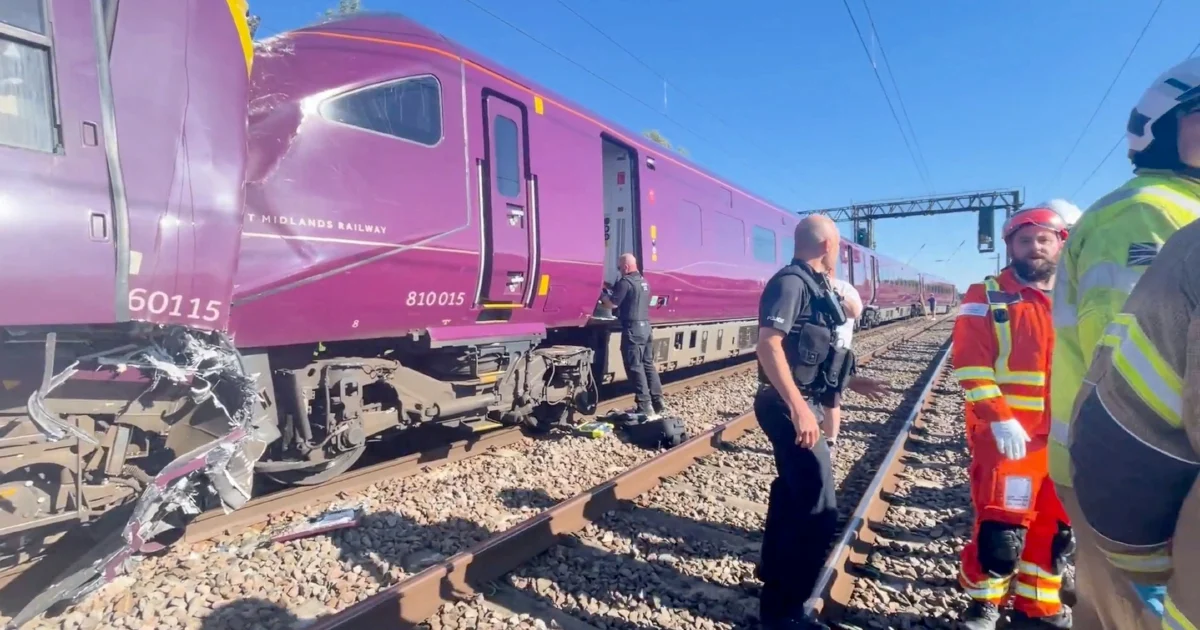
A catastrophic collision between two passenger trains north of London on Friday has claimed one life and left more than two dozen people injured, according to emergency services responding to the incident. Among the injured, at least eleven sustained injuries classified as very serious, underlining the severity of the impact as the trains crashed together during what would normally be a routine commute for morning travellers in the south of England.
Emergency response teams from across the region mobilised quickly to the crash site following the collision. The rapid deployment of paramedics, firefighters, and rescue specialists marked a significant coordination effort by the UK's emergency services, who faced a complex and challenging operation to extract passengers from the wreckage and provide urgent medical treatment to those suffering injuries ranging from moderate to critical.
The collision raises fresh concerns about railway safety standards in one of Europe's oldest rail networks. The UK's rail infrastructure has undergone significant modernisation in recent decades, yet incidents of this magnitude periodically highlight the critical importance of maintaining rigorous safety protocols across the network. For commuters throughout the southeast of England, such incidents serve as stark reminders of the inherent risks associated with mass rail transit, even in developed transportation systems.
The incident occurred during Friday morning rush hour, when many lines experience peak passenger volumes. The timing intensified the scale of the emergency response and complicated rescue operations. The collision's location north of London, a densely populated region served by multiple rail operators, meant that the impact rippled throughout the transport network as services were suspended and alternative arrangements scrambled to accommodate displaced passengers.
Investigators from the UK's relevant transportation safety authorities would typically begin examining the circumstances leading to the collision within hours of the incident. Such examinations focus on multiple factors including signalling systems, train speed, driver actions, track conditions, and maintenance schedules. These investigations often take weeks or months to complete, generating detailed reports that may inform changes to operational procedures or infrastructure improvements across the broader network.
For Malaysian readers following international transport stories, the incident underscores a universal challenge facing rail networks worldwide: the balance between capacity, speed, and safety. Despite technological advances in train control systems and track maintenance, human factors and system failures occasionally combine to produce catastrophic results. This remains true whether examining British Rail, Malaysia's Keretapi Tanah Air, or any other national network.
The broader implications for rail safety extend across the European Union and beyond. Railway operators throughout the continent continuously review safety records in other jurisdictions, particularly when significant incidents occur. Information sharing among railway authorities helps identify systemic vulnerabilities that might affect multiple networks, leading to coordinated improvements in signalling technology, staff training, and emergency response protocols.
Passenger confidence in rail transport typically experiences fluctuations following major incidents, though historical data shows that commuters in most developed markets gradually return to normal usage patterns once authorities have published findings and implemented corrective measures. In the UK context, where rail usage remains substantial despite periodic safety concerns, the incident would likely prompt temporary reductions in passenger numbers on affected routes.
The emergency services response to the collision demonstrated the importance of maintaining well-trained and adequately resourced rescue teams capable of handling mass casualty incidents. Coordination between multiple agencies—hospital systems, ambulance services, fire and rescue units, and police—requires pre-established protocols and regular training exercises. The Friday incident reflected successful execution of these procedures, though such successes provide scant comfort to those affected by the tragedy.
For the families of those injured and the bereaved, the collision represented a sudden and devastating disruption to ordinary lives. Recovery for those with serious injuries would likely involve lengthy hospitalisation and rehabilitation periods. The psychological trauma associated with being involved in a major transport accident often persists long after physical injuries heal, affecting survivors' willingness to use rail services.
The incident refocused attention on rail safety across the UK at a time when the government has pursued various transport policy initiatives. Rail infrastructure investment, staffing levels, and modernisation projects often become subjects of parliamentary scrutiny following major accidents, as legislators seek to determine whether adequate resources have been allocated to prevent future tragedies.
As the investigation unfolded, transport analysts throughout the region would examine the incident within the context of recent rail safety trends. Comparative analysis with historical collision data helps identify whether specific geographic regions, operational conditions, or time periods show elevated risk factors. Such analysis informs resource allocation decisions and targeted safety improvements across networks.
The Friday collision serves as a sobering reminder that despite sophisticated technology and regulatory frameworks, rail transport carries inherent risks that require constant vigilance, investment, and improvement. For commuters and operators alike, the incident underscores why maintaining rigorous safety standards remains non-negotiable.

%22%2F%3E%3C%2Fpattern%3E%3C%2Fdefs%3E%3Crect%20width%3D%22100%25%22%20height%3D%22100%25%22%20fill%3D%22url(%23ph3xy1tg)%22%2F%3E%3Crect%20width%3D%22100%25%22%20height%3D%22100%25%22%20fill%3D%22url(%23ph3xy1tp)%22%2F%3E%3Ctext%20x%3D%2250%25%22%20y%3D%2250%25%22%20text-anchor%3D%22middle%22%20dominant-baseline%3D%22central%22%20fill%3D%22rgba(255%2C255%2C255%2C0.95)%22%20font-family%3D%22Georgia%2C%20'Times%20New%20Roman'%2C%20serif%22%20font-weight%3D%22700%22%20font-size%3D%22272%22%20letter-spacing%3D%22-0.02em%22%3EFahmi%3C%2Ftext%3E%3C%2Fsvg%3E)