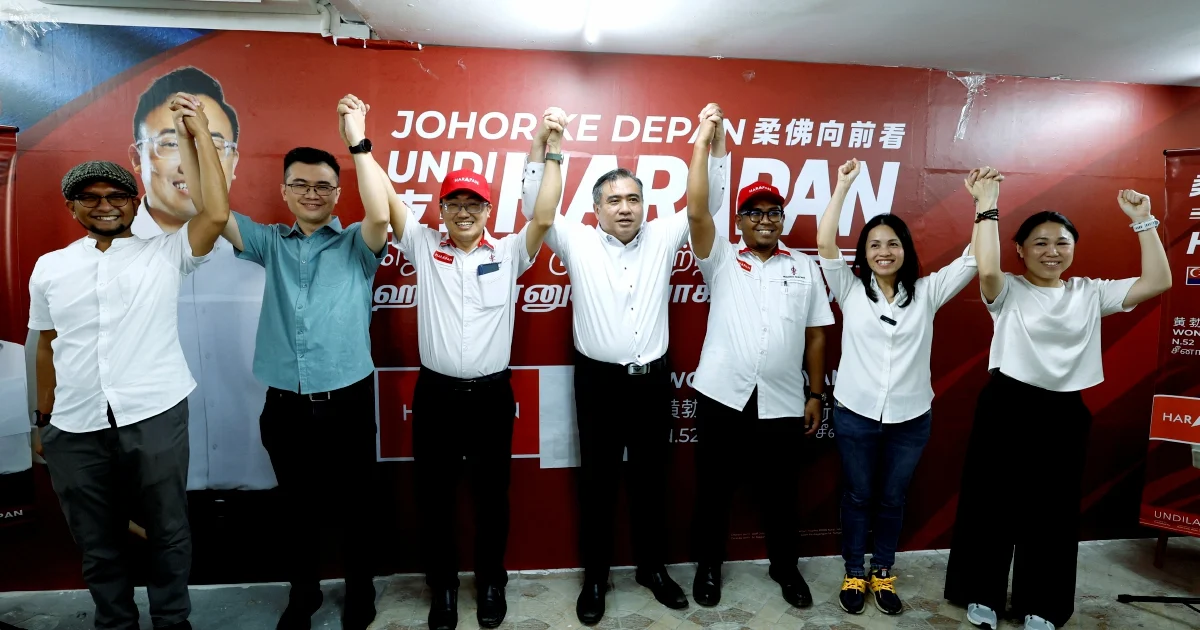
Pakatan Harapan's strategy for the upcoming Johor state election prioritises securing electoral victory before settling the question of who will assume the Menteri Besar post should the coalition succeed. The decision to delay announcing its chief minister candidate reflects a deliberate political approach aimed at maintaining internal cohesion and projecting a unified front to voters across the state.
The coalition's leadership has made clear that naming the Johor Menteri Besar will fall to the party's highest decision-making council only after polling day results are confirmed. This measured approach contrasts with electoral cycles where coalitions announce such positions before voting takes place, a tactic that can occasionally create friction among constituent parties or distract from core campaign messaging.
For Malaysian political observers, particularly those tracking developments in major states like Johor, the deferral strategy holds several implications. Johor remains a significant electoral battleground where the outcome can influence broader national political dynamics. By keeping the MB position open, Pakatan Harapan appears to be signalling flexibility in coalition arrangements and a commitment to merit-based selection rather than pre-determined choices.
The approach also allows the coalition breathing room to navigate complex inter-party negotiations. Within Pakatan Harapan, different component parties—including PKR, DAP, and Amanah—have their own political interests and aspirations for positions of power. Announcing the MB candidate prematurely could trigger disputes over power-sharing formulas or give ammunition to opposition parties seeking to exploit internal divisions.
For voters in Johor, the decision maintains focus on what the coalition intends to deliver in governance rather than personalising the election around individual candidates. This can prove especially valuable in state elections where bread-and-butter issues such as local infrastructure, business environment, and public services often matter more than national political positioning.
The timing of such announcements carries strategic weight in Malaysian electoral politics. By reserving this decision, Pakatan Harapan preserves the ability to negotiate with smaller parties or independent candidates who might be persuaded to support the coalition if the election result proves close. Such flexibility has proven decisive in Malaysia's complex multi-party landscape, where coalition governments frequently depend on securing sufficient seats rather than achieving absolute majorities.
Johor's political history adds another layer of complexity to this calculation. The state has traditionally been a stronghold for Umno and the Barisan Nasional coalition, making any Pakatan Harapan victory particularly significant. The coalition's current approach suggests confidence in its electoral prospects while simultaneously acknowledging the unpredictability inherent in major state contests.
The question of state leadership also intersects with broader Malaysian politics. Johor's Menteri Besar position carries considerable influence given the state's economic importance, large population, and geographical prominence. The eventual appointment could signal broader shifts in how Pakatan Harapan intends to govern—whether it prioritises technocratic governance, party loyalty, or consensus-building across diverse constituencies.
By deferring the announcement, coalition leaders also avoid being locked into commitments that might become electorally damaging if voter sentiment shifts during the campaign. Political preferences can evolve as elections approach, and maintaining flexibility allows Pakatan Harapan to adjust its messaging and emphasis based on real-time feedback from the ground.
For regional stakeholders observing Malaysian politics, including Singapore and other Southeast Asian neighbours, such decisions carry implications for political stability and governance continuity. How Pakatan Harapan eventually selects and empowers its Johor leadership will offer insights into the coalition's organisational maturity and ability to manage competing interests within a multi-party framework.
The coalition's emphasis on winning first rather than pre-selecting leadership also reflects lessons from previous Malaysian electoral cycles where premature power-sharing arrangements sometimes generated public scepticism or internal resentment. By keeping the focus on electoral victory and governance delivery, Pakatan Harapan seeks to build momentum based on voter approval rather than backroom political negotiations.
This strategic patience extends a broader message to Johor's electorate: that the coalition views the election as fundamentally about securing a mandate to govern for the state's benefit, with leadership positions secondary to that primary objective. Whether this approach ultimately strengthens or complicates Pakatan Harapan's electoral fortunes will become clear once voting concludes and the coalition's top councils convene to make their formal announcement.


%22%2F%3E%3C%2Fpattern%3E%3C%2Fdefs%3E%3Crect%20width%3D%22100%25%22%20height%3D%22100%25%22%20fill%3D%22url(%23ph58b6pg)%22%2F%3E%3Crect%20width%3D%22100%25%22%20height%3D%22100%25%22%20fill%3D%22url(%23ph58b6pp)%22%2F%3E%3Ctext%20x%3D%2250%25%22%20y%3D%2250%25%22%20text-anchor%3D%22middle%22%20dominant-baseline%3D%22central%22%20fill%3D%22rgba(255%2C255%2C255%2C0.95)%22%20font-family%3D%22Georgia%2C%20'Times%20New%20Roman'%2C%20serif%22%20font-weight%3D%22700%22%20font-size%3D%22320%22%20letter-spacing%3D%22-0.02em%22%3EMMC%3C%2Ftext%3E%3C%2Fsvg%3E)