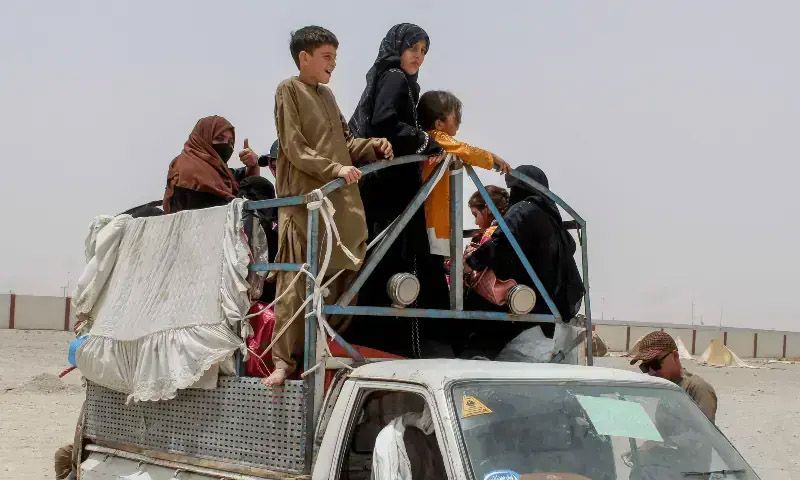
Pakistan's immigration authorities have deported approximately 2.59 million Afghan nationals living without valid documentation since 2023, marking an unprecedented acceleration of the country's deportation operations. The federal government and provincial authorities, particularly in Punjab, have intensified enforcement actions across residential neighbourhoods and commercial districts, reflecting a hardening stance on irregular migration in a nation that has historically hosted one of the world's largest Afghan refugee populations.
The Punjab home department's foreign national security cell remains actively engaged in locating and apprehending undocumented Afghan residents, currently holding some 53 individuals across 36 operational detention facilities distributed throughout the province. This extensive network of holding centres represents the infrastructure through which the provincial government processes deportation cases, with each facility equipped to handle documentation, registration, and logistical arrangements for removal. The sheer scale of these operations underscores the systematic nature of the enforcement campaign rather than sporadic immigration raids.
Punjab's contribution to the overall deportation figures has been substantial, with the provincial administration alone accounting for the detention and removal of 138,342 Afghan nationals. These individuals proceed through a standardised processing protocol within holding centres before being transported through the Torkham border crossing, the primary land route connecting Pakistan to Afghanistan. The consistency of this workflow indicates that authorities have established well-defined procedures for managing the logistics of mass deportations, though the human impact of displacing hundreds of thousands remains significant.
The federal government's articulated policy framework leaves little ambiguity regarding its immigration enforcement priorities. According to a home department spokesman, individuals lacking valid visa documentation face automatic deportation, with no discretionary provisions for humanitarian considerations or extended residence permits. This uncompromising approach reflects broader geopolitical tensions and domestic security concerns that have shaped Pakistan's relationship with its Afghan population in recent years, particularly following the Taliban's return to power in Afghanistan in 2021.
Government authorities have conducted extensive surveys across markets and residential neighbourhoods to identify undocumented Afghan nationals, deploying both systematic searches and intelligence-led operations. Once apprehended, individuals are transferred to holding centres where their identities are documented and deportation arrangements are coordinated. The spokesman emphasised that detained Afghans receive accommodation and basic services during their detention period, though independent verification of conditions within these facilities remains limited.
The deportation process itself operates through established corridors, with the Torkham border serving as the primary exit point for expelled Afghan nationals. This concentration of deportation traffic through a single crossing raises questions about capacity constraints and the treatment of deportees during transit, particularly during harsh weather conditions that periodically affect the region. The logistics of managing such large-scale population movements inevitably strain border infrastructure and resources.
For Malaysian and Southeast Asian observers, Pakistan's immigration enforcement campaign provides instructive lessons regarding the management of large irregular migrant populations and the policy tensions that arise when host nations reassess their capacity and willingness to accommodate displaced populations. Pakistan's experience demonstrates how geopolitical shifts—in this case, the Taliban's return to power—can trigger rapid reversals in migration policies previously tolerated for decades. The country hosted Afghan refugees dating back to the 1980s Soviet invasion, yet contemporary Pakistani administrations have concluded that sustained migration inflows prove incompatible with national security objectives and economic sustainability.
The involvement of provincial governments in deportation enforcement reflects Pakistan's federal structure, wherein immigration remains a concurrent responsibility shared between federal and provincial authorities. Punjab's prominent role in these operations stems partly from its concentration of Pakistan's urban population and economic activity, making it a primary destination for migrants seeking employment and livelihood opportunities. The provincial government's establishment of specialised security cells dedicated to foreign national enforcement indicates institutional prioritisation of immigration control.
Pakistan's decision to publicise deportation statistics and encourage public reporting through emergency services suggests an attempt to build social acceptance for the enforcement campaign by framing it as addressing irregular migration and associated security concerns. The promise of anonymity for those reporting undocumented Afghan nationals aims to overcome communal ties and family connections that might otherwise discourage neighbour-on-neighbour reporting. This approach raises civil liberties questions but reflects the government's determination to achieve comprehensive identification and removal of the target population.
The deportation campaign's implications extend beyond bilateral Pakistan-Afghanistan relations. The return of hundreds of thousands of Afghans to their homeland, many of whom have spent decades in Pakistan and possess limited economic prospects in Afghanistan's unstable environment, creates humanitarian challenges and potentially destabilises communities receiving deportees. Afghanistan's capacity to reintegrate such large populations remains severely constrained by ongoing conflict, economic collapse, and limited state services.
The Torkham border crossing, already strained by legitimate trade and limited humanitarian movement, faces additional pressure from concentrated deportation traffic. This concentration potentially impedes legitimate cross-border commerce and complicates Pakistan's already fraught relationship with Afghanistan, particularly given the Taliban administration's limited capacity to manage the influx of returned nationals. The cumulative effect may be creating secondary migration pressures within Afghanistan itself.
Looking forward, the sustainability of Pakistan's intensive deportation operations remains uncertain. The government's stated completion of surveys in markets and residential areas suggests that the most easily identifiable undocumented populations have been apprehended, implying that further enforcement may encounter diminishing returns or require more resource-intensive identification methods. The rate and duration of ongoing deportations will significantly influence Pakistan's long-term relationship with Afghanistan and broader regional stability.

