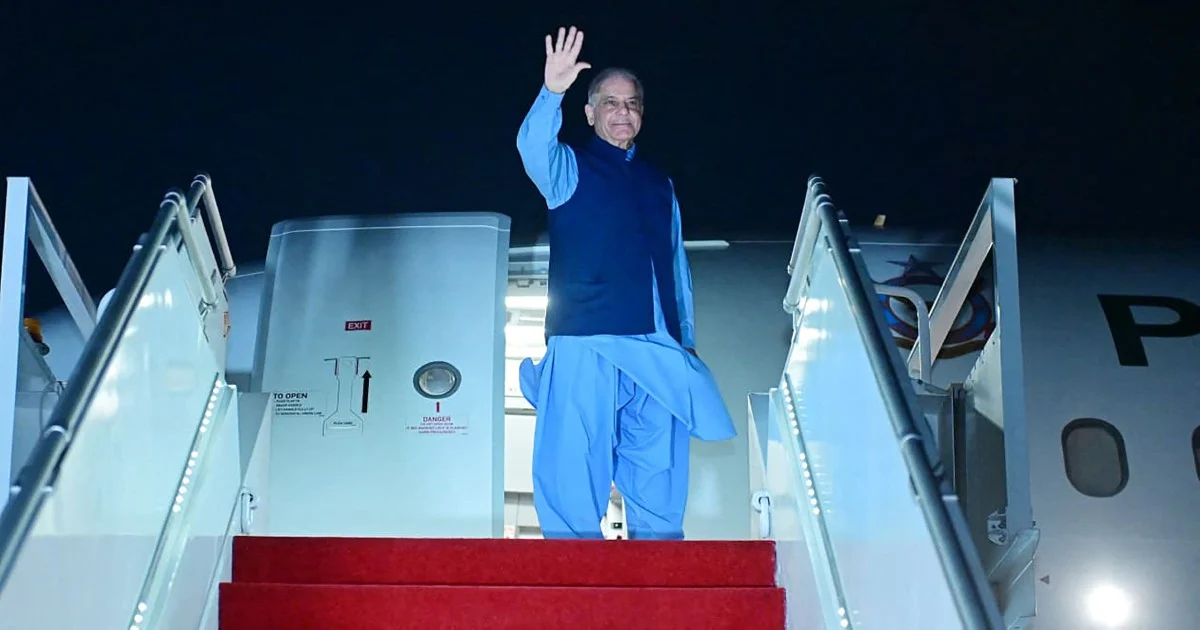
Pakistan's Prime Minister Shehbaz Sharif landed in Switzerland on Sunday morning to participate in technical-level discussions between the United States and Iran aimed at defusing the armed conflict engulfing the Middle East. The diplomatic engagement underscores Pakistan's positioning as a neutral intermediary in one of the region's most intractable geopolitical disputes.
The move reflects Islamabad's broader strategic interests in promoting stability across the Middle East, a region with which Pakistan shares deep historical, religious, and economic ties. Pakistan's involvement in these talks carries particular significance given its historical relationships with both Washington and Tehran, as well as its role as a Sunni-majority nation with substantial Shiite populations and long-standing religious connections to Iran.
Sharif's presence at the Swiss venue represents an attempt to leverage Pakistan's diplomatic credibility and regional influence to facilitate dialogue between two powers locked in sustained geopolitical competition. Switzerland has long served as neutral ground for sensitive international negotiations, offering both parties face-saving mechanisms and confidential settings conducive to frank technical discussions away from domestic political pressures.
The timing of Pakistan's involvement carries implications for South Asia and the broader Islamic world. Islamabad has consistently advocated for de-escalation in Middle Eastern conflicts, recognising that regional instability creates security spillovers affecting Pakistan directly through refugee flows, militant recruitment, and economic disruption. The country's leadership has repeatedly stressed the need for diplomatic solutions to replace military confrontation.
Technical-level talks typically focus on nuts-and-bolts issues rather than high-level political agreements—matters such as verification mechanisms, implementation frameworks, and procedural arrangements that enable higher political discussions to proceed. Pakistan's participation at this stage suggests Islamabad may be helping shape the operational architecture for any eventual comprehensive agreement.
The diplomatic initiative also reflects evolving regional dynamics where middle powers increasingly assert themselves as mediators rather than passive observers. Pakistan, along with countries like Oman and Iraq, has positioned itself as a potential facilitator capable of understanding both Washington's security concerns and Tehran's regional ambitions without being perceived as heavily biased toward either side.
For Malaysian and Southeast Asian observers, Pakistan's role underscores how diplomatic initiatives in distant regions can have interconnected consequences. The Middle East conflict influences energy prices, maritime security, and investment flows that directly affect ASEAN economies. Pakistan's efforts to promote dialogue therefore carry indirect relevance for the region's economic stability and strategic environment.
The broader context involves years of escalating US-Iran tensions following Washington's 2018 withdrawal from the nuclear deal and subsequent sanctions regime, punctuated by military incidents and proxy conflicts across Iraq, Syria, and Yemen. Technical discussions represent incremental steps toward potential confidence-building measures, though significant political hurdles remain on both sides.
Pakistan's diplomatic engagement must navigate delicate domestic politics at home, where substantial portions of the population hold varying views toward both the United States and Iran. The government's participation in these talks requires carefully calibrated messaging to maintain support across Pakistan's diverse constituencies while advancing what leadership views as national interests in regional stability.
The involvement of multiple mediators alongside Pakistan, including Oman and potentially other Gulf states, suggests a coordinated effort to create momentum for dialogue. Such multilateral approaches often prove more effective than bilateral channels alone, as they distribute political risk and offer multiple pathways for communication when direct channels prove difficult.
Successful technical-level discussions could establish groundwork for future negotiations addressing broader issues including sanctions relief, regional proxy activities, and security architecture. However, progress depends on both parties moving beyond maximum public positions toward the compromise inherent in any negotiated settlement.
Pakistan's participation also reflects its interest in preventing further destabilisation that could affect its own security, particularly regarding terrorism emanating from unstable Middle Eastern states and the flow of extremist financing and ideology into South Asia. Islamabad views regional conflict resolution as intrinsically connected to its national security strategy.
The outcome of these Swiss discussions remains uncertain, but Pakistan's presence at the table demonstrates that smaller powers can carve meaningful diplomatic roles even between major powers. For a nation managing multiple regional crises, such mediation efforts provide opportunities to exercise constructive international influence while pursuing concrete national interests in regional de-escalation.
%22%2F%3E%3C%2Fpattern%3E%3C%2Fdefs%3E%3Crect%20width%3D%22100%25%22%20height%3D%22100%25%22%20fill%3D%22url(%23ph3cmotg)%22%2F%3E%3Crect%20width%3D%22100%25%22%20height%3D%22100%25%22%20fill%3D%22url(%23ph3cmotp)%22%2F%3E%3Ctext%20x%3D%2250%25%22%20y%3D%2250%25%22%20text-anchor%3D%22middle%22%20dominant-baseline%3D%22central%22%20fill%3D%22rgba(255%2C255%2C255%2C0.95)%22%20font-family%3D%22Georgia%2C%20'Times%20New%20Roman'%2C%20serif%22%20font-weight%3D%22700%22%20font-size%3D%22151%22%20letter-spacing%3D%22-0.02em%22%3EMalaysian%3C%2Ftext%3E%3C%2Fsvg%3E)