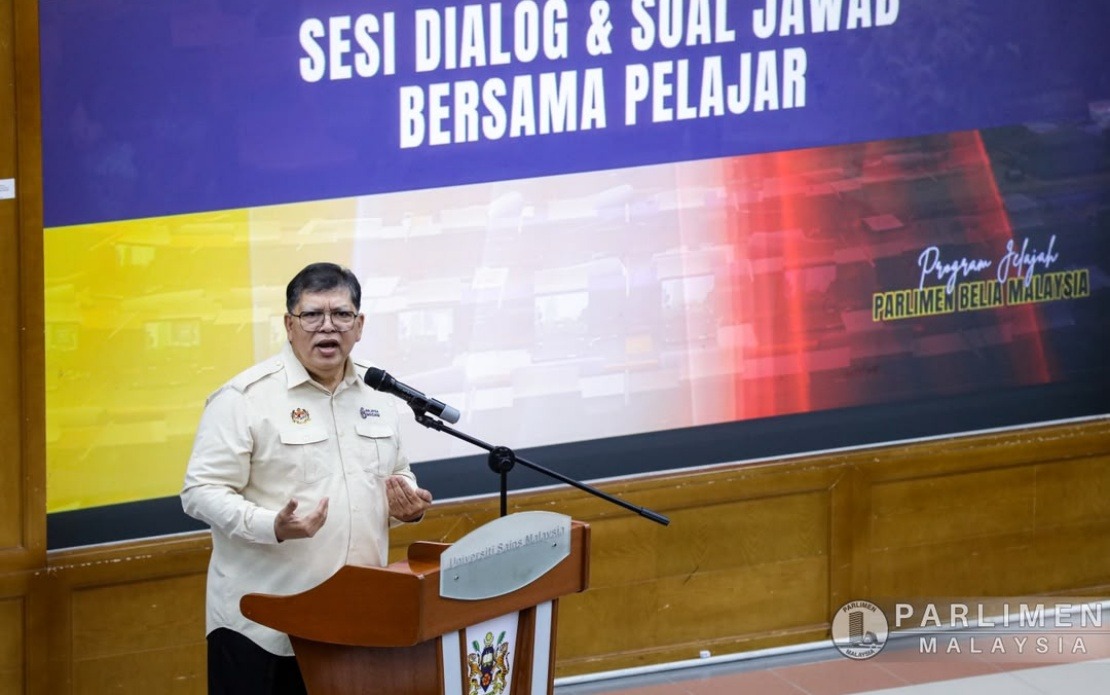
The Dewan Rakyat bears a profound responsibility to demonstrate the highest ideals of democratic governance as the nation prepares to launch the Malaysian Youth Parliament in September, according to Speaker Tan Sri Johari Abdul. His call for institutional excellence comes amid intensifying efforts to engage young Malaysians in the political process through a youth-focused parliamentary initiative that will mirror the structure and operations of the national legislature.
Johari stressed that Parliament functions as far more than a forum for legislative debate among elected representatives. Instead, the institution occupies a central position within Malaysian society as the supreme lawmaking body and, crucially, as a living textbook on democratic practice for future generations. This elevated understanding of Parliament's role underscores why the conduct of its members has implications extending well beyond parliamentary walls and into the shaping of civic values among young citizens who will eventually assume leadership positions in their communities and the nation.
The timing of Johari's message is significant, arriving just as Parliament Malaysia intensifies its campaign to recruit participants for the Malaysian Youth Parliament. The institution is targeting 300,000 young citizens aged eighteen to thirty to register for the inaugural elections under Parliament Malaysia's direct management. This represents a substantial expansion of civic participation, with the youth body structured to comprise 222 seats mirroring the geographical distribution of parliamentary constituencies throughout Malaysia. The transition to parliamentary oversight, completed in October 2023 after the initiative operated under the Ministry of Youth and Sports for eight years, signals the government's commitment to embedding youth engagement within Malaysia's democratic institutions.
For young participants in the Malaysian Youth Parliament, exposure to dignified and principled parliamentary conduct proves invaluable. These participants will observe and eventually emulate the debating culture prevalent in the Dewan Rakyat, making the quality of parliamentary discourse directly consequential for their development as future leaders. Johari emphasized that youth members require not merely written constitutional guidelines but living examples of how democracy functions when practiced with integrity, courtesy, and an unwavering focus on public welfare rather than partisan advantage. The formative impact of witnessing Parliament's deliberations, particularly in an era of ubiquitous media coverage, cannot be overstated.
The contemporary media environment intensifies the visibility of parliamentary proceedings in ways previous generations never experienced. Every utterance, gesture, and parliamentary maneuver in the Dewan Rakyat now reaches audiences instantly through social media platforms and live broadcasts. This transparency, while enhancing democratic accountability, simultaneously means that parliamentary members serve as unfiltered models for millions of observers, including the youth who will participate in the Malaysian Youth Parliament. Members who engage in personal attacks, factually baseless arguments, or disruptive conduct inadvertently communicate to young people that such behavior represents acceptable political engagement.
Johari's prescription for parliamentary culture centers on three interconnected elements: factuality, courtesy, and solution-oriented discourse. These standards represent a departure from increasingly polarized parliamentary environments in many democracies, where point-scoring and tribal loyalty often eclipse substantive engagement with policy questions. By emphasizing fact-based debate, Parliament models intellectual rigor and respect for evidence. Courtesy in discourse demonstrates that political opponents warrant basic human respect regardless of disagreement. Solution-oriented approaches signal that parliamentary business ultimately serves constituents' material welfare rather than abstract ideological contests.
The Malaysian Youth Parliament itself operates on a non-partisan foundation, which distinguishes it from actual political organization. Within the youth parliament platform, participants form parties that remain entirely separate from Malaysia's established political landscape. This design permits young people to develop parliamentary skills, understand legislative processes, and engage in democratic deliberation without the entrenched tribal loyalties that characterize actual party politics. To date, more than ten such youth parties have established themselves within the framework, creating ideological and organizational diversity within a fundamentally experimental and educational context.
The election timeline for the Malaysian Youth Parliament has been meticulously structured to accommodate the massive participation target. Nomination day occurs on July 8, with official candidate announcements following on July 11. A campaign period spanning twenty-seven days from mid-July through early August allows candidates and youth organizations to mobilize support across constituencies. The voting process, conducted online through the dedicated e-PBMy system on August 8 and 9, represents a modernized approach to democratic selection that emphasizes accessibility and efficiency for digital-native participants. This carefully orchestrated timeline culminates in the opening ceremony on September 11, when the new Youth Parliament formally convenes.
Once established, the Malaysian Youth Parliament will operate according to a structured schedule, convening three times annually with each sitting lasting two days. Youth Parliament members will serve two-year terms, providing sufficient duration to develop meaningful expertise and continuity in their respective portfolios and roles. This organizational framework mirrors parliamentary realities sufficiently to deliver authentic legislative experience while remaining scaled appropriately for a youth-focused body. The institutional permanence of three annual sittings signals that this represents a sustained commitment to youth engagement rather than a temporary or ceremonial exercise.
For Malaysian youth contemplating participation, the initiative offers tangible pathways to develop leadership capabilities within a structured democratic environment. Registering through the official Malaysian Youth Parliament portal at https://pbmy.parlimen.gov.my/my/ provides access to detailed information about the process, candidate requirements, and party platforms. The initiative's integration into Parliament Malaysia's operations, rather than remaining within youth ministry structures, elevates its status and likely increases the seriousness with which young people approach participation. This institutional embedding also strengthens the pedagogical mission, as youth members engage with the same physical space, procedural frameworks, and institutional culture as the national legislature.
Speaker Johari's exhortation to Members of Parliament to exemplify democratic values operates within a broader recognition that institutional legitimacy depends fundamentally on public perception of how institutions conduct themselves. When Parliament members engage in dignified, fact-based discourse oriented toward genuine problem-solving, they reinforce public confidence in democratic institutions. Conversely, parliamentary conduct characterized by personal animosity, intellectual dishonesty, or obstruction undermines the credibility of democracy itself in public estimation. Youth observers, as digital-era citizens accustomed to rapid information circulation and social media discourse, likely prove particularly sensitive to perceived hypocrisy or institutional failing.
The success of the Malaysian Youth Parliament ultimately depends on Parliament's willingness to sustain the exemplary standards that Speaker Johari has articulated. The institution's credibility as a training ground for democratic leadership requires consistent demonstration of the principles it purports to teach. As youth engagement in formal democratic processes faces challenges globally, Malaysia's commitment to meaningful youth parliament participation represents a significant institutional investment in building democratic capacity among future generations. The upcoming months will reveal whether Parliament's members embrace the responsibility of serving as models for the young people who will soon occupy those same benches.