Malaysia's Public Accounts Committee has delivered a damning assessment of the government's cooking oil subsidy scheme, recommending urgent structural reforms to prevent further wastage of public funds. Deputy chairperson Teresa Kok laid out eight major recommendations following a comprehensive parliamentary investigation into how the Ministry of Domestic Trade and Cost of Living manages price controls and subsidies for this essential commodity. The findings, presented to Parliament on July 16, suggest that current arrangements are fundamentally misaligned with actual consumer demand and have created openings for abuse that have siphoned billions from government coffers.
The scale of the problem is staggering. Between 2019 and February 2025, the government allocated RM10.879 billion to maintain cooking oil price controls through the Cooking Oil Price Stabilisation Scheme. Yet the PAC's investigation uncovered a stark mismatch between supply and need. The scheme currently authorises a monthly quota of 60,000 metric tonnes, but domestic consumption is estimated at merely 19,000 to 30,000 metric tonnes. This enormous surplus has created the conditions for extensive leakage, with subsidised oil diverted to ineligible parties including foreigners and commercial operators who should purchase at market rates. The absence of a properly targeted distribution mechanism has meant that subsidies intended for ordinary Malaysian households have been captured by those with no legitimate claim to assistance.
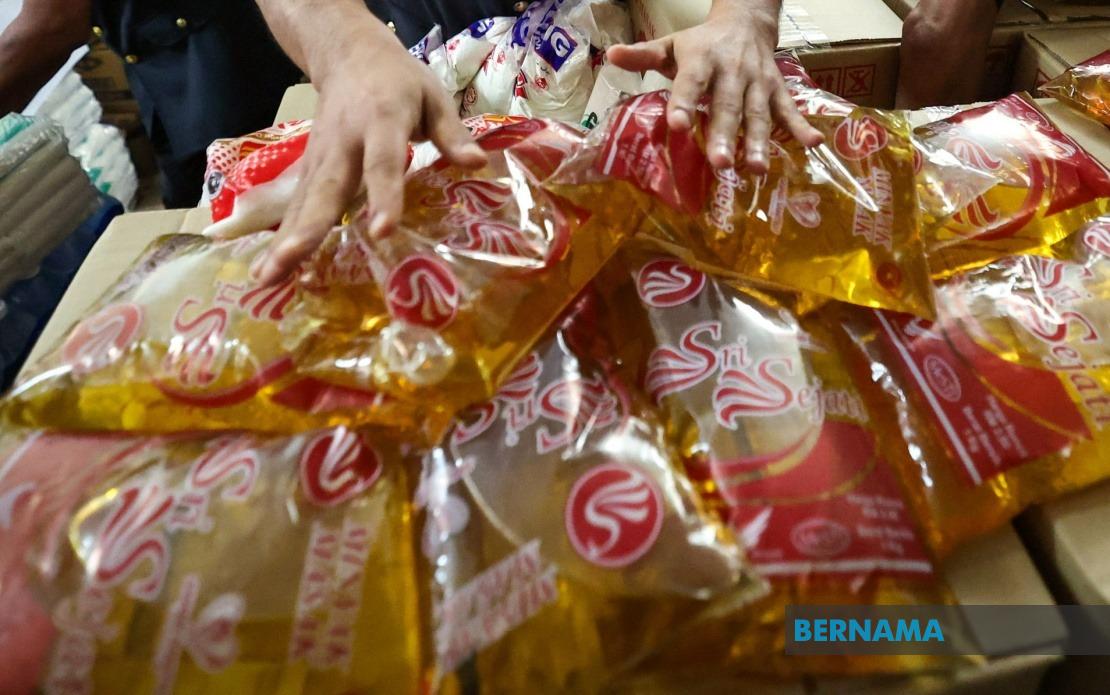
A critical vulnerability identified in the investigation concerns the packaging companies that repackage bulk oil into the familiar one-kilogramme packets sold at the RM2.50 controlled price. Two of nine packaging firms lack halal certification, a striking deficiency given that the Malaysian Islamic Development Department has substantially streamlined its certification procedures in recent years. The existence of non-certified firms suggests inadequate oversight and raises questions about how uncertified operators came to receive government subsidies. More troublingly, many repackers are capturing excessive profit margins. The government pays them RM600 per metric tonne in subsidy support, yet actual processing costs are substantially lower. This discrepancy between declared costs and market realities has inflated the government's subsidy burden without proportionate benefit to consumers or demonstrable justification.
Weaknesses in managing spoiled and damaged stocks compound the financial drain. The PAC found that the Ministry lacks standardised operating procedures for handling cooking oil that has deteriorated during storage or transport. Consequently, the government continues subsidising stocks that will never reach consumers and generating zero public value. Currently, subsidy payments flow to packaging companies regardless of whether the oil they receive arrives undamaged. A straightforward remedy would restrict payments to only undamaged consignments, immediately reducing unnecessary expenditure. The failure to implement such basic controls suggests either insufficient monitoring capacity or inadequate attention to cost management within KPDN.
Retail market discipline has also broken down. Ineffective oversight at the point of sale has permitted conditional purchasing schemes, hoarding of subsidised supplies, and widespread sales above the official RM2.50 ceiling. When retailers can extract additional margins through informal arrangements and stock restrictions, consumers face hidden costs and availability problems despite official price controls. This shadow pricing undermines the policy's stated objective of ensuring affordable cooking oil for ordinary Malaysians and indicates that monitoring mechanisms are either non-functional or under-resourced.
Market concentration presents a structural concern that the PAC believes warrants deliberate correction. Foreign companies control 67 per cent of the subsidy quota at the refining level, while local government-linked companies including FGV Holdings and SD Guthrie account for only 10.6 per cent. The remaining share goes to other local operators. This distribution raises questions about whether government support is being deployed to strengthen domestic industrial capacity or whether it primarily benefits foreign commercial interests. The PAC has recommended that the government study possibilities for reorienting quota allocation toward competitive local companies, suggesting that deliberate policy levers could strengthen Malaysian participation in this strategically important supply chain.
The committee's recommendation to accelerate transition toward fully digital targeted subsidies through an enhanced Cooking Oil Price Stabilisation Scheme System (eCOSS) represents the most fundamental reform proposed. A genuinely digital approach could restrict subsidised purchases to verified Malaysian citizens and households meeting eligibility criteria, eliminating the current broad-based subsidy that treats all purchasers identically regardless of genuine need. Moving from blunt universal subsidies to means-tested digital assistance would fundamentally alter programme economics, concentrating support on those most vulnerable to price movements while freeing government resources for other priorities. The current delay in implementing such systems suggests either technical obstacles or institutional resistance to change.
The PAC investigation also examined the subsidy rate paid to packaging companies, recommending that KPDN review whether the RM600 per metric tonne support level remains reasonable and competitive relative to actual operating costs. This rate was presumably established based on historical cost structures, but marketplace realities may have shifted substantially. A thorough cost benchmarking exercise could identify opportunities to reduce payments without compromising packaging company viability, trimming programme expenditure while maintaining adequate capacity within the supply chain. Such reviews should occur regularly to ensure subsidy rates remain calibrated to genuine economic needs rather than becoming entrenched through bureaucratic inertia.
The investigation itself was comprehensive, spanning ten parliamentary proceedings from August 5 through October 15 of the previous year and calling witnesses from KPDN, the Malaysian Islamic Development Department, and the Home Ministry. This inquiry was prompted by findings in the Auditor-General's Report 2/2025, which characterised the subsidy and price control management as unsatisfactory. The PAC's willingness to conduct extended investigation and publish detailed recommendations suggests Parliament is taking the matter seriously, though the committee has no direct enforcement authority. Implementation ultimately depends on KPDN's responsiveness and the government's political commitment to painful reforms that will inevitably provoke resistance from beneficiaries of the current system.
For Malaysian consumers and taxpayers, the implications are mixed. Reforms that reduce quota inflation and plug leakage could eventually lower the fiscal cost of maintaining price controls, potentially freeing resources for other social spending. However, transition to digital targeting may create temporary friction as the system shifts from universal availability to means-tested access. Retailers and packagers who have profited from the current arrangement will resist quota reductions and subsidy rate cuts. Yet the scale of identified waste—billions supporting leakage rather than genuine consumer assistance—makes reform increasingly difficult to defer. The PAC report now provides Parliament with detailed documentation of programme failures and a roadmap for correction, creating political pressure for action.
The broader context involves Malaysia's ongoing struggle with subsidy sustainability. As government revenues face pressure from competing demands and long-term fiscal constraints, programmes like cooking oil subsidies that lack effective targeting mechanisms become increasingly burdensome. Other Southeast Asian countries have experimented with cash transfers and digital assistance schemes as alternatives to commodity price controls, with mixed results. Malaysia's movement toward eCOSS represents a regional trend toward more sophisticated assistance delivery. The cooking oil case illustrates both the political difficulties of maintaining universal subsidies in an era of constrained budgets and the technical possibilities for reform through digitalisation and better monitoring. Whether KPDN acts decisively on the PAC's recommendations will signal whether the government genuinely intends to strengthen subsidy programme governance or merely tolerates ongoing waste as an acceptable cost of political stability.

