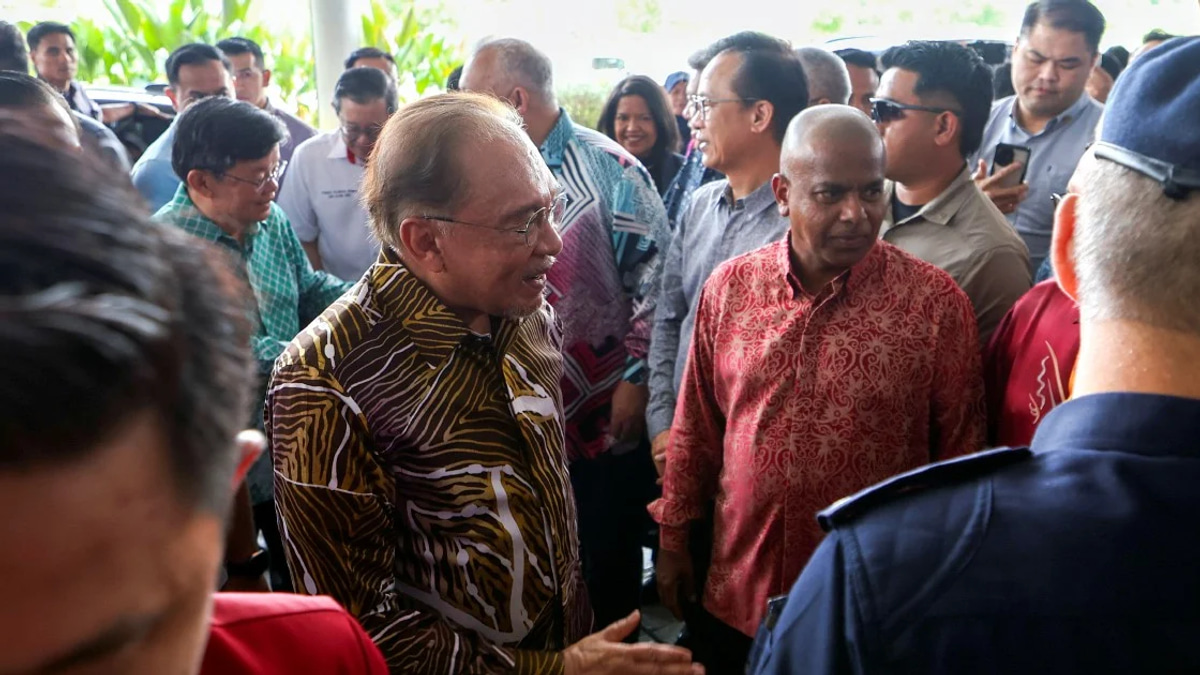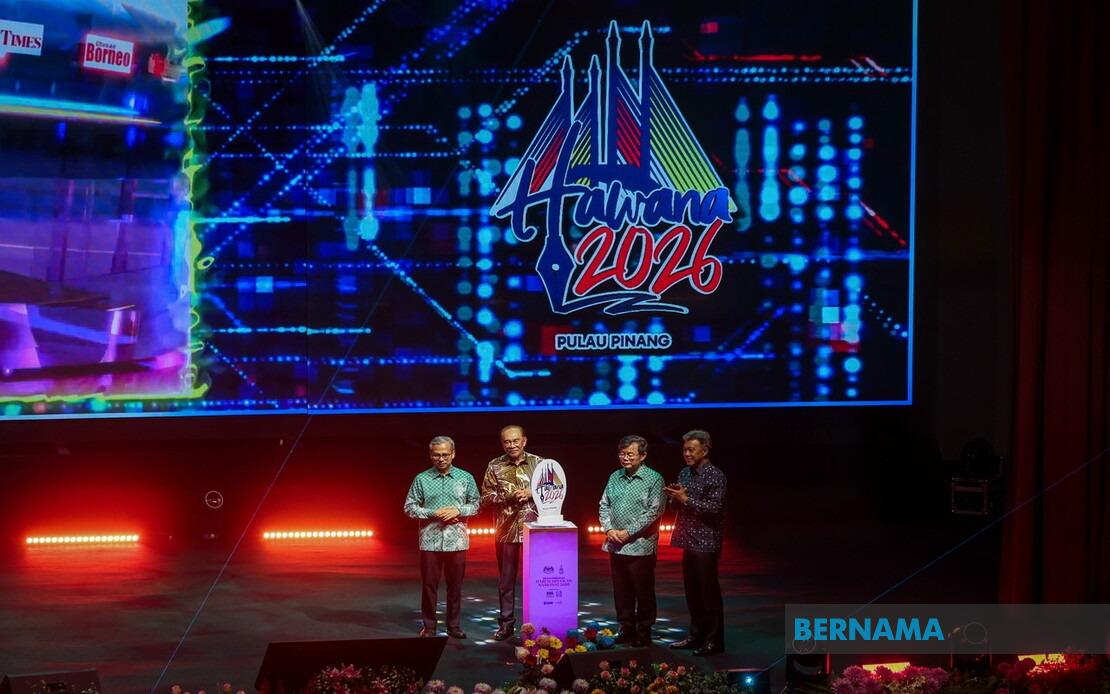
Prime Minister Datuk Seri Anwar Ibrahim has commended Malaysia's journalism community for their steadfast commitment to ethical reporting, acknowledging their essential role in sustaining public trust during an era of unprecedented technological disruption. Speaking at the National Journalists' Day (HAWANA) 2026 main event held at the PICCA Convention Centre @ Butterworth Arena in Penang, Anwar recognised the complex pressures facing newsrooms as they grapple with rapid digital innovation and artificial intelligence while maintaining the credibility that underpins democratic discourse.
The Prime Minister underscored that media practitioners shoulder an increasingly demanding responsibility as they navigate the intersecting challenges of technological change and evolving information landscapes. He acknowledged that the profession's difficulties extend beyond traditional reporting constraints, encompassing new complexities introduced by algorithmic content distribution, deepfakes, and the proliferation of digital channels that have fundamentally altered how news reaches audiences. This recognition reflects growing awareness among policymakers that supporting quality journalism requires understanding the structural pressures confronting modern newsrooms, not merely exhorting ethical behaviour without addressing systemic challenges.
Central to Anwar's remarks was an emphasis on the philosophical distinction between factual accuracy and ethical integrity. He articulated that determining whether information is true or false, right or wrong, fundamentally depends on the ethical framework and values guiding its dissemination rather than relying solely on factual claims. This nuance carries significant implications for Malaysian journalism, particularly as misinformation campaigns exploit the gap between technical accuracy and responsible presentation. By elevating ethics above mere factuality, the Prime Minister signalled that Malaysian journalism must aspire to a higher standard than simply reporting what occurred—it must contextualise information responsibly.
The government's position on press freedom emerged as carefully calibrated, neither unreservedly celebrating libertarian principles nor endorsing restrictive controls. Anwar stressed that democratic societies must allocate substantial space for journalistic expression, yet simultaneously insisted that freedom requires countervailing responsibility to prevent exploitation that could destabilise national institutions. This formulation reflects Malaysia's particular democratic context, where questions about balancing press autonomy against state stability remain politically sensitive and contested. For regional journalists observing Malaysian approaches to media regulation, this articulation suggests government thinking continues evolving toward defending institutional independence whilst resisting absolutist interpretations of press freedom.
Anwar highlighted media's instrumental value in advancing public policy comprehension and supporting informed civic participation. He positioned responsible journalism as a critical component enabling citizens to understand government initiatives across economic development, digitalisation strategies, energy transitions, and artificial intelligence deployment. This framing positions quality journalism not as adversarial to government but as complementary to state objectives—a perspective that carries implications for how Malaysian media negotiates its relationship with political authorities. The emphasis suggests official thinking increasingly recognises that sustainable policy implementation depends on public understanding facilitated by credible reporting.
The ceremony itself demonstrated institutional commitment to recognising journalistic excellence and supporting media professionals facing hardship. Awards presented to former broadcasting director-general Datuk Suhaimi Sulaiman and the late Azlan Idris acknowledged decades of industry contributions, while financial assistance distributed through Tabung Kasih@HAWANA addressed immediate welfare needs of practitioners confronting health challenges. These gestures indicate that government support for journalism extends beyond rhetorical commitment to include tangible recognition and material assistance, though sceptics might question whether such support adequately compensates for broader pressures affecting newsroom economics and editorial independence.
The HAWANA 2026 event, convened under the theme 'Media Integrity Strengthens Credibility', assembled more than 1,000 journalists from Malaysia alongside international delegates from Timor-Leste, Cambodia and Laos, signalling that media ethics concerns transcend national boundaries across Southeast Asia. This regional dimension reflects shared challenges confronting journalism throughout the region as authoritarian pressures, technological disruption, and economic unsustainability simultaneously threaten newsroom viability. Attendance by Timor-Leste's Secretary of State for Social Communication alongside regional media leaders suggested an emerging consensus that regional cooperation on journalistic standards and professional development could strengthen media sectors collectively.
The signing of a Memorandum of Understanding between Bernama and Timor-Leste's national news agency TATOLI represents substantive institutional collaboration addressing information exchange and professional capacity building. Such bilateral arrangements potentially create frameworks for sharing best practices regarding editorial standards, fact-checking methodologies, and institutional resilience—areas where Malaysian media's relative development could benefit less-established regional news organisations. For Malaysian journalists, these partnerships signal that professional standing increasingly depends on engaging constructively with regional counterparts and contributing to collective sector advancement beyond domestic borders.
Cultural programming interspersed throughout the ceremony, including boria performances and musical entertainment, reinforced connections between journalism and broader cultural expression. This integration reflects understanding that media's role encompasses not merely information transmission but cultural stewardship and community reflection. For Malaysian media practitioners operating in an increasingly polarised environment, such programming reminded attendees that journalism ultimately serves communities seeking meaningful connection and shared understanding, not merely data distribution.
The Prime Minister's remarks ultimately articulated a vision of Malaysian journalism balancing multiple constituencies and pressures. He acknowledged technology's transformative potential whilst insisting that innovation cannot displace ethical foundations undergirding credible reporting. He endorsed press freedom whilst linking it inextricably to professional responsibility. He recognised journalism's instrumental value in advancing government objectives whilst implicitly accepting that such support does not entail editorial subservience. Whether this calibrated position translates into sustainable protections for investigative reporting, editorial independence, and newsroom economic viability remains uncertain, but the HAWANA forum at least provided occasion for articulating standards against which actual media performance can be measured.