Prime Minister Datuk Seri Anwar Ibrahim's increasingly active diplomatic engagement across key global markets is receiving backing from policy experts and observers who see tangible economic benefits emerging from his international initiatives. His recent travels to Kazan, Russia, and Turkmenistan have positioned Malaysia to capitalise on new partnerships in energy, trade, and strategic investment sectors, particularly as global uncertainty continues to reshape international commerce and geopolitical alignments.
Academic analysis suggests that Anwar's diplomatic footprint addresses a critical strategic imperative for Malaysia. Dr Mohd Ramlan Mohd Arshad, a senior lecturer at Universiti Teknologi MARA's Faculty of Administrative Science and Policy Studies, emphasises that the Prime Minister's recent visits have unlocked substantial cooperation opportunities spanning trade, investment, energy, agriculture and technology sectors. Such diversification proves essential for Malaysia's economic resilience as traditional markets face cyclical pressures and emerging economies offer fresh avenues for growth. The visits themselves represent deliberate moves to reduce economic dependence on any single trading partner or region, a principle increasingly relevant as global supply chains recalibrate post-pandemic.
Dr Arshad characterises Anwar's leadership style as pragmatic and internationally respected, qualities that enhance Malaysia's competitive positioning as an investment destination. This assessment reflects broader confidence that Malaysia's ability to forge partnerships across ideologically and geographically diverse nations strengthens rather than compromises national interests. The ability to engage constructively with multiple powers without compromising sovereignty has become a hallmark of effective Southeast Asian diplomacy, and Malaysia appears to be executing this balancing act skillfully.
Beyond academic circles, stakeholders representing Malaysian civil society express enthusiasm for Anwar's international engagement. Siranjeev Ram, Policy and Think Tank Exco member at the Malaysian Indian Youth Council, frames international respect as a multiplier for domestic opportunity creation. His perspective acknowledges that Malaysia's global credibility directly translates into investor confidence, trade deal leverage, and business expansion possibilities for Malaysian enterprises seeking international markets. In an increasingly complex global environment characterised by trade tensions and competing power blocs, a leader perceived as bridge-builder and trusted partner becomes a national asset.
The emphasis on translating international standing into tangible domestic benefits reflects legitimate public expectations. Observers stress that diplomatic achievement means little if ordinary Malaysians do not experience improved economic circumstances, job creation, or enhanced living standards. This practical orientation ensures that foreign policy remains accountable to citizens rather than serving elite interests divorced from grassroots prosperity.
Private sector perspectives reinforce confidence in the diplomatic strategy's economic value. Dr Lim Yu Xiang, a healthcare professional, notes that favourable trade arrangements with emerging market powers like Russia and Turkmenistan represent concrete wins that strengthen Malaysia's negotiating position globally. The Prime Minister's evident international standing provides leverage in bilateral negotiations, as established leaders with proven track records typically command better terms than lesser-known counterparts. This soft power advantage translates directly into superior contract terms, investment commitments, and cooperative frameworks benefiting Malaysia's long-term interests.
Media and communications professionals add a visibility dimension to the analysis. Fiona Lim, a marketing specialist, observes that a respected leader amplifies national brand value on the world stage. When Malaysia's Prime Minister is perceived as influential, articulate, and strategically astute, the entire nation benefits from enhanced credibility and visibility among global audiences. This reputational advantage facilitates everything from attracting multinational corporate investments to securing favorable terms in international negotiations. Malaysia's growing prominence in global discourse becomes an asset that multiplies diplomatic and economic opportunities.
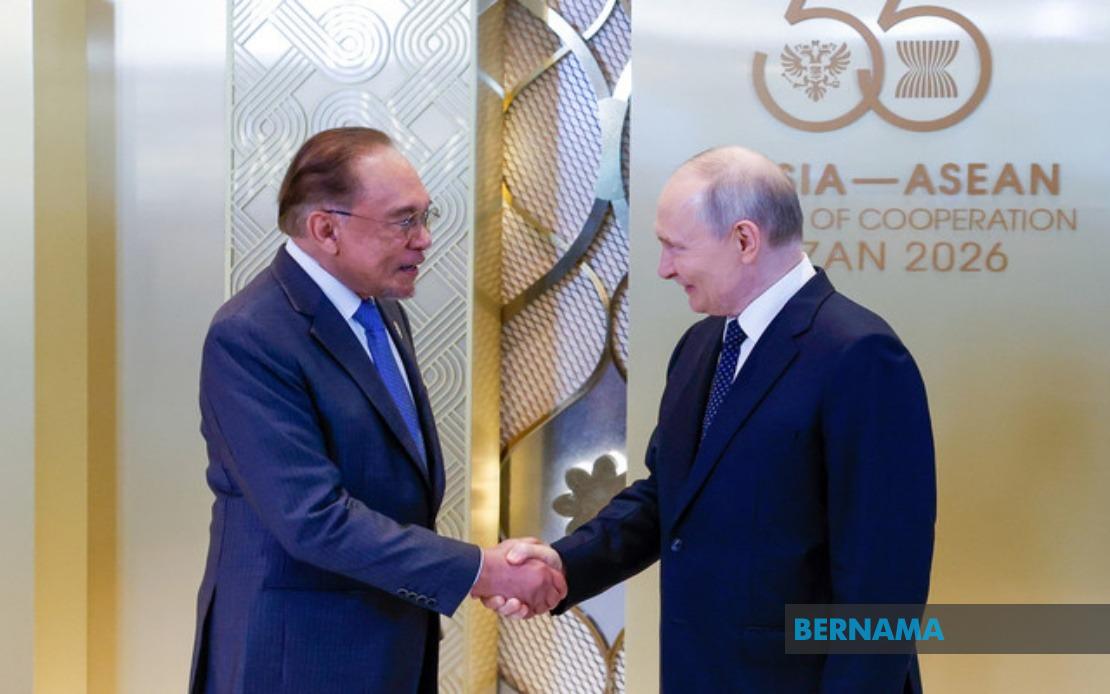
The energy sector provides concrete evidence of diplomatic gains materialising into economic reality. During Anwar's visit to Kazan for the ASEAN-Russia Commemorative Summit, bilateral negotiations advanced energy security cooperation significantly. Russia has committed to supplying petroleum, oil and gas to Malaysia through long-term arrangements that replace previous shorter-term contracts, providing the stability Malaysian refineries and consumers require. This agreement, currently in final refinement stages and involving Petronas and Russia's Tatarstan region, fundamentally alters Malaysia's energy security posture by creating predictable supply chains less vulnerable to seasonal disruptions or geopolitical volatility.
Turkmenistan engagement has yielded similarly substantial outcomes in the hydrocarbon sector. Petronas marked three decades of operations in the Central Asian nation by securing expanded exploration rights in the Caspian Sea's Offshore Blocks 19 and 20. The achievement represents meaningful expansion of Malaysian energy company influence in global hydrocarbon markets and demonstrates diplomatic effectiveness in securing preferred positioning for Malaysian enterprises competing against international oil majors. Additionally, a Long-Term Framework Agreement addressing the Galkynysh Gas Field—one of the world's largest gas reserves—opens downstream and processing opportunities, suggesting potential expansion of Malaysian energy sector activities well beyond extraction into higher-value processing and commercialisation.
These tangible outcomes validate the strategic logic underlying Anwar's diplomatic calendar. Energy security constitutes a fundamental concern for Malaysia as a developing economy requiring stable, affordable fuel supplies for industrial competitiveness and household consumption. The new Russia arrangements and expanded Turkmenistan partnerships reduce reliance on contested maritime shipping lanes and create diversified sources reducing single-point-of-failure vulnerability. For a nation geographically positioned along critical global trade routes yet economically dependent on secure energy imports, such arrangements represent strategic wins with lasting implications.
The timing of these diplomatic successes carries particular significance given global energy market volatility and ongoing geopolitical tensions in regions supplying petroleum to Asia. Malaysia's ability to establish long-term frameworks with major energy exporters provides competitive advantages over nations lacking similar diplomatic relationships. Industrial manufacturers making location decisions increasingly consider energy cost predictability and supply reliability, factors Malaysia can now market more effectively to prospective foreign investors.
Observer commentary consistently emphasises that Anwar's diplomatic achievements reflect not merely personal reputation but systematic strategic positioning benefiting Malaysia comprehensively. The combination of respected leadership, pragmatic foreign policy, diversified partnerships, and concrete economic gains creates a coherent strategy addressing both immediate prosperity and longer-term resilience. Whether this momentum sustains depends on continued diplomatic engagement, successful implementation of negotiated agreements, and demonstrable benefits reaching Malaysian households and businesses.

%22%2F%3E%3C%2Fpattern%3E%3C%2Fdefs%3E%3Crect%20width%3D%22100%25%22%20height%3D%22100%25%22%20fill%3D%22url(%23ph4qduzg)%22%2F%3E%3Crect%20width%3D%22100%25%22%20height%3D%22100%25%22%20fill%3D%22url(%23ph4qduzp)%22%2F%3E%3Ctext%20x%3D%2250%25%22%20y%3D%2250%25%22%20text-anchor%3D%22middle%22%20dominant-baseline%3D%22central%22%20fill%3D%22rgba(255%2C255%2C255%2C0.95)%22%20font-family%3D%22Georgia%2C%20'Times%20New%20Roman'%2C%20serif%22%20font-weight%3D%22700%22%20font-size%3D%22194%22%20letter-spacing%3D%22-0.02em%22%3EBersatu%3C%2Ftext%3E%3C%2Fsvg%3E)