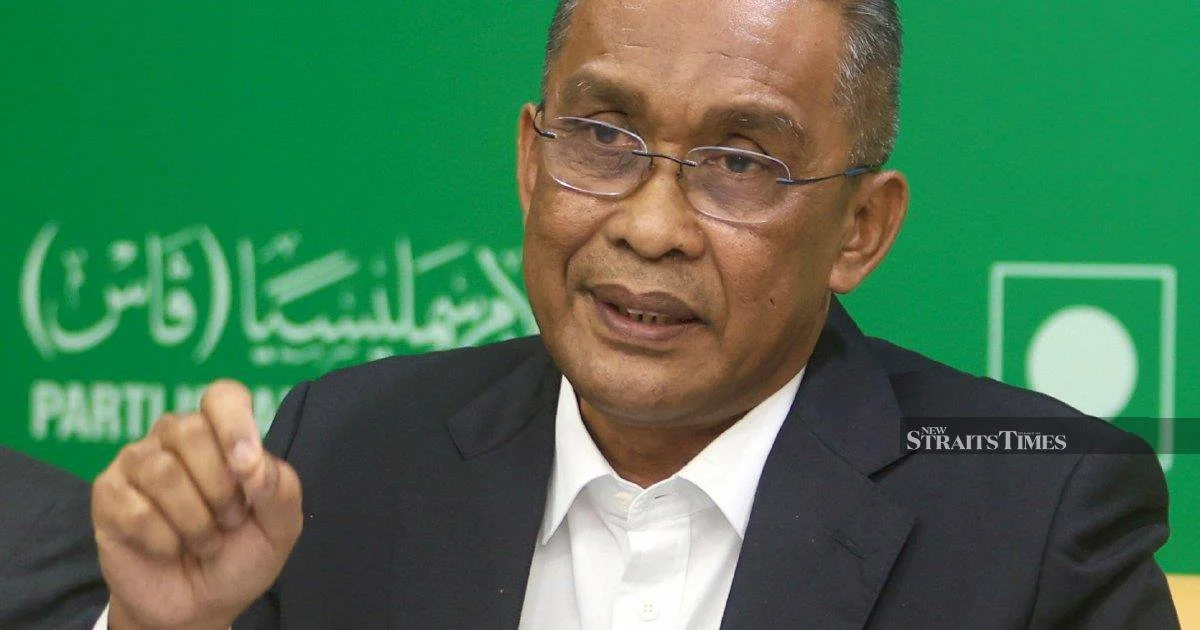
The Registrar of Societies has formally recognized a leadership transition within Perikatan Nasional, establishing a new governance framework that centralizes decision-making authority. Under this confirmed structure, Datuk Seri Dr Ahmad Samsuri Mokhtar holds the position of chairman and must give his blessing to any activity or meeting conducted under the PN banner. This official registration represents a significant organizational shift for the three-party coalition that has played a crucial role in Malaysian politics since its formation.
The formal confirmation from Malaysia's corporate regulator lends legal weight to the leadership arrangement and sets clear boundaries for how the coalition operates moving forward. By requiring chairman approval for all coalition activities, the structure ensures centralized control and prevents unauthorized actions from being conducted in PN's name. This bureaucratic formalization is particularly important for a multi-party coalition, where distinct entities with separate interests must coordinate their political operations under a unified framework.
Petualan Nasional, which comprises Bersatu, PAS, and Gerakan among other parties, has faced various internal pressures and realignments since its emergence as an alternative political force. The current leadership arrangement reflects an attempt to create organizational coherence and establish clear lines of authority. For Malaysian political observers, this development signals the coalition's intention to present itself as a disciplined, well-governed entity capable of managing the interests of its constituent parties.
The requirement for chairman approval extends to all dimensions of coalition activity, from formal political meetings to public events and policy announcements. This comprehensive oversight mechanism gives Ahmad Samsuri Mokhtar substantial influence over PN's strategic direction and public messaging. Such centralized control can facilitate coordination among PN's diverse components but may also create friction if individual parties feel their autonomy is being unduly restricted.
For members of PN's constituent parties, this development has practical implications for how they conduct party business and participate in coalition activities. Activists and leaders operating at state or grassroots levels must now be aware that activities they wish to undertake as part of PN operations require formal sanction from the chairman's office. This represents a standardization of procedures that, while administratively sensible for a large coalition, may slow decision-making in some contexts.
Regional political dynamics across Southeast Asia often feature similar coalition management challenges, particularly in nations where multiple parties must work together to form stable governing arrangements. The formalization of PN's governance structure reflects lessons learned from previous coalition experiences in Malaysia and offers a model for how diverse political organizations can establish operational coherence. The clarity provided by registered procedures helps prevent misunderstandings about what actions are authorized and who bears responsibility for coalition activities.
The Registrar of Societies' confirmation gives Ahmad Samsuri Mokhtar's authority an official legal foundation that extends beyond mere political convention. This distinction matters significantly in Malaysian politics, where organizational legitimacy and structural clarity contribute to a party or coalition's credibility and effectiveness. Should disputes arise regarding whether particular activities were properly authorized under PN's name, the registered governance structure provides a reference point for adjudication.
Looking at PN's broader political strategy, this leadership clarification may be intended to project an image of organizational maturity and professional management. Malaysian voters increasingly expect political entities to demonstrate administrative competence and transparent governance, particularly at the federal level. By formalizing decision-making procedures and establishing clear chains of authority, PN signals that it takes institutional governance seriously.
The coalition's constituent parties will likely develop internal protocols for obtaining chairman approval when they wish to undertake activities in PN's name. This may involve formal applications, preliminary consultations, or other procedural steps that add another layer to political decision-making. How efficiently PN manages these approval processes will partly determine whether the governance structure enhances or impedes the coalition's operational effectiveness.
Amid Malaysia's fractured political landscape, where alliances frequently shift and coalition arrangements remain in constant flux, establishing durable governance mechanisms represents a strategic choice to build institutional permanence. PN's leadership structure demonstrates an attempt to move beyond personality-driven politics toward systems-based governance, though the real test will come through consistent application of these procedures over time. For Malaysian political analysts, the confirmation of this framework offers a window into how major coalitions are attempting to manage the inherent tensions between constituent party autonomy and coalition cohesion.

%22%2F%3E%3C%2Fpattern%3E%3C%2Fdefs%3E%3Crect%20width%3D%22100%25%22%20height%3D%22100%25%22%20fill%3D%22url(%23ph4w4yvg)%22%2F%3E%3Crect%20width%3D%22100%25%22%20height%3D%22100%25%22%20fill%3D%22url(%23ph4w4yvp)%22%2F%3E%3Ctext%20x%3D%2250%25%22%20y%3D%2250%25%22%20text-anchor%3D%22middle%22%20dominant-baseline%3D%22central%22%20fill%3D%22rgba(255%2C255%2C255%2C0.95)%22%20font-family%3D%22Georgia%2C%20'Times%20New%20Roman'%2C%20serif%22%20font-weight%3D%22700%22%20font-size%3D%22226%22%20letter-spacing%3D%22-0.02em%22%3EPenang%3C%2Ftext%3E%3C%2Fsvg%3E)