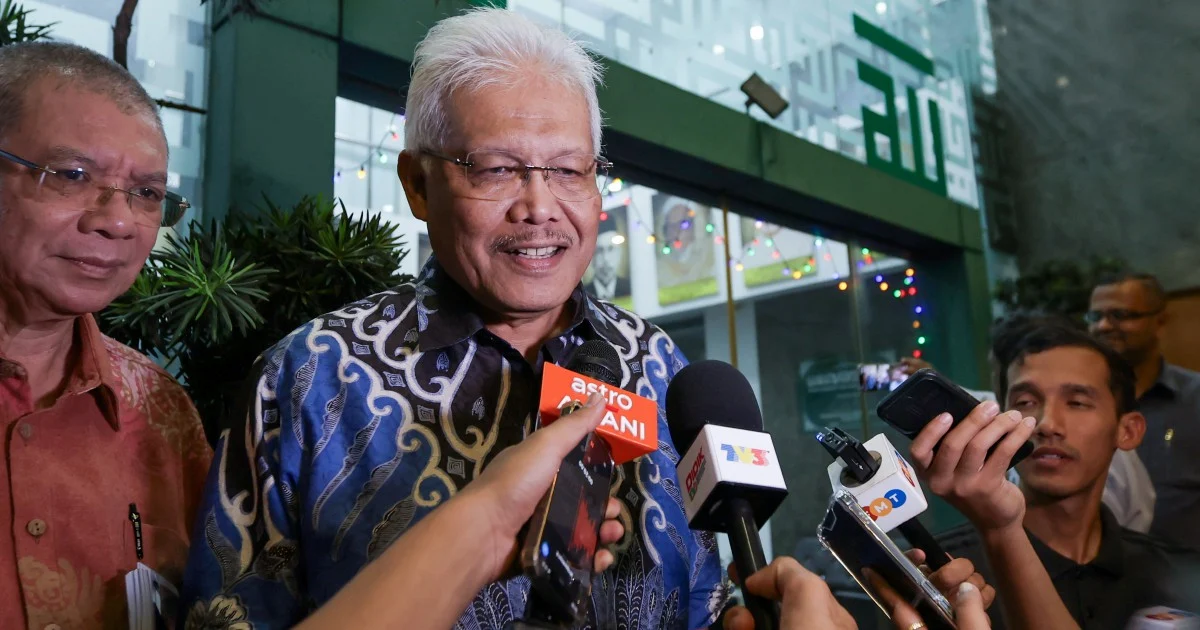
Perikatan Nasional's chief whip Datuk Seri Takiyuddin Hassan has formally lodged notification with the Dewan Rakyat Speaker's office confirming the reappointment of Datuk Seri Hamzah Zainudin to his position as opposition leader, a procedural step that underscores the coalition's stability in parliament.
The submission of this notification represents a routine but significant administrative requirement in Malaysia's parliamentary system, where the opposition leader's appointment must be formally recorded with the legislative branch. This procedural clarity helps establish clear lines of authority and responsibility within parliament's operational framework, ensuring the Speaker's office maintains accurate records of the opposition's organisational structure and representation.
Hamzah Zainudin, who leads Perikatan Nasional's parliamentary contingent, has been instrumental in articulating the coalition's policy positions and challenging government proposals on the legislative floor. His reappointment signals that PN remains cohesive despite the fractious nature of Malaysian coalition politics, where alliances frequently shift based on political calculations and ministerial aspirations.
The timing of this formal reappointment carries particular significance given the volatile landscape of Malaysian parliamentary politics. Since the 2022 general election reshaped the political terrain, opposition parties have worked to maintain unified messaging while navigating competing interests within their respective coalitions. PN's decision to formally reconfirm Hamzah's leadership suggests the coalition has resolved any internal disputes that might have threatened its parliamentary unity.
From a procedural standpoint, the Speaker's office maintains records of opposition leadership to ensure proper parliamentary protocols are observed. The opposition leader holds specific privileges under parliamentary standing orders, including reserved speaking time and participation in inter-parliamentary delegations. Formal notification ensures these entitlements are correctly allocated and that parliamentary procedures can function smoothly throughout the legislative term.
Takiyuddin Hassan's role as chief whip places him in a crucial position within PN's parliamentary machinery. The chief whip traditionally manages party discipline, ensures member attendance during important votes, and coordinates legislative strategy. His submission of Hamzah's notification reflects his responsibility for maintaining proper documentation of the coalition's parliamentary hierarchy and communicating organisational decisions to the appropriate authorities.
Pecan Nasional's parliamentary representation has remained relatively stable compared to other Malaysian political actors, though the coalition has faced periodic tensions between its component parties—BERSATU, PAS, and several smaller groups. Hamzah's continued leadership demonstrates that the coalition leadership has consensus on maintaining existing hierarchies despite these underlying strains.
For Malaysian observers tracking parliamentary dynamics, this development offers insight into opposition consolidation at a moment when Malaysian politics continues to experience significant flux. The opposition's organisational coherence affects its capacity to mount effective legislative challenges, scrutinise government proposals, and present voters with coherent alternative platforms.
The formal reappointment also addresses international dimensions of Malaysian governance. Parliamentary opposition leaders increasingly engage in international forums and diplomatic exchanges, representing Malaysia's legislative voice to overseas audiences. Hamzah's reconfirmation ensures continuity in these external relationships and establishes clear authority for diplomatic engagement on behalf of the parliamentary opposition.
Within PN's constituent parties, this notification likely reflects internal political agreements and power-sharing arrangements that remain largely opaque to public view. PAS maintains significant parliamentary strength while BERSATU, despite reduced membership following defections, retains strategic importance. Hamzah's reappointment probably represents a compromise that respects factional interests while maintaining effective opposition leadership.
Looking forward, this procedural clarity may prove valuable if Malaysian parliamentary politics experiences further realignment. By formally recording Hamzah's position, the Speaker's office creates unambiguous records should questions arise regarding opposition representation or procedural entitlements. Such documentation becomes particularly important during transitional periods or when coalition stability becomes contested.
The reappointment also carries symbolic weight for PN's grassroots supporters and party members. Leadership clarity sends messages about organisational direction and reinforces commitment to parliamentary engagement as a primary mechanism for advancing the coalition's political agenda. Formal procedures, while seemingly technical, communicate important signals about stability and long-term strategic thinking.
%22%2F%3E%3C%2Fpattern%3E%3C%2Fdefs%3E%3Crect%20width%3D%22100%25%22%20height%3D%22100%25%22%20fill%3D%22url(%23ph3xy1tg)%22%2F%3E%3Crect%20width%3D%22100%25%22%20height%3D%22100%25%22%20fill%3D%22url(%23ph3xy1tp)%22%2F%3E%3Ctext%20x%3D%2250%25%22%20y%3D%2250%25%22%20text-anchor%3D%22middle%22%20dominant-baseline%3D%22central%22%20fill%3D%22rgba(255%2C255%2C255%2C0.95)%22%20font-family%3D%22Georgia%2C%20'Times%20New%20Roman'%2C%20serif%22%20font-weight%3D%22700%22%20font-size%3D%22272%22%20letter-spacing%3D%22-0.02em%22%3EFahmi%3C%2Ftext%3E%3C%2Fsvg%3E)