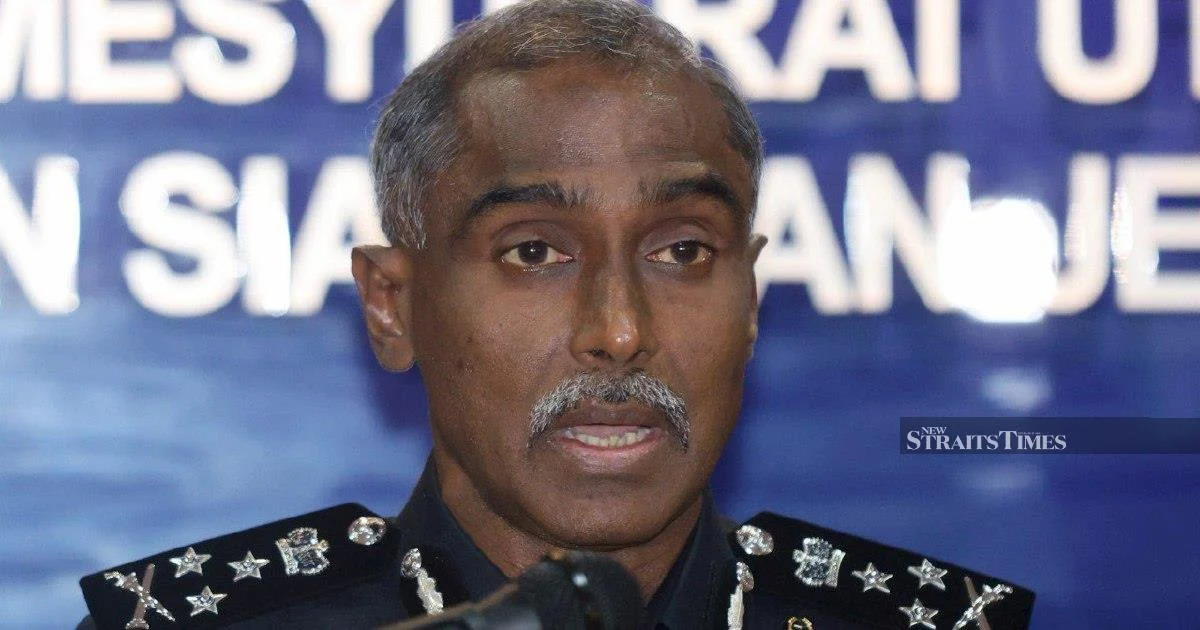
Law enforcement authorities in Selangor have wrapped up a comprehensive security operation that resulted in the arrest of 349 individuals over a four-day period, with among them five people wanted under the Security Offences (Special Measures) Act 2012, commonly referred to as Sosma. The coordinated effort, which drew resources across multiple police divisions and task forces, represents a significant enforcement push against criminal networks and individuals evading arrest warrants across the country's most populous and economically vital state.
The integrated operation reflects the police's commitment to addressing layered security threats in a region that serves as a commercial and industrial hub for Malaysia. Selangor's position as the manufacturing and financial centre of the nation makes it particularly vulnerable to cross-border criminal activity, human trafficking networks, and organised syndicates that exploit the state's extensive transportation infrastructure and port facilities. The four-day operation was designed to dismantle such networks systematically while simultaneously hunting down persons who had escaped the justice system.
The five individuals detained under Sosma warrant particular attention given the stringent nature of that legislation. Sosma, enacted in 2012, grants authorities enhanced investigative powers and allows for extended detention periods without court orders in cases involving terrorism, sedition, and threats to national security. The apprehension of these five suspects suggests the operation extended beyond common organised crime into territory involving potential security threats that authorities consider grave enough to invoke this controversial statute.
The broader sweep targeting wanted persons demonstrates the perpetual challenge law enforcement agencies face in tracking fugitives across Selangor's sprawling landscape. The state encompasses both densely urbanised zones around Kuala Lumpur and surrounding suburbs, as well as rural and semi-industrial areas where individuals can more easily evade detection. Police operations of this scale typically involve intelligence gathering from multiple sources including community tip-offs, surveillance footage analysis, and inter-agency coordination with bodies such as the Immigration Department and National Registration Department.
Organised crime remains a persistent problem in Selangor, with criminal syndicates involved in drug trafficking, loan sharking, extortion, and human smuggling operating across the state. By consolidating resources into integrated operations rather than conducting scattered arrests, police aim to disrupt criminal hierarchies and networks rather than simply removing individual offenders. This approach potentially yields greater dividends in terms of intelligence gathering and dismantling supply chains or protection rackets that sustain larger criminal enterprises.
The timing and scale of such operations also serve an important symbolic function in demonstrating police capability and willingness to conduct large-scale enforcement actions. In a state as large and complex as Selangor, public confidence in law enforcement depends partly on visible police presence and regular announcements of significant arrests. These periodic crackdowns provide reassurance to residents and businesses that authorities remain vigilant against criminal activity.
However, the effectiveness of large-scale arrest sweeps remains subject to ongoing debate among criminologists and civil liberties advocates. While such operations can generate intelligence leads and remove dangerous individuals from circulation, critics argue that they can sometimes lead to procedural shortcuts or the detention of individuals without sufficient evidence. The involvement of Sosma in this particular operation may generate scrutiny regarding the threshold for invoking such stringent legislation and whether due process protections remain adequately safeguarded.
For Malaysian businesses and residents in Selangor, the results of such operations have direct implications for public safety and investor confidence. The presence of organised crime networks depresses property values in affected areas, deters business investment, and creates climate of fear among merchants particularly in urban villages and commercial districts. By targeting these networks systematically, police operations aim to restore a sense of security that underpins economic activity and quality of life.
The operation also highlights ongoing challenges in cross-border law enforcement within the Asean region. Criminal networks frequently exploit porous borders and differing legal standards across neighbouring jurisdictions. Fugitives apprehended in Selangor may have committed crimes in other Malaysian states or even regional countries, necessitating coordination with foreign law enforcement agencies. The five Sosma suspects may fall into this category, requiring international cooperation for investigation and potential extradition proceedings.
Moving forward, the challenge for police will be converting these arrests into successful prosecutions and sustained disruption of criminal operations. Merely removing individuals from the streets provides only temporary relief unless investigations yield evidence that allows courts to impose substantial sentences and prosecute higher-ranking members of criminal organisations. The data from this operation will likely inform police resource allocation and strategic planning for future enforcement activities in Selangor.
The arrest figures also provide context for understanding Selangor's crime landscape relative to other Malaysian states. As the country's economic engine and most populous state outside Kuala Lumpur Federal Territory, Selangor requires proportionally intense law enforcement attention. Police will continue monitoring the effectiveness of their operational strategies and adjusting tactics based on evolving criminal methodologies and intelligence assessments.
%22%2F%3E%3C%2Fpattern%3E%3C%2Fdefs%3E%3Crect%20width%3D%22100%25%22%20height%3D%22100%25%22%20fill%3D%22url(%23ph6m3xg)%22%2F%3E%3Crect%20width%3D%22100%25%22%20height%3D%22100%25%22%20fill%3D%22url(%23ph6m3xp)%22%2F%3E%3Ctext%20x%3D%2250%25%22%20y%3D%2250%25%22%20text-anchor%3D%22middle%22%20dominant-baseline%3D%22central%22%20fill%3D%22rgba(255%2C255%2C255%2C0.95)%22%20font-family%3D%22Georgia%2C%20'Times%20New%20Roman'%2C%20serif%22%20font-weight%3D%22700%22%20font-size%3D%22320%22%20letter-spacing%3D%22-0.02em%22%3E32%3C%2Ftext%3E%3C%2Fsvg%3E)