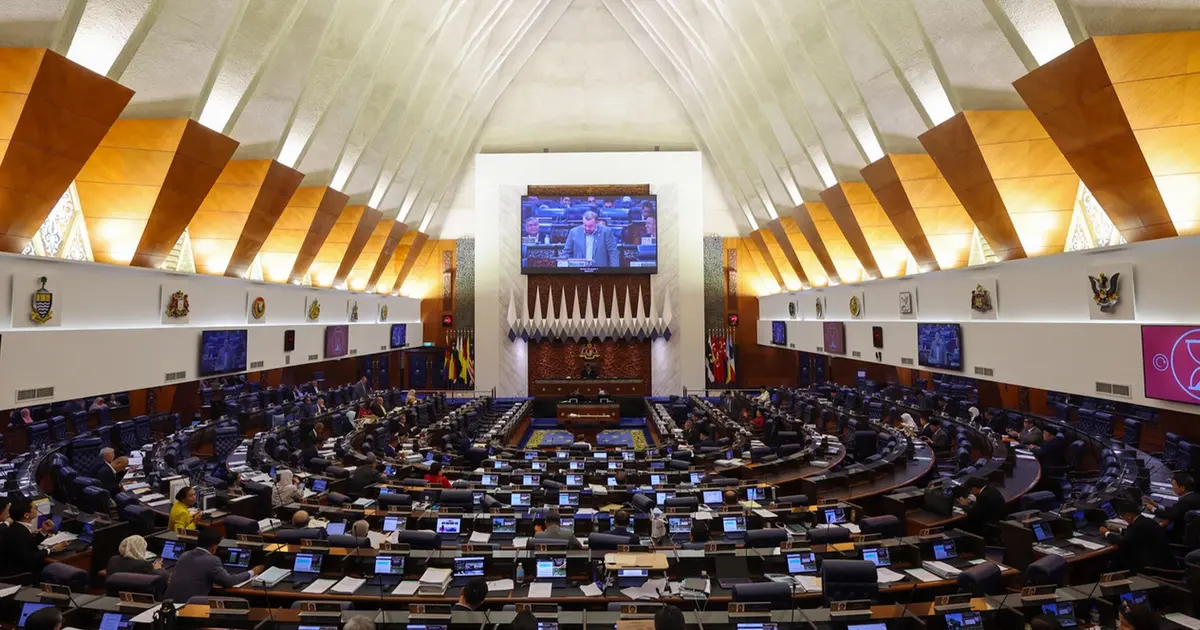
Parliament is poised to take another run at a constitutional amendment that would limit a prime minister's time in office to a maximum of 10 years, as part of a four-bill legislative agenda beginning Monday. The measure, which previously fell short of the necessary two-thirds parliamentary majority in the last Dewan Rakyat sitting, will again be put before lawmakers in what represents a pivotal moment for Malaysia's governance architecture.
The effort to impose term limits on Malaysia's chief executive reflects broader global trends toward constitutional guardrails on executive power. The 10-year proposal, while framed as a modernising step, carries significant implications for Malaysia's political system, which has historically lacked explicit restrictions on how long an individual prime minister may consecutively hold office. Such limitations exist in various Commonwealth nations and democracies worldwide, though their implementation often proves contentious.
The bill's earlier defeat underscores the parliamentary mathematics required for constitutional amendments in Malaysia. Securing a two-thirds supermajority demands extraordinary consensus among legislators, a threshold that reflects the framers' intention to make fundamental law difficult to alter without broad political agreement. That the measure was reintroduced signals either the government's determination to push through the reform or shifting calculations about coalition support in the chamber.
Contextually, this legislative push arrives amid ongoing Malaysian political discourse about strengthening institutional checks and the accountability mechanisms surrounding high office. Term limits have long featured in debates about preventing excessive executive consolidation and ensuring democratic renewal through leadership transitions. However, advocates must contend with perspectives that stability in executive leadership offers governance advantages, particularly during periods of economic uncertainty or international tension.
The timing of the prime minister tenure cap within a broader four-bill package suggests strategic bundling of constitutional changes. Parliamentary observers will scrutinise whether bundling distinct measures enhances passage prospects by packaging popular provisions alongside more contested ones, or whether it dilutes focus from individual reform initiatives. The parliamentary schedule itself signals priority-setting by the government.
For Malaysian stakeholders—including civil society organisations, constitutional scholars, and ordinary citizens—the term limit debate touches fundamental questions about power distribution and democratic participation. How frequently leadership changes should occur, and whether imposed cycles better serve the national interest than organic political transitions, remains contested terrain. Some argue that artificial limits prevent experienced, effective leaders from continuing stewardship, while others contend that time-bound tenures encourage institutional development beyond any individual personality.
Regionally, Malaysia's constitutional evolution carries significance as other Southeast Asian democracies confront similar governance questions. Thailand and Indonesia have experimented with term limitations for chief executives, with mixed results informing ongoing debates throughout the region. Malaysia's approach may influence regional democratic practices while reflecting comparable tensions between stability and renewal that transcend national boundaries.
The parliamentary sitting will also shed light on the robustness of coalition politics in Malaysia. Party voting discipline, inter-coalition negotiations, and individual legislators' positions on constitutional matters will become visible through this legislative test. The behaviour of smaller coalition partners may prove decisive, as their votes could determine whether the two-thirds threshold is breached.
Specialists in Malaysian constitutional law note that the 10-year ceiling would affect not only future prime ministers but potentially reset tenure calculations for the incumbent, depending on the amendment's precise drafting and transitional provisions. Such technical details—which often escape public notice—can substantially reshape practical impact. Drafting ambiguities may invite future judicial interpretation or parliamentary clarification.
The broader legislative package, encompassing three additional bills alongside the term limit measure, creates a substantive parliamentary session that government and opposition benches will navigate carefully. Strategic positioning on the term limit bill may influence negotiations around the other measures, suggesting that parliamentary arithmetic operates as an interconnected calculus rather than isolated votes.
Observers should note that even if passed at Monday's sitting, the amendment would require Royal Assent and potentially trigger broader constitutional review discussions. The successful passage of a term limit measure need not conclude the conversation about executive tenure; instead, it may inaugurate new debates about related constitutional questions, such as whether similar restrictions should apply to state-level chief ministers or how transitions should be managed.
As Malaysia weighs whether to embrace explicit tenure constraints on its highest executive office, the nation engages with timeless democratic questions about power's proper scope and duration. The four-bill parliamentary agenda thus transcends routine legislative business, touching the constitutional foundations upon which Malaysian democracy rests and signalling the government's appetite for foundational institutional reform.