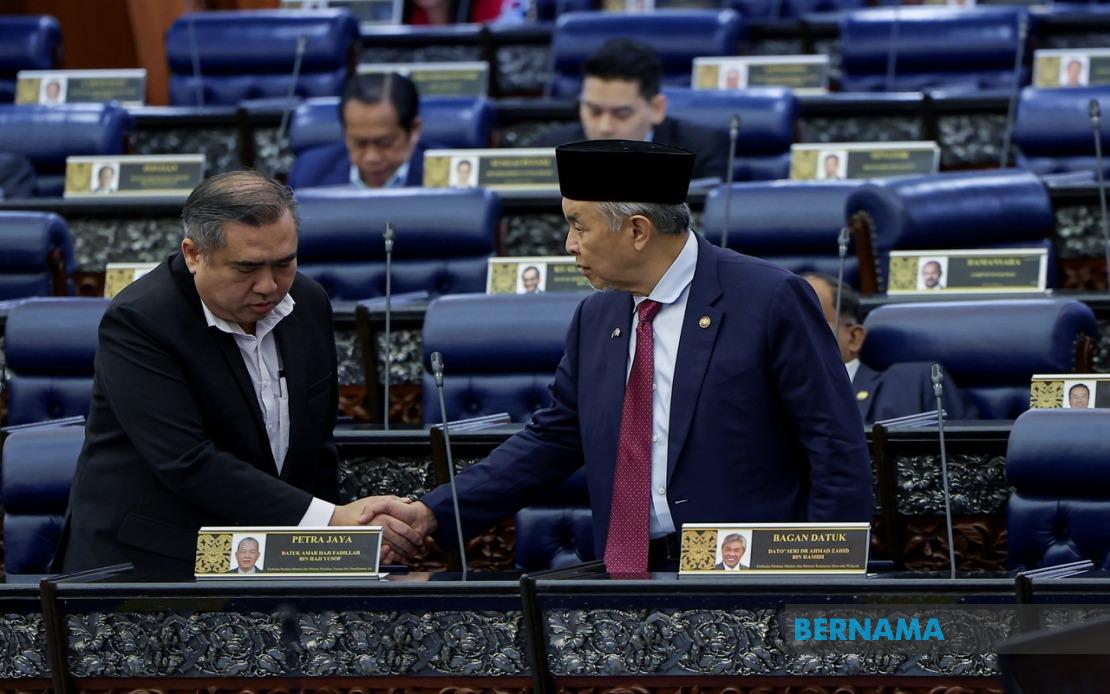
Parliament has taken a significant step toward toughening traffic enforcement in Malaysia with the first reading of the Road Transport (Amendment) Bill 2026. Transport Minister Anthony Loke tabled the Bill in the Dewan Rakyat on June 22, signalling the government's intention to move swiftly through the legislative process, with second reading scheduled during the current parliamentary session. The proposed amendments represent a comprehensive overhaul of penalties and enforcement mechanisms within Malaysia's Road Transport Act, reflecting growing concern over traffic safety and reckless driving behaviour on public roads.
The Bill introduces across-the-board increases in financial penalties for a wide range of driving offences, raising the minimum fine from RM300 to RM500 for numerous violations. This baseline increase applies to commonplace infractions such as failing to display a vehicle registration number, driving without a valid licence, speeding, breaching vehicle construction and equipment regulations, ignoring traffic signals and instructions, and participating in illegal street racing. While the absolute figures may appear modest to some observers, the proportional increase of roughly 67 per cent signals a deliberate policy shift to make non-compliance more costly. For Malaysian road users accustomed to relatively light fines, the change will necessitate genuine behavioural adjustment, particularly among commercial vehicle operators and habitual speeders.
The amendments contain particularly stringent provisions targeting drivers who operate vehicles with suspended or revoked licences, a practice that poses demonstrable public safety risks. The new framework would impose imprisonment of up to three years coupled with fines ranging from RM3,000 to RM10,000, a substantial escalation from the previous ceiling of one year imprisonment or RM5,000 in fines. This doubling of maximum jail terms reflects parliamentary recognition that driving while suspended represents a deliberate flouting of legal authority and endangers other road users. The severity suggests legislators view this behaviour not merely as a technical violation but as a serious criminal matter deserving custodial punishment.
Street racing and organised speed-testing have emerged as particularly acute problems on Malaysian highways, and the Bill addresses this phenomenon with dramatically increased penalties. First-time offenders now face fines between RM2,000 and RM10,000, imprisonment of up to two years, or both. Repeat offenders encounter far harsher consequences: fines from RM5,000 to RM20,000, compulsory prison terms of no less than five years, or both. These escalating tiers create meaningful deterrence progression, acknowledging that second-time violators demonstrate incorrigibility and require extended removal from public roads. For a country grappling with viral social media videos of street racing activities, these provisions may finally provide enforcement officers with teeth sufficient to make meaningful prosecutions stick.
Beyond specific offence categories, the Bill expands enforcement authority in multiple directions. It grants police and road transport officers enhanced powers to manage traffic flow, including broader authority to control, redirect, and manage vehicle movements during congested periods or emergencies. These expanded powers address long-standing operational constraints faced by enforcement agencies attempting to respond dynamically to changing road conditions. Additionally, the legislation introduces new procedures for detaining and disposing of micromobility vehicles—increasingly prevalent on Malaysian roads—establishing clear protocols for removing illegal or abandoned e-scooters and similar devices that frequently obstruct traffic and pedestrian movement.
The Bill also creates a new arrestable offence of obstructing or assaulting enforcement officers during the discharge of their duties. This provision extends criminal protections previously reserved for police to road transport personnel, many of whom operate without adequate legal safeguards when confronting uncooperative or hostile drivers. By elevating interference with these officials to arrestable status, the legislation removes discretionary elements from the enforcement equation and signals that impeding traffic law administration will trigger serious consequences. This protection becomes increasingly important as enforcement intensity rises under the new penalty structure.
Compound amounts available for out-of-court settlements have also been adjusted upward. The maximum compoundable offence amount increases from RM300 to RM500, creating a middle ground between on-the-spot fines and full prosecution. This mechanism offers administrative flexibility, permitting resolution of lower-level infractions without consuming court resources, while simultaneously increasing the financial incentive for voluntary compliance. For drivers preferring to resolve matters quickly without lengthy court proceedings, the revised compound ceiling provides a proportionate exit mechanism.
False declarations and fraudulent statements connected with road transport matters now carry penalties reaching RM200,000 in fines or ten years imprisonment. These severe consequences target organised document fraud schemes and individuals falsifying vehicle registration, licence, or permit information. In Southeast Asian contexts where such fraud networks frequently operate across borders, subjecting perpetrators to decade-length sentences creates meaningful international deterrence value. Such serious penalties acknowledge that systemic fraud undermines enforcement of all other road transport regulations.
The Minister gains new delegated authority to establish fees governing foreign motor vehicle entry permits, transferring this regulatory function from the Act's fixed schedule to executive discretion. This mechanism permits responsive fee adjustment without requiring parliamentary amendment each time cost structures shift, modernising the legislative approach to an increasingly complex registration environment where electric and autonomous vehicles introduce novel regulatory considerations. The flexibility suits Malaysia's integrated regional context, where cross-border vehicle movement continues expanding.
From a practical implementation perspective, the Bill's progression through parliamentary reading stages during the current session indicates government determination to operationalise these provisions promptly, potentially within calendar year 2026. Malaysian enforcement agencies have begun preparing for transition to the heightened penalty regime, though successful implementation will require substantial public communication explaining the new financial consequences. The dramatic increases may initially generate substantial compound revenues before achieving their intended behavioural modification effects through enhanced deterrence.
Regionally, Malaysia's amendments align with strengthening traffic safety initiatives across Southeast Asia, where vehicle ownership and road fatalities continue rising. Thailand, Vietnam, and Indonesia have similarly escalated penalties in recent years, creating a regional trend toward stricter enforcement. For Malaysian drivers operating across borders—particularly those involved in commercial transport—understanding the comparative severity of Malaysia's revised regime becomes critical to compliance planning.
The Bill's comprehensive scope extends beyond simple fine adjustments to reshape enforcement mechanisms entirely, suggesting lawmakers recognise that incremental modifications to existing frameworks have failed to achieve satisfactory road safety outcomes. By simultaneously increasing penalties, expanding enforcement authority, protecting enforcement officers, and introducing new procedural mechanisms, the legislation pursues multi-dimensional improvement rather than relying on any single intervention. Whether these changes ultimately reduce accident rates and fatalities will become apparent only after enforcement officers apply the new powers systematically across Malaysia's diverse road environments, from congested urban streets to sprawling highways where speed-racing incidents frequently occur.