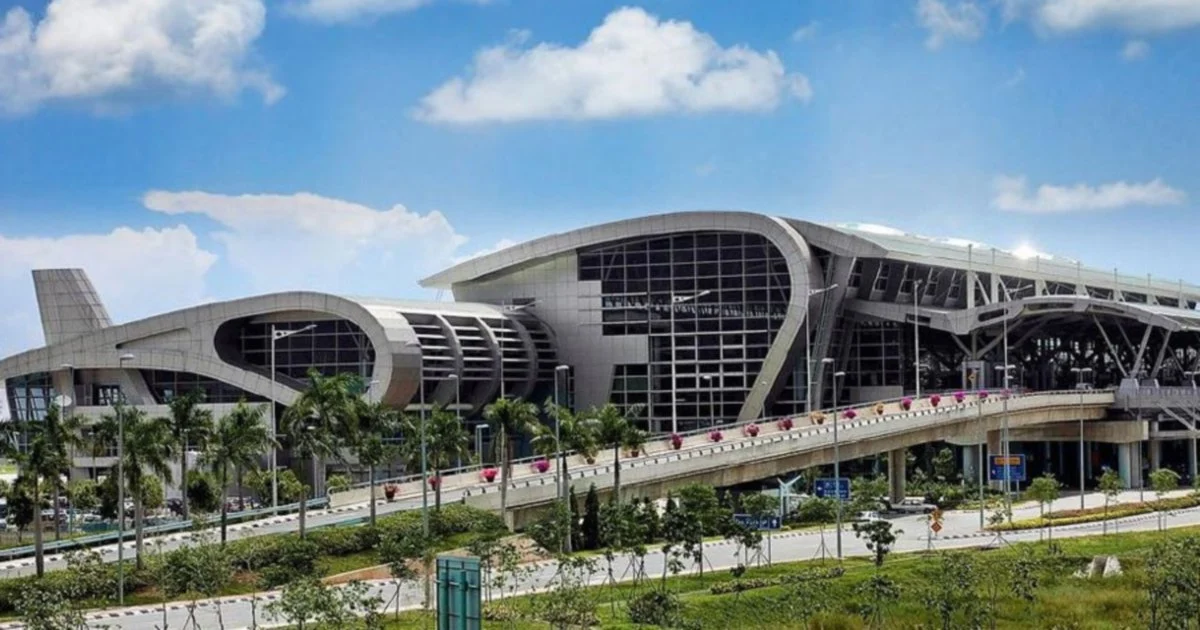
A nearly RM500 million expansion initiative for Kota Kinabalu International Airport remains stalled as federal authorities work to iron out property and operational site complications with the Sabah administration, according to Deputy Transport Minister Datuk Hasbi Habibollah. The project, which aims to enhance capacity and facilities at the gateway to Malaysian Borneo, cannot advance to the construction phase until these foundational matters are fully resolved between the two levels of government.
The nature of the land-related obstacles has not been explicitly detailed, but such complications at major infrastructure sites typically involve questions of land ownership, zoning classification, environmental clearance, or the relocation of existing structures and utilities. For a facility already operating at a significant scale, such issues can become particularly complex when expansion is contemplated, as additional space may require negotiating access to adjacent parcels or reclassifying land currently designated for other purposes.
Kota Kinabalu International Airport serves as a critical transport hub for Sabah, connecting the state's capital to domestic destinations across Malaysia and international gateways including Southeast Asian capitals. The airport handles millions of passengers annually and plays a vital role in supporting tourism, business travel, and the state's broader economic activities. As visitor arrivals to Sabah and Malaysia generally continue to recover and grow following pandemic disruptions, airport capacity has become an increasingly pressing concern for planners.
The proposed enhancement represents one of several major airport development schemes underway across Malaysia as the government seeks to modernise aviation infrastructure in preparation for projected growth in passenger demand over the coming decade. Similar expansion projects at regional facilities have proven complex to execute, requiring coordination between federal authorities, state governments, local councils, and sometimes private operators depending on ownership structures and concession arrangements.
For Malaysian Borneo specifically, improved airport infrastructure carries particular strategic weight. Both Sabah and Sarawak serve as growing economic zones with expanding oil and gas industries, timber exports, agricultural production, and increasingly diversified tourism sectors. Efficient air connectivity underpins these activities and supports both foreign investment and regional development ambitions. Delays in expanding KKIA can therefore create bottlenecks that ripple across multiple economic sectors and dampen growth potential.
The Deputy Transport Minister's public acknowledgement of the stalled project indicates that both federal and state authorities recognise the importance of resolving outstanding matters expeditiously. Whether the complications involve technical disagreements over project scope, financial arrangements, or more fundamental questions about land governance will ultimately determine the timeline for moving forward. Transparency about these obstacles, while sometimes uncomfortable for officials, can help maintain confidence among stakeholders that a credible path forward exists.
Sabah's government has prioritised economic development and infrastructure investment in recent years as part of broader efforts to diversify revenue streams and reduce fiscal strain. The state has pursued agreements with federal authorities on various development initiatives, and the KKIA expansion sits within this broader negotiating context. How swiftly these particular land issues are resolved will likely depend on the political will of both levels of government to prioritise the project and commit resources to finding mutually acceptable solutions.
The RM500 million investment figure places this among the more substantial infrastructure commitments in Sabah's development pipeline. Once commenced, the project would likely generate employment during the construction phase and create operational opportunities in expanded facilities. For surrounding communities, such developments bring both opportunities and potential disruptions, making the resolution process important not only to government officials but to residents and businesses affected by airport operations.
International best practice suggests that early and sustained dialogue between all stakeholders—federal transport authorities, state government, airport operators, environmental agencies, and local communities—facilitates faster resolution of such complications. The fact that no specific timeline has been announced for resolving the current impasse suggests that negotiations may still be in preliminary stages or that complications are more entrenched than initially anticipated.
Looking ahead, stakeholders will be watching for updates on progress toward resolving these land and site matters. The Deputy Transport Minister's statement serves as both an acknowledgement that complications exist and an implicit commitment that federal authorities remain engaged in working toward a solution. For the aviation sector and Sabah's broader economic prospects, successfully clearing these hurdles and commencing the expansion project represents an important development milestone.

