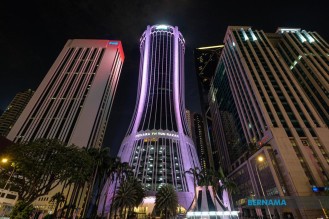
The Securities Commission Malaysia's expanded supervisory authority over Tabung Haji's investment portfolio marks a significant shift in how the country's pilgrimage fund manages its assets, following recommendations from a comprehensive inquiry into institutional failures that shook public confidence in recent years. This governance restructuring, announced by the government at a special sitting on August 11, reflects acknowledgement that TH requires substantially tighter oversight mechanisms to balance its competing obligations: generating competitive returns for savers, safeguarding capital, and maintaining liquidity reserves necessary to facilitate the annual haj pilgrimage for hundreds of thousands of Malaysian Muslims.
Dr Mohd Faisol Ibrahim, a senior lecturer in Islamic Economics and Banking at Universiti Sains Islam Malaysia, emphasises that the SC's involvement represents more than administrative reorganisation. Since TH operates as a non-banking intermediary collecting deposits from millions of Malaysians, depositors rightfully anticipate returns that remain competitive with conventional savings vehicles. The challenge lies in achieving this objective whilst adhering to investment standards and risk parameters that have historically proven inadequate, culminating in the financial difficulties that necessitated government intervention and the establishment of the Royal Commission of Inquiry.
The RCI's 211-page report, released publicly on July 29, documented systemic weaknesses spanning 2014 to 2020, revealing governance lapses, inadequate oversight mechanisms, and investment decisions that prioritised objectives beyond TH's core mandate. Among its 25 recommendations were proposals to prohibit active politicians from TH's board, establish independent appointment procedures, and separate the Religious Affairs and Finance ministerial portfolios' oversight responsibilities. These findings underscored how institutional drift and politicisation had compromised TH's fiduciary responsibilities to its depositors.
Under the new framework, TH's fund management and investment operations will operate within a supervisory architecture comparable to that governing other major financial institutions regulated by the SC. This means investment governance standards, risk-management protocols, and disclosure requirements must align with industry benchmarks rather than remaining subject to ad-hoc arrangements or political considerations. Such standardisation addresses a fundamental weakness identified in the RCI findings: the absence of rigorous, independent evaluation of investment proposals before capital deployment occurs.
Dr Mohd Faisol advocates for direct SC participation in TH's investment committee, ensuring that decisions reflect commercial merit and risk assessment rather than broader policy objectives disconnected from depositor interests. A critical distinction must exist between TH's legitimate investment function and governmental economic priorities. The scholar notes that tightening standards governing solvency, reserves, asset composition, and profit distribution mechanisms remains essential to prevent recurrence of the institutional trauma that left depositors deeply concerned about their savings. Without such fortification, confidence in TH's stewardship cannot be convincingly restored.
The proposed establishment of dual oversight structures—an investment committee and a risk committee—creates systematic checks and balances preventing unilateral decision-making. Rather than permitting TH management to independently determine capital allocation, such arrangements necessitate multi-party involvement. A special committee comprising SC representatives, Bank Negara Malaysia officials, and Ministry of Finance personnel would jointly evaluate significant investment proposals, incorporating perspectives spanning capital markets regulation, monetary policy, and fiscal considerations. This distributed accountability model substantially reduces the likelihood of investment decisions driven by considerations extraneous to depositor protection and returns maximisation.
Bank Negara Malaysia's expanded role as principal adviser to TH also warrants strengthening. The central bank possesses specialised capacity in strategic risk management and macroeconomic analysis necessary for evaluating TH's long-term asset sustainability. As domestic and international economic conditions fluctuate—particularly concerning the ringgit's strength and global financial stability—informed central bank guidance becomes invaluable in calibrating TH's portfolio composition and leverage ratios. Enhanced coordination between BNM and SC ensures that monetary stability considerations and capital markets oversight operate in tandem rather than isolation.
Financial restructuring simultaneously demands attention to TH's balance sheet resilience. Dr Mohd Faisol recommends examining whether reserve adequacy thresholds require adjustment, potentially through modest increases in minimum savings requirements for prospective haj pilgrims. Such measures must account for the ringgit's trajectory and prevailing global economic uncertainties that could affect investment valuations and repatriation of overseas funds. These adjustments should undergo careful calibration to avoid imposing undue burdens on middle and lower-income Malaysians whilst ensuring TH maintains sufficient financial buffers against market volatility.
The implementation of these recommendations demonstrates governmental responsiveness to the RCI's findings and recognition that TH's fundamental purpose—facilitating Muslims' religious obligation whilst respecting their financial interests—cannot be subordinated to extraneous considerations. Minister in the Prime Minister's Department (Religious Affairs) Dr Zulkifli Hasan confirmed that haj management functions remain within the Religious Affairs portfolio whilst investment supervision transitions to SC oversight, clarifying institutional roles and reducing conflicts of interest inherent in single-ministry control.
For Malaysian depositors, the SEC's enhanced supervisory role offers tangible reassurance that their accumulated haj savings will be managed according to standards equivalent to those protecting other major institutional investors. The multi-layered governance structure creates transparent pathways for investment evaluation, risk identification, and performance accountability. This restructuring acknowledges that TH's previous institutional model, whilst superficially attractive in concentrating administrative authority, ultimately proved insufficient for protecting millions of Malaysians' long-term financial interests.
The broader Southeast Asian context renders Malaysia's TH governance reform particularly significant. As other Muslim-majority nations operate analogous pilgrimage funds and Islamic finance institutions, Malaysia's approach to reconciling commercial investment discipline with religious and social mandates offers relevant lessons. The integration of SC oversight mechanisms, central bank involvement, and ministerial coordination demonstrates how contemporary governance frameworks can strengthen institutional integrity without compromising core mission objectives.
Implementing these recommendations requires sustained political commitment beyond the reform announcement phase. Previous governance initiatives have encountered resistance from entrenched interests or competing policy priorities. The SC's supervisory authority must be accompanied by adequate resources, decision-making autonomy, and protection from pressure to accommodate considerations beyond investment merit and depositor protection. Long-term restoration of public confidence in TH depends not merely on structural reforms but on demonstrable commitment to prioritising depositor interests consistently across investment cycles and political transitions.

