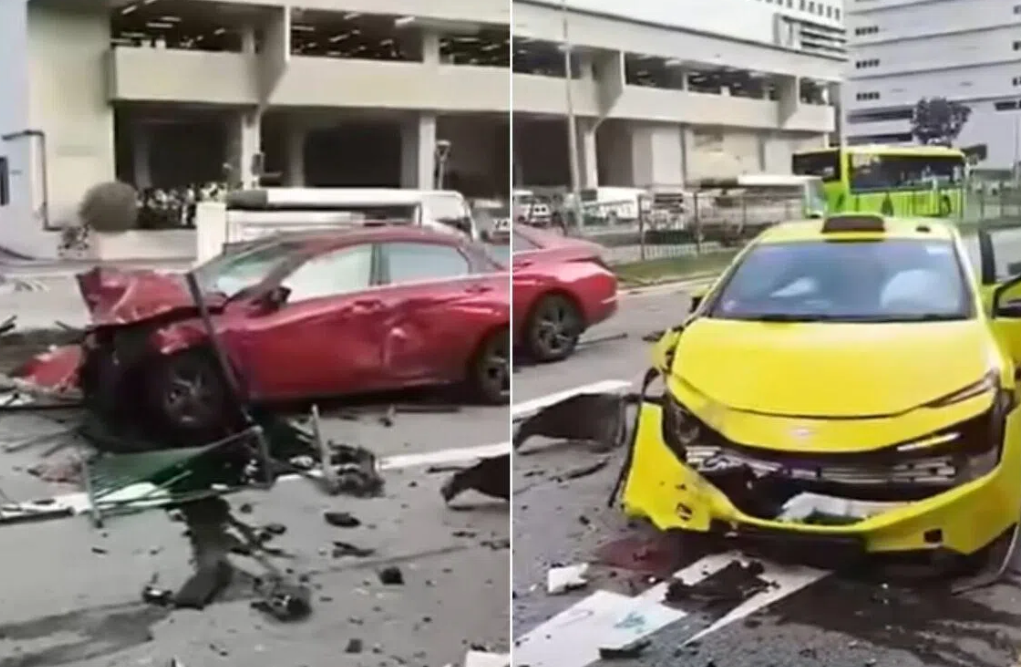
A 36-year-old man has been brought before Singapore courts on a series of serious traffic and drug-related offences stemming from a collision in Kallang that left two people injured. Mohamed Firdouz Mohamed Akram was charged on June 19 with multiple counts, including operating a vehicle while impaired by methamphetamine—colloquially known as "Ice"—and driving without holding a valid Class 3 licence.
The incident unfolded on the morning of June 17 when Firdouz allegedly operated a private vehicle along Kallang Bahru at approximately 8am. According to police investigations and court documentation, he had consumed Ice prior to driving. His impaired state allegedly led to a loss of vehicle control, culminating in a collision with a taxi ferrying two passengers. The taxi driver, aged 60, sustained chest pains from the impact, whilst his 43-year-old passenger suffered tailbone injuries requiring medical attention.
What began as a traffic accident quickly evolved into a criminal investigation when Firdouz did not remain at the scene. Police records indicate he abandoned his vehicle immediately after the collision and fled before officers arrived at Kallang Bahru. The hit-and-run aspect of the incident prompted a broader investigation into his identity and whereabouts. Authorities moved swiftly, establishing his identity within hours of receiving the initial report.
During the search of Firdouz's abandoned vehicle, police discovered items that expanded the scope of charges he would face. Officers seized what they described as suspected drugs, drug-related paraphernalia, vaporisers, and a knuckleduster from inside the car. These items would later form the basis for additional weapon possession charges filed against him in court. The discovery suggested a pattern of behaviour beyond the single traffic incident and raised questions about his activities prior to the collision.
The investigation took a further turn when court documents revealed that police located Firdouz at the Village Hotel Katong on Marine Parade Road approximately five hours after the accident report. When apprehended in a hotel room at around 1pm on June 17, he was found in possession of two knives. This discovery led to two separate weapon possession charges being added to his mounting legal troubles. The relatively swift apprehension—within five hours of the initial report—suggests police deployed focused investigative resources to locate and detain him.
Driving under the influence of controlled substances represents a particularly grave offence under Singapore law, reflecting heightened road safety concerns. The charge of operating a motor vehicle whilst impaired by methamphetamine carries potential penalties of up to one year imprisonment, a fine not exceeding SGD 10,000, or both. This provision underscores the seriousness with which authorities view drug-impaired driving, treating it as a public safety hazard comparable to alcohol-induced driving offences in many jurisdictions.
The dangerous driving charges—specifically causing injuries to two individuals through reckless vehicle operation—carry their own substantial penalties. Conviction on these counts could result in imprisonment of up to one year combined with fines ranging between SGD 2,000 and SGD 10,000 per offence. For Malaysian and regional observers, Singapore's approach demonstrates a rigorous legal framework designed to deter substance-impaired driving and protect road users from preventable harm.
The case reflects broader concerns across Southeast Asia regarding drug-impaired driving, a phenomenon that has become increasingly visible as methamphetamine use spreads through urban centres. The incident serves as a cautionary example of how drug consumption can translate into immediate threats to public safety when individuals operate heavy machinery such as vehicles. The involvement of a taxi and civilian passengers highlights how such incidents extend consequences beyond the impaired driver to innocent third parties.
Singapore's legal system distinguishes between drug possession and drug-induced driving impairment, treating the latter as a traffic violation rather than a pure narcotics offence. This classification recognises that the primary harm stems from impaired road usage rather than substance possession alone. For Malaysian policymakers and road safety advocates, Singapore's integrated approach—combining drug enforcement with traffic law—offers lessons in comprehensive public safety strategy.
The weapon possession charges add complexity to Firdouz's legal situation, though their precise connection to the Kallang incident remains unclear from court documents. The discovery of knives in a hotel room suggests activities extending beyond the morning's collision, potentially indicating a broader pattern of concerning behaviour. Whether these weapons charges relate directly to the collision or represent separate investigative findings will likely emerge as the case progresses.
Firdouz's court case will be mentioned again on July 17, providing an opportunity for further legal proceedings, possible plea negotiations, or additional evidence presentation. The interval between the June 19 initial charging and the July 17 court mention allows for preparation by both prosecution and defence counsel. This timeline reflects Singapore's criminal justice procedures, which typically allow several weeks between initial charges and substantive hearings.
For road safety advocates across Southeast Asia, particularly in Malaysia where methamphetamine use has emerged as a significant public health concern, this case underscores the intersection of drug policy and traffic safety. The Kallang collision exemplifies how substance abuse directly translates into tangible risks for ordinary commuters and transport workers. As regional countries grapple with rising drug consumption rates, integrating drug prevention messaging into road safety campaigns may prove increasingly important for reducing incidents like the one that injured the Kallang taxi passengers.

%22%2F%3E%3C%2Fpattern%3E%3C%2Fdefs%3E%3Crect%20width%3D%22100%25%22%20height%3D%22100%25%22%20fill%3D%22url(%23ph2re9gg)%22%2F%3E%3Crect%20width%3D%22100%25%22%20height%3D%22100%25%22%20fill%3D%22url(%23ph2re9gp)%22%2F%3E%3Ctext%20x%3D%2250%25%22%20y%3D%2250%25%22%20text-anchor%3D%22middle%22%20dominant-baseline%3D%22central%22%20fill%3D%22rgba(255%2C255%2C255%2C0.95)%22%20font-family%3D%22Georgia%2C%20'Times%20New%20Roman'%2C%20serif%22%20font-weight%3D%22700%22%20font-size%3D%22194%22%20letter-spacing%3D%22-0.02em%22%3ETeacher%3C%2Ftext%3E%3C%2Fsvg%3E)
%22%2F%3E%3C%2Fpattern%3E%3C%2Fdefs%3E%3Crect%20width%3D%22100%25%22%20height%3D%22100%25%22%20fill%3D%22url(%23phu80ug)%22%2F%3E%3Crect%20width%3D%22100%25%22%20height%3D%22100%25%22%20fill%3D%22url(%23phu80up)%22%2F%3E%3Ctext%20x%3D%2250%25%22%20y%3D%2250%25%22%20text-anchor%3D%22middle%22%20dominant-baseline%3D%22central%22%20fill%3D%22rgba(255%2C255%2C255%2C0.95)%22%20font-family%3D%22Georgia%2C%20'Times%20New%20Roman'%2C%20serif%22%20font-weight%3D%22700%22%20font-size%3D%22136%22%20letter-spacing%3D%22-0.02em%22%3EProsecuti%E2%80%A6%3C%2Ftext%3E%3C%2Fsvg%3E)