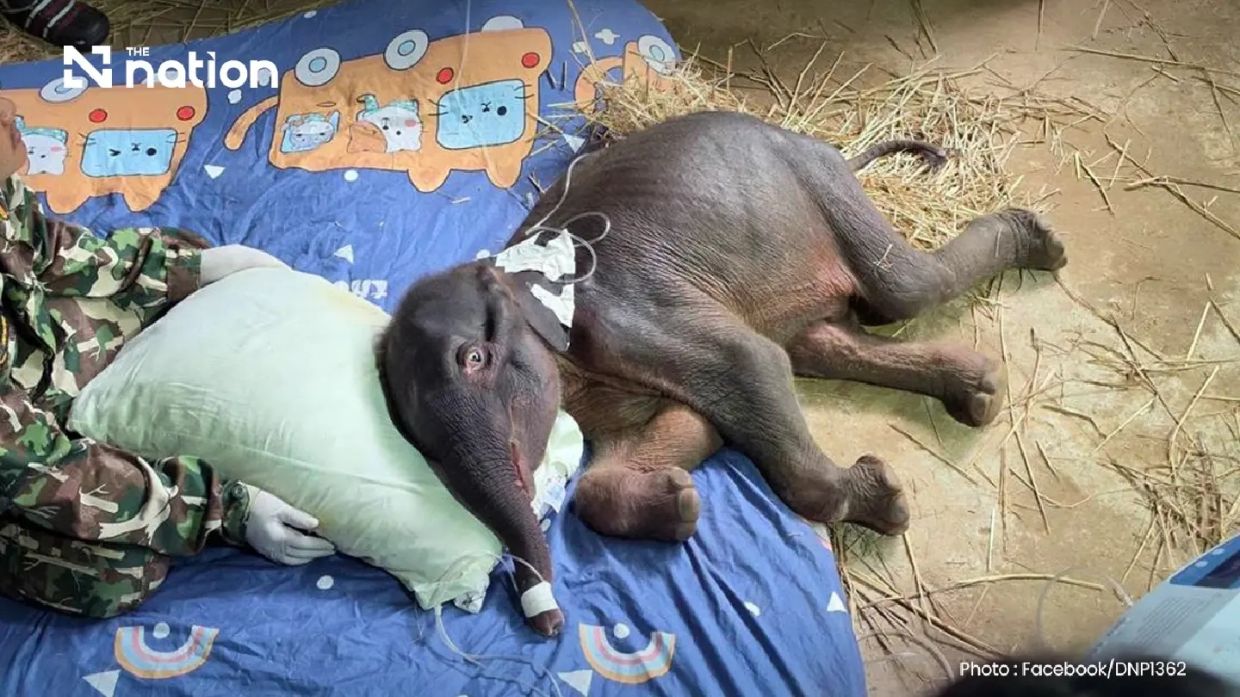
Jiew Sai Yok, a young wild elephant separated from her herd, died peacefully in the early hours of Tuesday morning at Sai Yok National Park in Kanchanaburi province after a week-long rescue effort. The Department of National Parks, Wildlife and Plant Conservation announced the tragic outcome, leaving veterinarians and park officials grieving the loss of an animal they had fought to save. Initial investigations by the veterinary team point to acute kidney failure as the probable cause, though officials plan a full necropsy to establish the exact circumstances of her death.
The calf's ordeal began on July 30 when local residents spotted her wandering alone near the Huai Mae Nam Noi riverbank, a remote area difficult to access by conventional means. Lacking any sign of her mother or the broader elephant family group, villagers and officials recognised immediately that this young animal faced grave danger. The rescue team deployed a boat to navigate the waterway and retrieve the frightened calf, transporting her to a location where veterinarians could begin their initial assessment. Early indications suggested that Jiew Sai Yok had been abandoned or separated from her herd approximately two days prior to discovery, leaving her vulnerable and increasingly distressed.
During that first critical night, rescue workers maintained a vigil alongside the calf, documenting her periodic cries for her mother. These plaintive calls echoed unanswered through the forest darkness, a stark reminder of the isolation the young elephant was experiencing. The team harboured hope that the mother elephant might locate her offspring by following these distress signals, but as dawn broke on July 31, no herd appeared. This realisation prompted officials to escalate their intervention, dispationing a full veterinary team to evaluate the calf's physical condition and determine the best course of action for her survival.
The veterinarian's examination revealed a deeply compromised animal. Jiew Sai Yok exhibited severe dehydration alongside multiple wounds, including abrasions and sores inside her mouth roughly the size of a Thai 10-baht coin. Her trunk bore blisters with necrotic tissue, whilst her navel area showed infection. Dark yellow-red urine indicated possible systemic infection or profound dehydration, and loose, foul-smelling faeces suggested gastrointestinal distress. Conjunctivitis caused by insects around her eyes added to her suffering, and her overall demeanour suggested an animal in considerable pain. Despite these alarming findings, the calf remained conscious and receptive to milk supplementation, prompting officials to transfer her immediately to Sai Yok National Park headquarters for intensive care.
There, a dedicated medical team established round-the-clock monitoring and treatment protocols. Veterinarians administered intravenous fluids to combat dehydration and provided continuous oxygen support to sustain her vital functions. Every two to three hours, the calf was offered milk, which she consumed in quantities between 350 and 500 millilitres, demonstrating a fighting spirit despite her physical weakness. Her condition remained volatile, however, with fluctuating energy levels and persistent diarrhoea suggesting that internal complications were developing beyond the surface injuries the team could treat directly. The laboratory blood work undertaken during this period already hinted at renal dysfunction, a warning sign that the veterinarians monitored with growing concern.
The situation deteriorated overnight. At approximately 2am on Tuesday, Jiew Sai Yok fell into sleep from which she would not awaken. Her body, already compromised by dehydration, infection, and probable congenital anomalies, finally surrendered. The veterinary team immediately attempted full resuscitation, administering every intervention at their disposal, but their efforts proved unsuccessful. The calf passed away peacefully, her struggle ended after just five days in human care.
The Department of National Parks believes that acute kidney failure, supported by laboratory evidence, was the primary cause of death. However, officials have not ruled out congenital internal organ abnormalities as a contributing or underlying factor. These defects—present from birth—might have rendered the calf unable to survive independently of her mother's care, making separation effectively a death sentence regardless of human intervention. A full necropsy and comprehensive laboratory analysis of tissue samples will be conducted to provide definitive answers about what medical condition proved insurmountable.
This tragedy carries broader implications for wildlife management across Southeast Asia. Elephant populations throughout Thailand and the wider region face increasing pressure from habitat loss and fragmentation, forcing family groups into smaller ranges where separation incidents become more common. The level of veterinary expertise deployed at Sai Yok demonstrates the region's capacity for elephant conservation, yet also underscores the limitations of rescue efforts when animals arrive in advanced stages of physiological compromise. Young calves separated from their mothers lack not only nutrition but psychological stability, creating a complex medical challenge that even well-equipped facilities struggle to overcome.
The Department of National Parks extended official recognition and gratitude to all veterinarians and rescue personnel who dedicated themselves to Jiew Sai Yok's welfare. These professionals faced the emotional difficulty inherent in intensive animal care knowing that success remained uncertain from the outset. Their commitment reflected the deep institutional values of wildlife protection agencies across Thailand, values that extend beyond individual cases to encompass broader conservation philosophy. Yet the outcome serves as a sobering reminder that sometimes, despite human knowledge and technology, the bonds between wild animals and their natural families cannot be successfully replicated or replaced.

