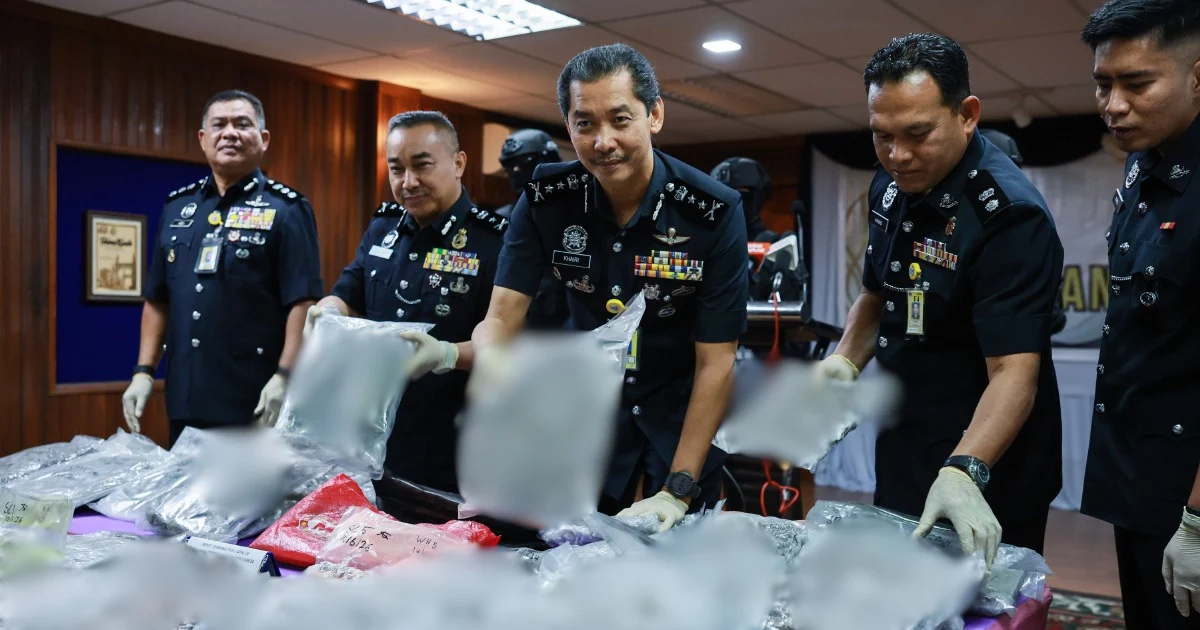
Police have arrested two brothers in Kuala Terengganu on suspicion of operating a significant drug distribution operation from their residential property. The suspects, held in connection with the discovery of narcotics worth RM1.76 million, were allegedly using their residence in Kampung Duyong Besar as a central storage and distribution point for controlled substances.
The raid, conducted at the brothers' home address, resulted in one of the state's larger drug seizures in recent months. Officers recovered a substantial cache of drugs, with the street value of the confiscated items reaching RM1.76 million. The scale of the operation suggests the suspects may have been supplying dealers across multiple districts in the state, rather than engaging in simple possession for personal consumption.
House-based drug operations have become increasingly common across Malaysia as criminals adapt their distribution networks to avoid detection. Residential locations offer apparent legitimacy to police observation, allowing suspects to operate under the guise of ordinary family activity. The use of private homes as storage facilities enables distributors to maintain larger quantities of narcotics while minimising the conspicuous movement of substances that would be evident at dedicated commercial operations.
This bust highlights the ongoing challenges faced by Terengganu's police force in combating organised drug trafficking. The state, with its coastline and port facilities, has historically served as a potential entry point for international drug smuggling operations. The proximity to major distribution hubs in Peninsular Malaysia makes the state strategically important for traffickers seeking to establish supply chains.
The arrest of the two brothers demonstrates the effectiveness of intelligence-led policing, suggesting that local authorities had monitored the residence and identified suspicious activity patterns before executing the raid. Family-based operations, where brothers or relatives work together, are particularly difficult to detect as they can operate with greater secrecy and trust than unaffiliated criminal associates.
The implications for the Malaysian drug enforcement landscape are significant. Authorities have indicated that dismantling residential drug operations requires sustained intelligence gathering and coordination between state and federal agencies. The RM1.76 million seizure represents not merely the removal of contraband from circulation, but also represents a direct financial loss to trafficking organisations and interrupts supply chains to end users throughout the state.
Investigators are likely examining the brothers' communication records, financial transactions, and supplier contacts to map the broader distribution network. Such investigations often reveal connections to larger syndicates and can lead to further arrests upstream and downstream in the trafficking chain. The location of the residence in Kampung Duyong Besar, a fishing village near Kuala Terengganu's port area, may provide clues about how the contraband entered Malaysia and which international trafficking groups may be involved.
For Malaysian readers, particularly those in Terengganu and neighbouring states, this arrest underscores the reality that drug trafficking operations exist within residential neighbourhoods rather than solely in isolated or secretive locations. Community vigilance regarding unusual activity—unexpected visitors, irregular hours, or suspicious deliveries—remains a critical component of neighbourhood safety and effective law enforcement.
The case also reflects broader challenges in managing the supply side of Malaysia's ongoing drug crisis. While enforcement actions are necessary, the consistent emergence of residential drug operations indicates that profits remain substantial enough to incentivise individuals to accept significant criminal risks. The RM1.76 million street value suggests healthy demand from consumers across Terengganu, despite existing penalties and enforcement efforts.
The investigation into the brothers' case will proceed through Malaysia's criminal justice system, with charges likely to be brought under the Dangerous Drugs Act. Depending on the quantity and type of substances seized, the suspects may face mandatory minimum sentences if convicted. Terengganu's courts have been progressively applying stringent sentences in drug trafficking cases, reflecting the judiciary's commitment to deterring high-level distribution operations.
Police have emphasised the importance of public cooperation in identifying drug-related criminal activity. Anonymous tip-off channels remain available for citizens who suspect narcotics operations in their communities. This case demonstrates that such information, when acted upon professionally and carefully, can result in significant disruptions to trafficking networks and the removal of dangerous substances from circulation.