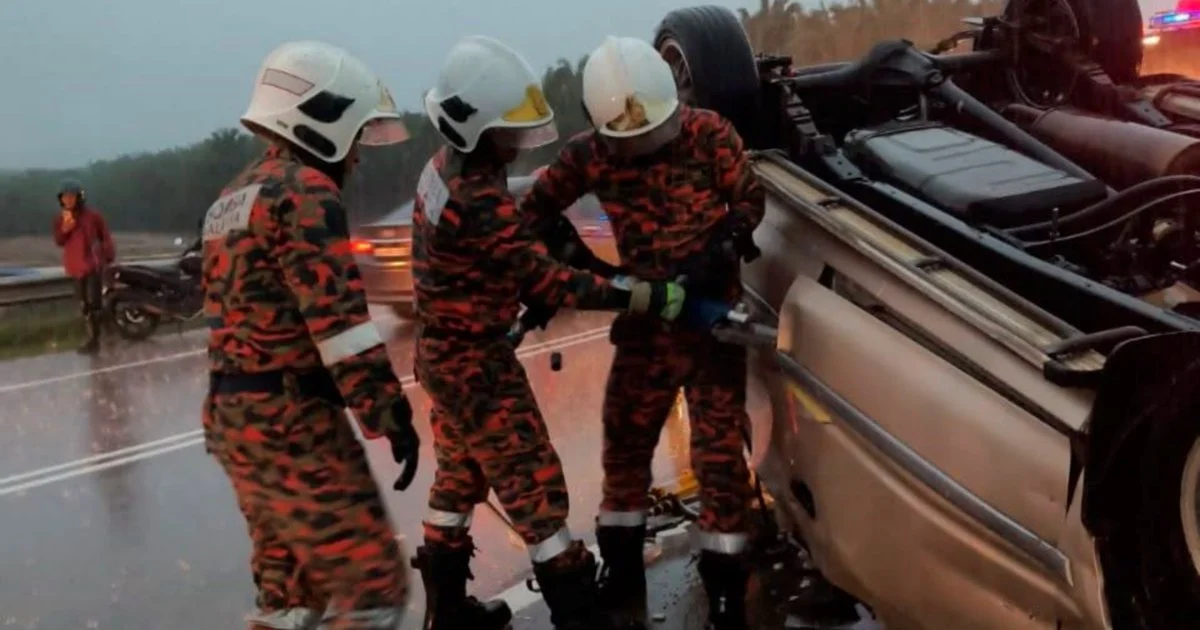
A tragic sequence of traffic incidents has claimed four lives in Pahang, with two sisters among the fatalities following separate crashes in Maran and Pekan that unfolded in quick succession today.
The close timing of the two accidents, occurring within less than an hour of each other, has raised fresh concerns about road safety in the state, where fatal collisions continue to pose a significant public health threat. Local authorities responded to both incidents, which have drawn attention to the circumstances surrounding such high-impact crashes and the need for enhanced preventative measures across key traffic corridors.
The Maran and Pekan areas have long witnessed considerable traffic volumes due to their proximity to major highways and commercial routes connecting Pahang to neighbouring states. These regions serve as transit points for both commercial vehicles and private motorists, creating conditions where accidents can escalate quickly when safety protocols are not rigorously followed or when vehicles encounter mechanical failures.
Road fatalities involving multiple family members remain particularly distressing cases that resonate deeply within communities. The loss of the two sisters underscores the indiscriminate nature of traffic accidents, which can transform ordinary journeys into tragedies within moments. Such incidents often prompt renewed conversations about driver awareness, vehicle maintenance standards, and the enforcement of traffic regulations that can mean the difference between life and death.
Authorities typically conduct comprehensive investigations following fatal crashes to establish contributing factors, whether mechanical failure, driver error, adverse weather conditions, or violations of traffic laws. These examinations provide crucial data for understanding patterns and developing targeted interventions to reduce future casualties.
Malaysia's road fatality rate remains a persistent challenge for public health officials and transportation authorities. While national campaigns promoting safety practices have gained momentum in recent years, the frequency of fatal accidents—particularly multi-vehicle incidents—suggests that structural approaches involving infrastructure improvements, stricter enforcement, and comprehensive driver education continue to require significant investment and coordination.
The convergence of two fatal incidents within a compressed timeframe often prompts highway authorities to review traffic management strategies in affected areas. Speed enforcement, visibility enhancements, emergency response protocols, and hazard warning systems all form part of a comprehensive safety ecosystem that, when properly implemented, can substantially reduce collision severity and mortality rates.
Family members and communities affected by these tragedies face profound grief and lasting trauma. Beyond the immediate loss, such accidents create ripple effects across workplaces, schools, and social networks, underscoring the broader societal costs of road insecurity that extend far beyond the individuals directly involved in the collisions.
For Malaysian motorists and residents across Pahang, these incidents serve as sobering reminders of the importance of defensive driving practices, vehicle inspection protocols, and adherence to speed limits and traffic signals. The unpredictability of road conditions and other drivers necessitates constant vigilance, particularly during peak travel periods when traffic volumes increase and the risk of cascading accidents escalates.
The investigation into both crashes will likely yield recommendations for local stakeholders, potentially influencing future decisions about road design, traffic calming measures, and the deployment of emergency response resources in the affected districts. Such post-incident analyses contribute incrementally to the body of knowledge about preventing similar tragedies in the future.
Regional highway safety coordinators continue to emphasize the critical importance of immediate reporting systems, proper first aid response, and efficient medical transport networks in minimising fatalities when accidents do occur. The speed of emergency service dispatch and the availability of trauma care facilities can substantially influence survival rates following serious collisions.
As investigations proceed into the specific circumstances of both accidents, authorities and public health advocates will undoubtedly use these incidents to reinforce safety messaging and encourage compliance with traffic regulations. The loss of four lives, including two sisters whose connection emphasizes the familial dimensions of such tragedies, represents a significant toll that the broader community must collectively work to prevent through sustained commitment to road safety principles and infrastructure improvements.

%22%2F%3E%3C%2Fpattern%3E%3C%2Fdefs%3E%3Crect%20width%3D%22100%25%22%20height%3D%22100%25%22%20fill%3D%22url(%23ph3xy1tg)%22%2F%3E%3Crect%20width%3D%22100%25%22%20height%3D%22100%25%22%20fill%3D%22url(%23ph3xy1tp)%22%2F%3E%3Ctext%20x%3D%2250%25%22%20y%3D%2250%25%22%20text-anchor%3D%22middle%22%20dominant-baseline%3D%22central%22%20fill%3D%22rgba(255%2C255%2C255%2C0.95)%22%20font-family%3D%22Georgia%2C%20'Times%20New%20Roman'%2C%20serif%22%20font-weight%3D%22700%22%20font-size%3D%22272%22%20letter-spacing%3D%22-0.02em%22%3EFahmi%3C%2Ftext%3E%3C%2Fsvg%3E)