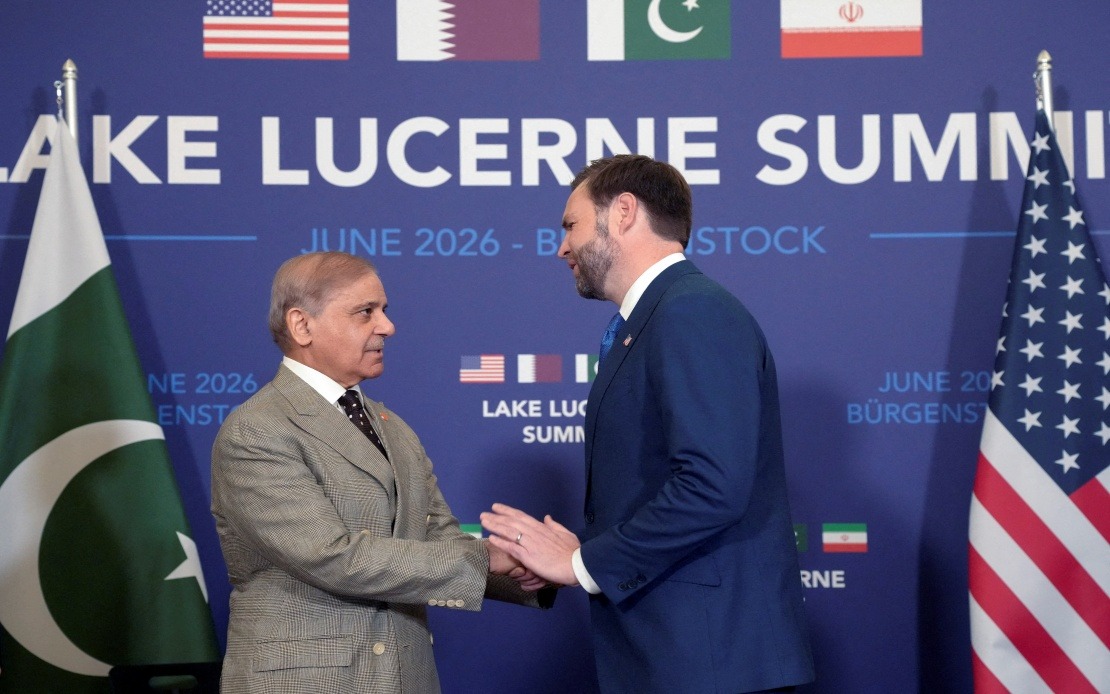
A significant diplomatic engagement between Washington and Islamabad got underway on Sunday at Burgenstock in Switzerland, with Vice President JD Vance leading the American delegation in meetings with Pakistan's Prime Minister Shehbaz Sharif and Army Chief Field Marshal Asim Munir. The encounter marked a high-level conversation between the two nations, with special envoys Steve Witkoff and Jared Kushner also participating in the discussions held at the Swiss resort. The timing of these consultations underscores the intricate web of regional relationships at play as major geopolitical actors navigate complex security and diplomatic challenges in South and West Asia.
The meeting in Burgenstock occurred alongside broader technical-level negotiations involving the United States, Iran, and mediating nations Pakistan and Qatar. These discussions are focused on implementing the terms of a recently agreed memorandum signed between Washington and Tehran in the early hours of June 18. The convergence of these separate but interconnected diplomatic tracks in a single location suggests coordinated efforts to manage both bilateral relationships and multilateral security arrangements in the region. For Malaysia and other Southeast Asian nations monitoring developments in West Asia, the involvement of Pakistan as a mediator carries particular significance given its strategic location and influence in regional affairs.
The memorandum signed between the United States and Iran represents a significant diplomatic breakthrough, establishing mechanisms to end military hostilities that erupted on February 28 of this year. The agreement goes beyond mere ceasefire arrangements, incorporating specific timelines and commitments from both parties. Notably, the United States has committed to lifting its naval blockade that has constrained Iranian shipping activities, while Tehran has pledged to restore maritime commerce through the critical Strait of Hormuz—a chokepoint through which millions of barrels of global oil transit daily. These provisions have direct implications for international energy markets and supply chains that affect economies throughout Southeast Asia, including Malaysia's own energy security considerations.
Central to the agreement is Iran's commitment to abstain from pursuing nuclear weapons development, a cornerstone of Western security concerns in the Middle East. However, rather than resolving the nuclear question within the current framework, the parties have established a separate negotiating track dedicated specifically to this matter. The 60-day timeline established for these follow-up discussions suggests that while both sides recognize the urgency of resolving the nuclear dimension, they have chosen to compartmentalize negotiations to facilitate progress. This approach reflects diplomatic pragmatism, allowing parties to secure quick wins on military and maritime issues while tackling the more contentious nuclear proliferation question through dedicated channels.
For Iran, the primary incentive driving participation in these negotiations is sanctions relief. The lifting of American economic sanctions represents enormous potential for Tehran's economy, which has been severely constrained by years of international restrictions. Iranian officials have made clear that comprehensive sanctions relief forms a non-negotiable component of any durable settlement. This fundamental asymmetry—with Iran seeking economic reopening and the US seeking security assurances—defines the underlying negotiating dynamic and will shape subsequent discussions on nuclear matters.
Pakistan's role as a mediator in these negotiations reflects its unique position within regional geopolitics. Situated between Iran and the Arabian Sea, with significant Shia Muslim populations and deep economic ties to Gulf states, Pakistan occupies a delicate diplomatic position. The participation of Prime Minister Shehbaz Sharif and Field Marshal Asim Munir, who respectively represent civilian and military leadership, underscores the institutional seriousness with which Islamabad approaches these discussions. The Pakistani military's involvement signals that security considerations—including strategic stability in the broader region—remain paramount concerns for Rawalpindi's establishment.
The choice of Switzerland as a neutral venue for these discussions reflects international diplomatic convention. Burgenstock, located in the heart of the Alps, has historically served as a location for sensitive talks between parties seeking confidentiality and neutrality. The decision to conduct technical-level negotiations behind closed doors protects the negotiators from domestic political pressures and allows for frank discussions without fear of immediate public backlash or nationalist posturing. This confidentiality extends to the substance of discussions, meaning observers must interpret intentions through the carefully worded statements released by official channels.
The broader context of these negotiations involves the structural realignment occurring across West Asia and South Asia. The involvement of Qatar alongside Pakistan as a mediator reflects Doha's emergence as a key diplomatic player in regional affairs, particularly following its role in Afghanistan-related negotiations. The convergence of American, Iranian, Pakistani, and Qatari diplomacy in a single location demonstrates how multilateral frameworks are being constructed to address interlocking security challenges that no single nation can resolve independently. For Malaysia, observing these dynamics provides insights into how other developing nations navigate great power competition and regional security concerns.
The success or failure of these negotiations will reverberate far beyond the immediate parties involved. A durable agreement normalizing relations between the United States and Iran could fundamentally reshape Middle Eastern politics, potentially reducing tensions that have spiked periodically over the past two decades. Conversely, a breakdown in talks could trigger renewed escalation, threatening global energy markets and regional stability. Southeast Asian nations, including Malaysia, have significant economic interests in maintaining stable access to Middle Eastern oil and maintaining secure shipping lanes through the Indian Ocean. The ongoing Strait of Hormuz disputes therefore constitute genuine concerns for regional governments attempting to secure energy supplies for growing populations.
The technical-level nature of these Burgenstock discussions suggests that negotiators are attempting to operationalize the broad commitments made in the June 18 memorandum. Working groups likely focus on precise implementation details: the timeline for blockade removal, verification mechanisms for shipping normalization, and the operational procedures for nuclear verification inspections. Such granular negotiation work often proves more challenging than reaching headline agreements, as parties must reconcile competing interests and build mutual confidence through concrete steps. The presence of high-level officials like Vice President Vance indicates that Washington considers these discussions sufficiently important to warrant personal involvement from the nation's second-highest executive.
The 60-day nuclear negotiating window provides a defined timeframe within which substantial progress must occur. This compressed schedule reflects mutual recognition that prolonged uncertainty serves neither party's interests. However, nuclear proliferation represents a technically complex and politically sensitive issue where verification challenges and historical mistrust could easily derail progress. Pakistan's presence at these talks carries special weight, given its own nuclear weapons capability and its knowledge of both American security concerns and Iranian perspectives on regional security architecture.
Looking forward, the implications for regional stability depend heavily on whether the framework established at Burgenstock survives its initial test phase. If these technical-level discussions produce concrete agreements on blockade removal and maritime commerce restoration, momentum may build toward resolving nuclear questions. Success would represent a significant diplomatic achievement, potentially opening space for broader regional cooperation. Failure would likely trigger renewed escalation, benefiting neither Washington nor Tehran and creating spillover instability affecting nations throughout the broader region, including those in Southeast Asia dependent on stable Middle Eastern relations.
%22%2F%3E%3C%2Fpattern%3E%3C%2Fdefs%3E%3Crect%20width%3D%22100%25%22%20height%3D%22100%25%22%20fill%3D%22url(%23ph5pwjeg)%22%2F%3E%3Crect%20width%3D%22100%25%22%20height%3D%22100%25%22%20fill%3D%22url(%23ph5pwjep)%22%2F%3E%3Ctext%20x%3D%2250%25%22%20y%3D%2250%25%22%20text-anchor%3D%22middle%22%20dominant-baseline%3D%22central%22%20fill%3D%22rgba(255%2C255%2C255%2C0.95)%22%20font-family%3D%22Georgia%2C%20'Times%20New%20Roman'%2C%20serif%22%20font-weight%3D%22700%22%20font-size%3D%22226%22%20letter-spacing%3D%22-0.02em%22%3ELegacy%3C%2Ftext%3E%3C%2Fsvg%3E)