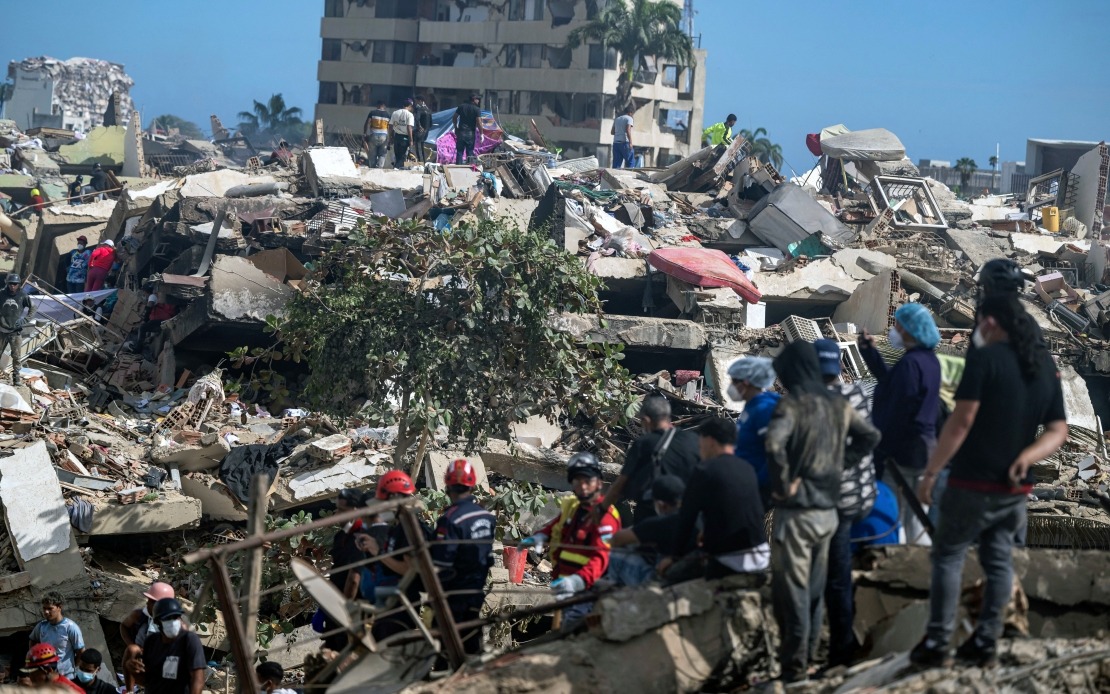
The humanitarian crisis unfolding in northern Venezuela has deepened considerably as officials confirmed on Wednesday that the destructive twin earthquakes that devastated the region on June 24 have claimed 2,295 lives. National Assembly President Jorge Rodriguez disclosed the mounting casualty figures during a televised national briefing, underscoring the catastrophic scale of what has become one of South America's most severe seismic disasters in recent memory.
Beyond the confirmed deaths, the seismic event has left a broader trail of human suffering across the affected territories. Medical facilities in the region have documented 11,267 injured persons receiving treatment, while authorities have registered 12,841 individuals displaced from their homes and unable to return to damaged properties. The scale of displacement reflects not merely the immediate physical destruction but also the longer-term disruption to housing infrastructure that will require sustained rebuilding efforts across multiple Venezuelan municipalities.
The rescue and recovery operations mobilized across the devastated zones represent an unprecedented international collaborative effort. More than 4,000 emergency personnel drawn from various nations have been actively engaged in extraction work, and their coordinated efforts have yielded significant results thus far. Rescue teams have successfully extracted 6,461 survivors from the wreckage of collapsed buildings, demonstrating both the effectiveness of rapid international deployment and the tragic reality that many people remain trapped or unaccounted for beneath fallen structures.
The geological aftermath of the initial seismic event continues to reshape the physical landscape and complicate recovery operations. Since the initial twin shocks measured at 7.2 and 7.5 magnitudes struck on June 24, seismologists have documented 782 separate aftershocks reverberating through the affected region. While technical analysis indicates that both the frequency of these tremors and their subterranean intensity have shown measurable decline over the preceding 48 hours, the continued seismic activity presents persistent hazards to rescue personnel and survivors sheltering in damaged structures.
Government officials have struck a cautious tone regarding the trajectory of the seismic threat. Rodriguez noted that while indicators suggest the worst may have passed, the danger has not been fully eliminated, and citizens must exercise vigilance around structurally compromised buildings that risk sudden collapse. This warning carries particular weight for an impoverished nation where many people may lack access to stable shelter and face the agonizing choice between remaining in damaged homes or seeking precarious refuge elsewhere.
Satellite-based damage assessments have illuminated the staggering infrastructure destruction inflicted by the earthquakes. Analysis of NASA satellite imagery indicates that over 58,000 buildings across the impacted region sustained either severe damage or complete destruction. This figure suggests that the official casualty count, while devastating, may understate the full scope of the disaster when measured against residential and commercial infrastructure loss. The rebuilding of this devastated architectural landscape will require years of sustained effort and resources that cash-strapped Venezuela may struggle to muster independently.
The international rescue response has mobilized at unprecedented speed and scale. Teams from more than 30 countries have deployed personnel, equipment, and expertise to Venezuelan disaster zones, where they continue conducting search and rescue operations at maximum capacity. This multinational deployment reflects both the universal humanitarian imperative to respond to major disasters and the recognition that Venezuela's domestic rescue infrastructure, strained by economic hardship and political instability, requires substantial external assistance to mount an adequate response.
The logistical dimensions of managing mass casualties have spurred international bodies into action. The United Nations has initiated procurement of 10,000 body bags, a stark indicator of the grim reality that rescue personnel face amid ongoing recovery operations. This procurement decision, while necessary, underscores the harsh practical challenges confronting relief agencies and the likelihood that the recovered death toll may continue rising as rescue teams penetrate deeper into collapsed structures.
For Malaysia and other Southeast Asian nations watching developments in Venezuela, this disaster carries multiple implications. The scale of the Venezuelan earthquake, comparable in magnitude to major regional seismic events that have struck Indonesian and Philippine territories, underscores the importance of robust disaster preparedness infrastructure and rapid international coordination mechanisms. The multinational rescue response demonstrates the value of maintaining disaster response capabilities and international partnerships that enable swift mobilization when catastrophe strikes.
The Venezuelan earthquake also illustrates how natural disasters disproportionately affect nations already weakened by economic and political challenges. Venezuela's ongoing economic crisis has compromised the state's capacity to invest in earthquake-resistant infrastructure and maintain disaster response systems, magnifying the humanitarian toll beyond what better-resourced nations might experience from comparable seismic events. This pattern resonates throughout developing regions in Southeast Asia, where economic constraints similarly limit investments in disaster mitigation and response capabilities.
As rescue operations continue at full operational tempo, Venezuelan authorities and international partners face the dual challenge of extracting remaining survivors while simultaneously pivoting toward longer-term recovery and reconstruction planning. The immediate focus remains on search and rescue operations, but the scale of destruction evident in satellite imagery suggests that humanitarian needs will persist for months or years beyond the initial emergency response phase.

