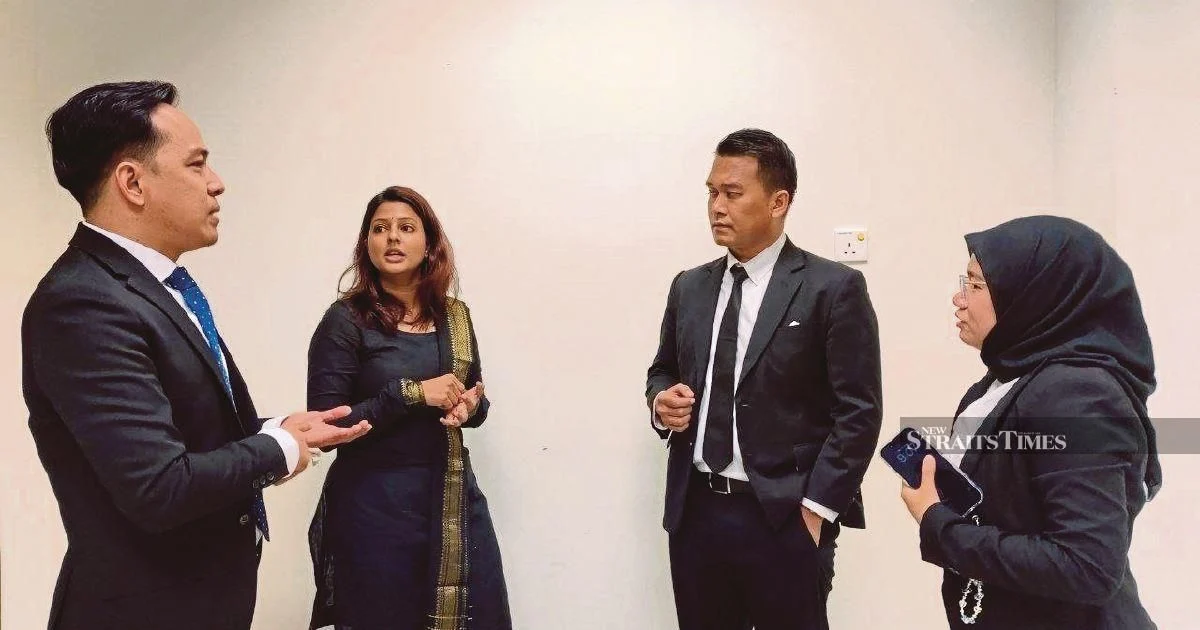
The Coroner's Court in Kota Kinabalu has received expert testimony regarding the characteristics of Zara Qairina Mahathir's handwriting, with a specialist informing the bench that her writing patterns reflected developmental stages typical of adolescence rather than mature adult penmanship.
During proceedings examining various aspects of the case, the court considered forensic analysis of handwriting samples attributed to the late teenager. The expert evidence presented suggested that her script retained qualities associated with the transitional period between childhood and adulthood, when writing habits are still being refined and stabilised.
Handwriting analysis serves as one of several investigative tools employed in coroner's inquiries, particularly when questions arise regarding the authenticity of documents or the circumstances surrounding written communications. The testimony in this instance appears to have addressed whether any written materials associated with the case aligned with what could reasonably be expected from a person at her stage of cognitive and physical development.
The characterisation of her handwriting as remaining in an "adolescent stage" carries particular significance in forensic examination, as it suggests a lack of the consistency and uniformity typically present in fully mature writing. During adolescence, individuals often display considerable variation in their script—pressure applied to the pen, letter formation, and overall flow can fluctuate substantially even within a single document, influenced by emotional state, haste, or developmental inconsistency.
In Malaysia's legal system, coroner's inquiries serve a crucial function in investigating sudden, unnatural, or unexplained deaths. The Coroner's Court operates under specific procedural rules and relies heavily on expert witnesses to provide technical and scientific evidence. Handwriting analysis constitutes one of several forensic disciplines that may be called upon, alongside pathology, toxicology, and document examination.
The volatility noted in the characterisation of her writing patterns would be consistent with research into adolescent handwriting development, which demonstrates that teenagers' scripts typically exhibit greater inconsistency than those of fully mature adults. This volatility can manifest across multiple dimensions—some letters may be formed carefully while others appear hurried, pressure variations may be pronounced, and overall sizing and spacing may lack uniformity.
Forensic document examiners undergo formal training and certification to assess handwriting characteristics systematically. They consider numerous variables when analysing scripts, including baseline consistency, letter formation patterns, spacing between words and letters, slant angle, pressure patterns, and distinctive flourishes or idiosyncrasies. When testifying in court, these specialists must present their findings in ways accessible to judges and juries while maintaining scientific rigor.
The introduction of such expert testimony in coroner's proceedings reflects the sophisticated approach Malaysia's judicial system takes toward investigating deaths. Rather than relying solely on circumstantial evidence or eyewitness accounts, courts increasingly depend on specialised forensic analysis to establish facts with greater precision. This shift toward evidence-based investigation has strengthened the reliability of coroner's findings across the country.
For observers following this case, the handwriting analysis testimony represents one element within a broader investigative framework. Coroners must synthesise multiple sources of evidence—physical evidence, expert testimony, witness statements, and medical findings—to reach conclusions about the cause and circumstances of death. No single piece of evidence typically determines the final outcome, though certain evidence may prove particularly significant depending on the specific circumstances.
The development and refinement of forensic techniques continue to influence how Malaysian courts approach investigation and evidence presentation. As technology advances and analytical methods become increasingly sophisticated, coroner's inquiries benefit from more precise tools for establishing factual foundations. The reliance on expert witnesses to explain technical findings helps ensure that judicial decisions rest on solid evidentiary ground rather than speculation.
This case underscores how contemporary investigations employ multiple investigative disciplines working in concert. Handwriting analysis, when properly conducted and presented, provides valuable corroborating evidence that can either support or challenge other findings emerged during inquiry. The systematic evaluation of such evidence contributes to the integrity of Malaysia's legal proceedings and the public's confidence in the justice system's capacity to investigate thoroughly and fairly.
As the Coroner's Court continues its examination of circumstances surrounding Zara Qairina Mahathir's death, each piece of evidence presented builds toward a comprehensive understanding of what occurred. The testimony regarding her handwriting characteristics joins other expert and factual evidence already presented, with the bench eventually tasked with weighing all information to reach determinations about the case.