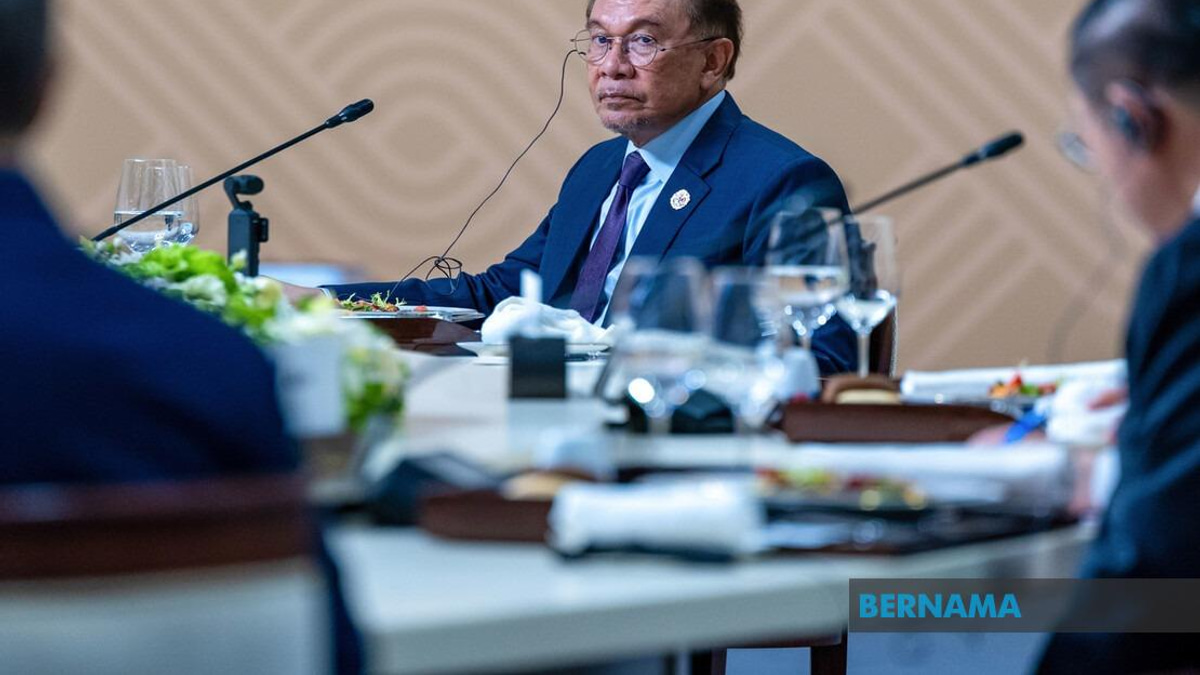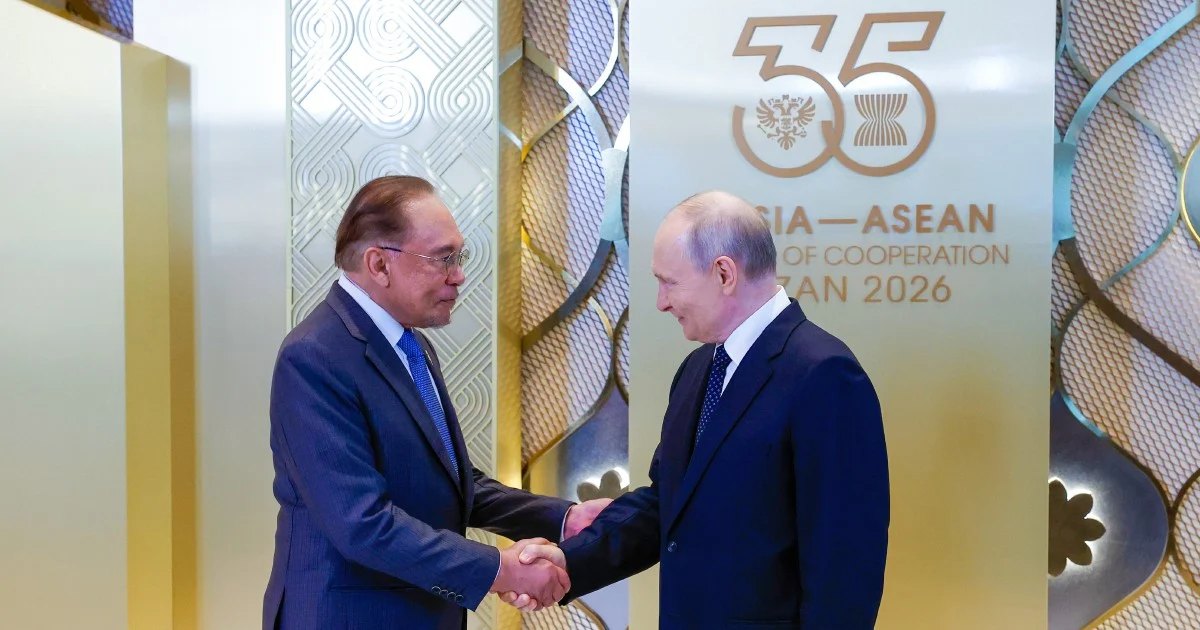
Prime Minister Datuk Seri Anwar Ibrahim and Russian President Vladimir Putin met in Kazan to explore avenues for strengthening the strategic partnership between Malaysia and Russia, with particular emphasis on energy security and broadening economic engagement across multiple sectors.
The bilateral discussion underscored Malaysia's evolving approach to diversifying its international partnerships as geopolitical dynamics shift across Asia and beyond. For Malaysian policymakers, the meeting represents an opportunity to secure more reliable energy supplies while positioning the country as a bridge between Eastern and Western economic interests in Southeast Asia. Russia remains a significant energy exporter, and Malaysia's growing energy demands make strategic cooperation on this front increasingly relevant to the nation's long-term development plans.
Central to the talks was a commitment to expanding trade volumes through mechanisms that reduce reliance on traditional reserve currencies. The use of local currencies—the Malaysian ringgit and Russian ruble—in bilateral transactions reflects a broader trend among non-Western economies seeking to insulate themselves from currency volatility and geopolitical pressures tied to dollar-denominated trade. This approach aligns with Malaysia's participation in regional initiatives like the ASEAN Comprehensive Investment Agreement and reflects growing interest in alternative financial arrangements across Asia.
Energy security discussions likely encompassed Malaysia's medium and long-term requirements for crude oil, liquefied natural gas, and refined petroleum products. As a net energy importer, Malaysia faces increasing pressure to maintain diverse sourcing options, particularly given regional supply uncertainties and global energy market volatility. Russian energy exports, though historically modest to Southeast Asia, represent a strategic alternative that could enhance Malaysia's energy independence and negotiating leverage with existing suppliers.
The timing of the meeting also reflects Malaysia's careful navigation of great power competition. While maintaining traditional partnerships with Western nations and developing economies, Malaysia has consistently pursued a non-aligned foreign policy that capitalizes on relationships across ideological divides. Engagement with Russia at the leadership level signals Malaysia's pragmatic approach to bilateral relations and its determination to extract maximum economic benefit from its strategic geographic position.
Beyond immediate energy and trade considerations, the meeting carries broader implications for ASEAN's collective approach to its external relationships. Malaysia's outreach to Russia occurs within a context where Southeast Asian nations are increasingly asserting greater agency in their foreign policy choices, resisting pressure to choose between competing power blocs. The ringgit-ruble trade mechanism, though potentially modest in scale, demonstrates how smaller economies can innovate in financial arrangements to pursue their interests more independently.
The discussion likely extended to regional security matters, given Russia's persistent interests in Southeast Asia and its competition with Western powers for influence. Malaysia's perspective on maintaining freedom of navigation in shared waters, particularly the South China Sea, may have featured in conversations about regional stability. Russia's limited but notable military presence in the region and its diplomatic engagements across ASEAN capitals make it a relevant stakeholder in regional security architecture, even if its direct strategic capabilities remain constrained compared to larger powers.
From Malaysia's standpoint, deeper cooperation with Russia also offers potential advantages in technology transfer and industrial collaboration. The Russian economy, despite international sanctions and isolation, maintains significant capabilities in certain sectors including energy infrastructure, aerospace, and telecommunications. Exploring partnerships in these areas could open new possibilities for Malaysian companies and contribute to the nation's technological development objectives.
The bilateral engagement also reflects Malaysia's historical diplomatic relationships. The two nations have maintained cordial ties stretching back decades, and contemporary discussions build on this foundation. However, the intensity and strategic focus of recent high-level meetings suggest a deliberate effort to elevate the relationship beyond traditional courtesy to substantive economic and security partnerships. For Malaysia, this represents an opportunity to demonstrate leadership in Southeast Asia by maintaining functional relationships across the global political spectrum.
Looking forward, concrete outcomes from these discussions—whether through memoranda of understanding on energy cooperation, expansion of trade protocols, or joint ventures in specific sectors—will signal the depth of commitment both nations are willing to invest. Malaysia's business community and energy sector enterprises will be particularly attentive to developments that create new opportunities. The successful implementation of local currency trade mechanisms could serve as a template for Malaysia's engagement with other partners, further reducing financial friction in bilateral commerce.
The meeting also positions Malaysia as a country comfortable engaging with all major powers, a stance that has served Southeast Asian nations well historically. As global tensions persist and economic blocs crystallize around different poles, Malaysia's ability to maintain productive relationships across divides enhances its diplomatic value and creates space for pursuing nationally defined interests. The energy and trade discussions with Russia exemplify this balanced approach, combining practical economic cooperation with strategic autonomy in an increasingly complex international environment.