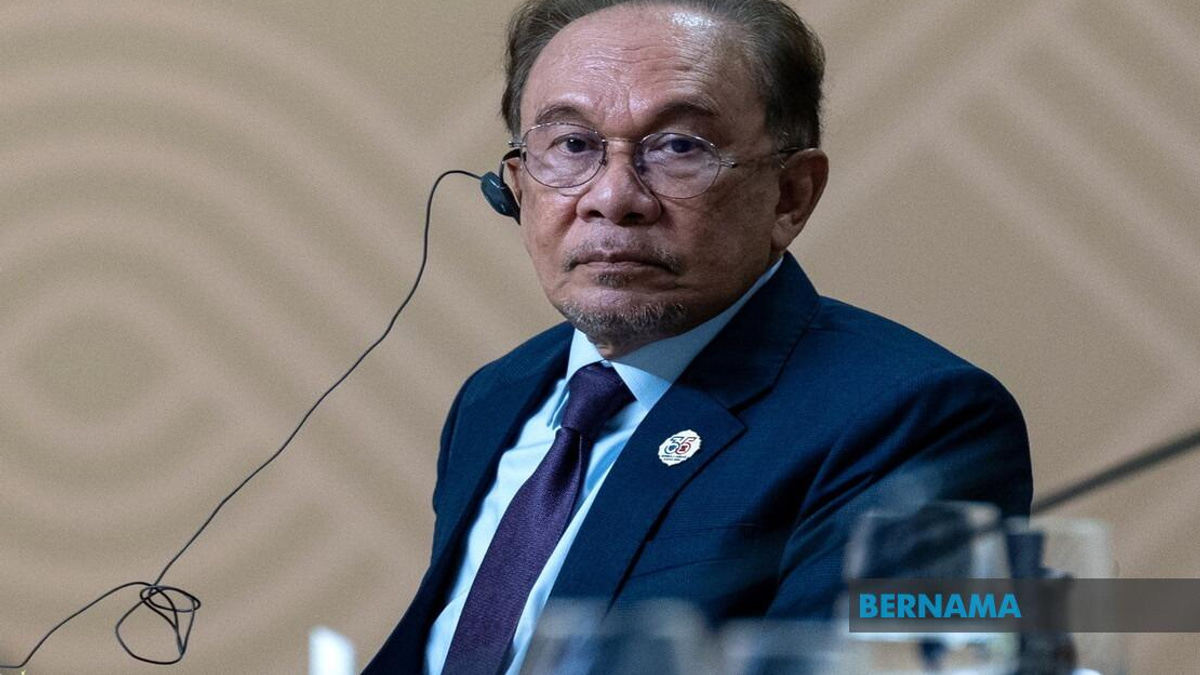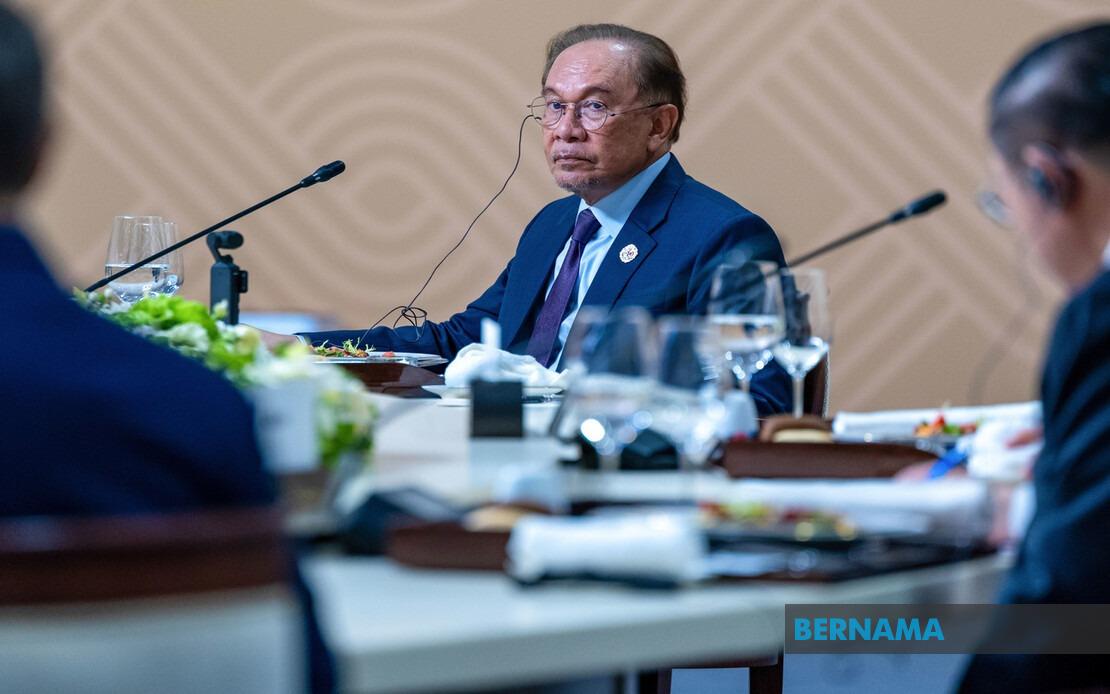
Prime Minister Datuk Seri Anwar Ibrahim has called for deeper cooperation between ASEAN and the Shanghai Cooperation Organisation on tackling cross-border crime and strengthening energy ties, arguing that both regional blocs possess the institutional foundations necessary to address these challenges but must now activate them with concrete action. Speaking during an ASEAN-Russia working lunch in Kazan on June 18, Anwar outlined how the two organizations could harness their combined resources to combat threats that increasingly transcend traditional borders, from organized crime networks to digital-age threats.
The foundation for such collaboration already exists. ASEAN and the SCO established a memorandum of understanding in 2005 that explicitly covers cooperation in counter-terrorism, narcotics control, money laundering prevention, and energy collaboration involving hydroelectric power and bio-fuels. What remains lacking, according to Anwar, is the political will and operational focus to convert these agreements from paper frameworks into functional mechanisms delivering measurable results within clearly defined timeframes. The challenge, as he articulated it, is not the absence of institutional structures but rather the need to concentrate energy and resources on a limited set of priority areas where genuine progress can be demonstrated.
The urgency of addressing cross-border criminal activity has become impossible to ignore. Online scams, illicit financial transactions, and human trafficking have demonstrated a troubling capacity to move across jurisdictional lines faster than law enforcement agencies can respond effectively. These modern transnational crimes exploit the technological asymmetry between criminal networks and government institutions, creating enforcement gaps that no single country can close independently. Anwar emphasized that intelligence sharing and capacity-building among ASEAN and SCO member states would be transformative, allowing nations to pool analytical resources and develop coordinated responses to threats that respect no borders.
On the energy dimension, Anwar highlighted the SCO's distinctive advantage as a coalition bringing together major energy producers and repositories of advanced energy technology. The organization's membership, which includes China, Russia, India, Kazakhstan, and Uzbekistan alongside eight other member states and two observer states, creates an unusually concentrated cluster of energy expertise and production capacity. This positioning opens unprecedented possibilities for collaborative work on energy security and the critical transition toward cleaner energy sources—a priority increasingly relevant to Malaysia and Southeast Asia as regional nations confront the twin pressures of rising electricity demand and climate commitments.
Malaysia's approach to energy cooperation, as articulated by Anwar in his concurrent role as Finance Minister, prioritizes pragmatic, technology-driven initiatives rather than abstract commitments. These include advancing energy efficiency standards, improving grid reliability to withstand stress and disruption, expanding liquefied natural gas trade, accelerating the integration of renewable energy sources into existing power systems, and promoting knowledge exchange on safety and system resilience. This framework reflects a sophisticated understanding that genuine energy transition requires not ideological pronouncements but rather accumulated technical expertise and proven methodologies adapted to regional circumstances.
Beyond the bilateral ASEAN-SCO relationship, Anwar identified parallel opportunities within the Eurasian Economic Union, a separate but overlapping institutional framework with which ASEAN maintains existing cooperative mechanisms. He argued that these established relationships require activation through commercial channels and private-sector engagement. Rather than creating new bureaucratic structures, Anwar proposed strengthening business confidence and commercial activity by encouraging regular private-sector meetings and enhanced participation in bilateral trade events, including dialogues held alongside the Eastern Economic Forum and St Petersburg International Economic Forum.
Small and medium enterprises represent a particular concern within ASEAN's regional development agenda. These firms, which form the backbone of Southeast Asian economies, struggle to compete in unfamiliar market environments without targeted support. Anwar identified three critical enablers: first, improved market access arrangements that reduce tariff and non-tariff barriers; second, technology transfer and capacity development that allows firms to operate at competitive global standards; and third, skills training that equips workers and managers to utilize sophisticated technologies effectively. Without deliberate institutional support for smaller enterprises, trade liberalization can paradoxically benefit only larger corporations with existing international networks.
Emerging technology domains represent another frontier where ASEAN and EAEU interests increasingly converge. The digital economy, artificial intelligence applications, cybersecurity protocols, and food security networks all feature prominently in national development strategies across both regions. These newer areas of cooperation go beyond traditional energy and security frameworks, reflecting the reality that modern regional integration encompasses the full spectrum of economic and technological activity. Food security, in particular, carries heightened significance for Southeast Asia given population growth, climate vulnerability, and the region's heavy reliance on agricultural exports and imports for domestic food supplies.
Anwar's broader vision reflects a pragmatic regionalism focused on delivering concrete benefits to member states rather than expanding institutional complexity. Rather than creating parallel organizations or duplicative mechanisms, he advocates for activating existing agreements through focused implementation, measurable targets, and regular private-sector engagement. This approach acknowledges both the institutional fatigue that can accompany excessive organizational proliferation and the reality that frameworks without implementation represent merely aspirational documents gathering dust in government files.
The timing of these remarks during a Kazan summit devoted to commemorating ASEAN-Russia relations underscores Russia's significance within SCO dynamics and its historic ties to ASEAN nations. Russia's dual role as an energy exporter and security actor positions it strategically within both the SCO and broader regional partnerships with Southeast Asian states. For Malaysia specifically, engaging Russia through multilateral ASEAN channels provides opportunities to advance national interests while maintaining balanced diplomatic positioning in an increasingly multipolar geopolitical environment.
The Prime Minister's emphasis on measurable outcomes and defined timeframes reflects lessons learned from previous regional initiatives that generated considerable diplomatic activity while delivering limited tangible benefits. By insisting on specificity rather than generality, and on implementation rather than mere agreement, Anwar positions ASEAN as a mature regional actor capable of demanding that partner organizations deliver substantive cooperation. This approach potentially elevates ASEAN's negotiating position within Asian multipolar dynamics, demonstrating that the bloc will commit resources only where reciprocal commitments are genuinely honored.