Malaysia's sexual harassment crisis continues to worsen, with 388 cases reported during the first five months of 2024 alone. Deputy Minister of Women, Family and Community Development Lim Hui Ying revealed this troubling statistic in Port Dickson on June 18, underscoring a persistent pattern of workplace misconduct and personal assault that extends across Malaysian society. The figure represents merely a snapshot of a broader landscape, as official records from the Royal Malaysia Police demonstrate a sharp acceleration in reported incidents over recent years.
The trajectory of harassment complaints tells an increasingly urgent story. Police data indicates that reported sexual harassment cases surged from 477 incidents in 2022 to 1,038 cases in 2023—a jump of more than 117 percent in just twelve months. These numbers provide crucial context for understanding the scale of the problem facing Malaysian workplaces, educational institutions, and communities. While such dramatic increases might initially suggest worsening conditions on the ground, Deputy Minister Lim offered an important perspective on interpretation: the rise reflects not merely a proliferation of misconduct itself, but rather a fundamental shift in social dynamics that empowers victims to break their silence.
According to Lim, the elevation in reported cases signals growing public consciousness about harassment and mounting courage among those affected to reject the historical culture of concealment. This interpretation carries significant implications for Malaysian society. For decades, silence protected perpetrators while victims endured their experiences privately, absorbing shame and emotional damage in isolation. The willingness to report—even if rates remain below actual incidence—represents progress toward accountability and justice. However, this progress remains incomplete. Many victims still suppress their experiences due to shame, fear of career sabotage, or anxiety about damaging family relationships and social standing.
The geographic and relational patterns of harassment reveal where prevention efforts must concentrate. Lim highlighted that most recorded incidents occur within workplace environments, and crucially, many involve individuals already connected to victims through familial bonds. This intersection of power dynamics—employment hierarchies combined with family relationships—creates psychological barriers that deter reporting. The victim must weigh the trauma of disclosure against potential consequences affecting their livelihood and intimate family structures. Such calculus ensures that even growing awareness campaigns cannot immediately translate into proportional reporting increases. The gap between actual harassment and reported harassment remains vast, particularly among Malaysia's vulnerable populations.
While sexual harassment predominantly affects women, the phenomenon extends across gender lines in ways that remain underrecognized. Lim acknowledged that men also experience harassment, though statistics indicate lower prevalence rates among male victims. This gendered dimension warrants deeper investigation. Workplace cultures that normalize aggressive behavior or dismiss certain comments as acceptable banter create environments where harassment flourishes regardless of victims' gender. Yet masculinity norms may discourage men from seeking help or speaking openly about uncomfortable experiences, leaving male victims even more isolated than their female counterparts. Malaysian workplaces and institutions must address these structural factors rather than treating harassment as isolated incidents.
The Tribunal for Anti-Sexual Harassment has emerged as a potential game-changer in Malaysia's response infrastructure. Since its establishment through June 15, TAGS received 100 complaints, with an impressive 82 cases—approximately 82 percent—resolved within 60 days of initial hearing. This efficiency matters profoundly for victims. Swift resolution provides psychological closure, validates complaints quickly, and removes perpetrators from positions enabling further harm. For Malaysian employees struggling through harassment situations, the tribunal's demonstrated speed offers a tangible alternative to prolonged legal processes that previously consumed years. Nevertheless, 100 complaints processed represents only a fraction of the 1,038 cases reported annually to police, suggesting significant awareness gaps about TAGS's availability.
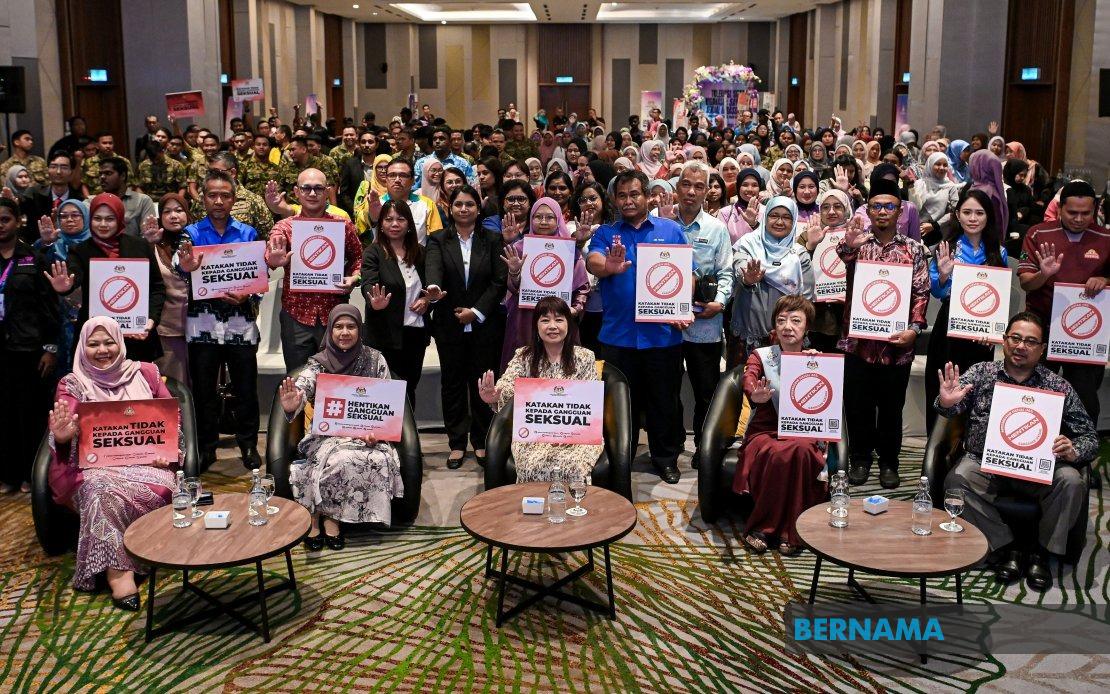
Deputy Minister Lim emphasized that sexual harassment constitutes grave misconduct undermining victims' dignity, emotional stability, and life quality. This framing moves beyond characterizing harassment as workplace inconvenience or minor interpersonal conflict. Instead, it positions harassment within a continuum of violations that damage psychological well-being and perpetuate power imbalances. For Malaysian society, accepting this perspective demands cultural shifts across professional, educational, and domestic spheres. Normalizing harassment—treating it as inevitable workplace reality or joking matter—enables perpetuation. Creating genuine zero tolerance requires institutional commitment from employers, educational administrators, and family structures.
The Malaysian government has extended its support infrastructure beyond tribunal mechanisms. The Women's Development Department operates the 24-hour Talian Kasih hotline at 15999, providing counseling and psychosocial support to those experiencing harassment or considering reporting. These services acknowledge that victims frequently require emotional processing and safety planning before formal complaints. Local social support centers complement hotline services, offering accessible assistance across Malaysian communities. Such integrated approaches recognize that harassment victims need multifaceted help rather than simply legal recourse. However, awareness remains problematic—many potential beneficiaries likely remain unaware of these services, particularly in rural areas with limited digital connectivity.
The ministry's integration of sexual harassment prevention within the broader Women, Peace and Security framework signals recognition that harassment connects to larger patterns of violence affecting communities and national stability. The National Action Plan 2025–2030 positions women's security and development roles as interconnected with national security architecture. This strategic framing potentially elevates harassment prevention from women's affairs sideline issue to core governance concern. For Malaysian policymakers, treating harassment reduction as security imperative rather than charitable concern might generate additional resources and institutional accountability. Yet implementation will test whether this rhetorical elevation translates into meaningful organizational change.
Education emerges repeatedly in Lim's recommendations as prevention foundation. Early education about consent, bodily autonomy, and respectful conduct can reshape cultural norms before entrenched attitudes crystallize. Malaysian schools and universities should integrate comprehensive anti-harassment curricula beginning in primary education, progressing through secondary and tertiary levels. Such early intervention equips young Malaysians—both potential victims and perpetrators—with frameworks for recognizing and rejecting harassment. Educators bear particular responsibility as both implementers of curricula and models of respectful behavior. Parents similarly must nurture children's understanding that harassment represents unacceptable violation rather than tolerable behavior.
Building effective support systems requires cultural participation beyond government intervention. Colleagues, employers, family members, and community members must actively support victims rather than defaulting to silence or victim-blaming. This shift demands organizational and family leadership that clearly signals intolerance for harassment and visible support for disclosure. Workplaces implementing transparent reporting mechanisms, protecting reporters from retaliation, and ensuring swift investigation demonstrate that institutional cultures genuinely reject harassment. Similarly, families that listen without judgment to harassment disclosures and advocate for victims' safety and recovery provide essential grounding.
Deputy Minister Lim warned that unaddressed harassment escalates into more severe violence affecting individual trauma trajectories and broader social harmony. This observation connects sexual harassment prevention to violence prevention more generally. Early intervention—whether through reporting, counseling, institutional response, or family support—interrupts escalation patterns before they metastasize. Conversely, normalized harassment creates environments where perpetrators escalate behavior, confident in continued tolerance. For Malaysian communities seeking to reduce violence prevalence, sexual harassment prevention represents preventive investment in social stability.
Moving forward, Malaysia requires sustained investment in awareness campaigns, institutional reforms, victim support services, and perpetrator accountability. The rising reporting trend presents opportunity to understand patterns and implement targeted interventions. Yet the gap between reported cases and actual prevalence suggests years of work remain before victims universally feel empowered to come forward. Malaysian society stands at an inflection point—awareness is growing, institutional mechanisms are developing, and government attention is increasing. Whether these elements coalesce into genuine cultural transformation toward zero tolerance remains contingent on sustained commitment from employers, educators, families, and communities across the archipelago.