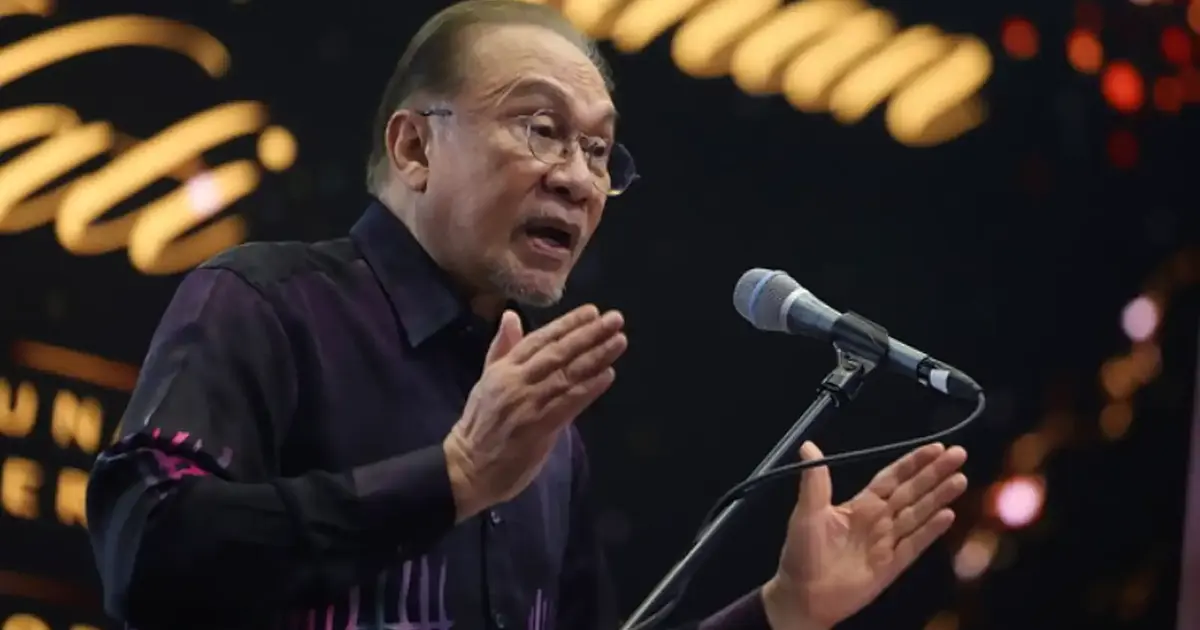
Prime Minister Anwar Ibrahim has issued a strong appeal to Malaysians to look beyond the divisive narratives being promoted by certain political leaders, positioning the country's multicultural fabric as essential to its continued progress and prosperity.
Speaking on the matter, Anwar underscored that Malaysia's ethnic diversity stands as one of its most valuable assets. This characterisation reflects a deliberate counter-narrative to polarising discourse that has periodically surfaced in Malaysian politics, where appeals to singular ethnic or religious identity sometimes threaten the delicate social consensus built over decades.
The prime minister's intervention comes at a time when Southeast Asia's third-largest economy continues to grapple with the balance between maintaining its founding principles of pluralism and managing competing political interests that occasionally exploit communal anxieties. Malaysia's constitution was fundamentally constructed around the principle of negotiated coexistence between its major ethnic groups—Malays, Chinese, and Indians—alongside indigenous communities. This framework, enshrined in the social contract of 1957, has proven resilient across multiple cycles of political competition.
Anwar's remarks carry particular significance given the current political climate. In recent years, Malaysian politics has witnessed periodic flare-ups of identity-based messaging, where certain opposition figures and activist groups have attempted to mobilise support through appeals to narrow communal interests. The proliferation of such rhetoric across social media platforms has amplified concerns among moderate voices about the potential fracturing of the national consensus.
The premier's emphasis on diversity as a strength rather than a liability reflects an understanding that Malaysia's economic vitality and regional standing are intrinsically linked to social stability. Foreign investors, regional partners, and domestic businesses all benefit from an environment where different communities coexist and contribute their talents to the national project. The deterioration of intercommunal harmony historically correlates with economic uncertainty and capital flight, lessons that Malaysia has learned from its own turbulent episodes.
Anwar's call also represents a broader leadership philosophy that seeks to position the government as a unifying force above factional interests. This approach distinguishes his messaging from competitors who may find electoral advantage in sharper identity politics. However, the effectiveness of such appeals ultimately depends on whether government policies translate these rhetorical commitments into tangible protections for minority rights and equitable resource distribution.
The backdrop to these comments includes ongoing debates about religious expression in public spaces, economic opportunities for different communities, and representation in higher education and employment sectors. Each of these flashpoints has occasionally been weaponised by political actors seeking to mobilise particular constituencies. Anwar's intervention suggests recognition that such mobilisation carries risks that outweigh short-term political gains.
Southeast Asia more broadly has witnessed how rapid economic change and migration patterns can trigger anxiety-driven political movements built on exclusionary narratives. Thailand, Myanmar, and Indonesia have each experienced periods of heightened communal tension linked to perceived threats to cultural dominance. Malaysia's relative stability by comparison owes substantially to institutional mechanisms and leadership rhetoric that reinforce inclusive governance. Anwar's positioning himself within this tradition.
The prime minister's message also implicitly critiques the opposition landscape, particularly elements that have gained traction through divisive appeals. By publicly rejecting hate-peddling rhetoric, Anwar creates space for moderate voices within the opposition to gain ground against their more radical wings, potentially shifting the entire political conversation toward the centre.
Looking forward, the challenge for Malaysian leadership—whether from government or opposition benches—involves demonstrating that pluralism delivers tangible benefits to all communities rather than merely serving as abstract principle. Economic inclusion, educational opportunity, and genuine dialogue mechanisms become essential tools for reinforcing Anwar's message that diversity constitutes genuine strength rather than something to be endured.
The prime minister's call thus functions on multiple levels: as immediate rejection of current hate speech, as longer-term investment in the values system that has prevented Malaysia from sliding into the sort of ethnic conflict that periodically destabilises other multiethnic states, and as an assertion of leadership that seeks to position inclusive nationalism as the superior political project. Whether this messaging translates into sustained action through policy implementation and resource allocation will ultimately determine its credibility and effectiveness in shifting political culture.
%22%2F%3E%3C%2Fpattern%3E%3C%2Fdefs%3E%3Crect%20width%3D%22100%25%22%20height%3D%22100%25%22%20fill%3D%22url(%23ph43s4kg)%22%2F%3E%3Crect%20width%3D%22100%25%22%20height%3D%22100%25%22%20fill%3D%22url(%23ph43s4kp)%22%2F%3E%3Ctext%20x%3D%2250%25%22%20y%3D%2250%25%22%20text-anchor%3D%22middle%22%20dominant-baseline%3D%22central%22%20fill%3D%22rgba(255%2C255%2C255%2C0.95)%22%20font-family%3D%22Georgia%2C%20'Times%20New%20Roman'%2C%20serif%22%20font-weight%3D%22700%22%20font-size%3D%22136%22%20letter-spacing%3D%22-0.02em%22%3ERonaldinho%3C%2Ftext%3E%3C%2Fsvg%3E)
%22%2F%3E%3C%2Fpattern%3E%3C%2Fdefs%3E%3Crect%20width%3D%22100%25%22%20height%3D%22100%25%22%20fill%3D%22url(%23ph4tn5og)%22%2F%3E%3Crect%20width%3D%22100%25%22%20height%3D%22100%25%22%20fill%3D%22url(%23ph4tn5op)%22%2F%3E%3Ctext%20x%3D%2250%25%22%20y%3D%2250%25%22%20text-anchor%3D%22middle%22%20dominant-baseline%3D%22central%22%20fill%3D%22rgba(255%2C255%2C255%2C0.95)%22%20font-family%3D%22Georgia%2C%20'Times%20New%20Roman'%2C%20serif%22%20font-weight%3D%22700%22%20font-size%3D%22272%22%20letter-spacing%3D%22-0.02em%22%3EJohor%3C%2Ftext%3E%3C%2Fsvg%3E)