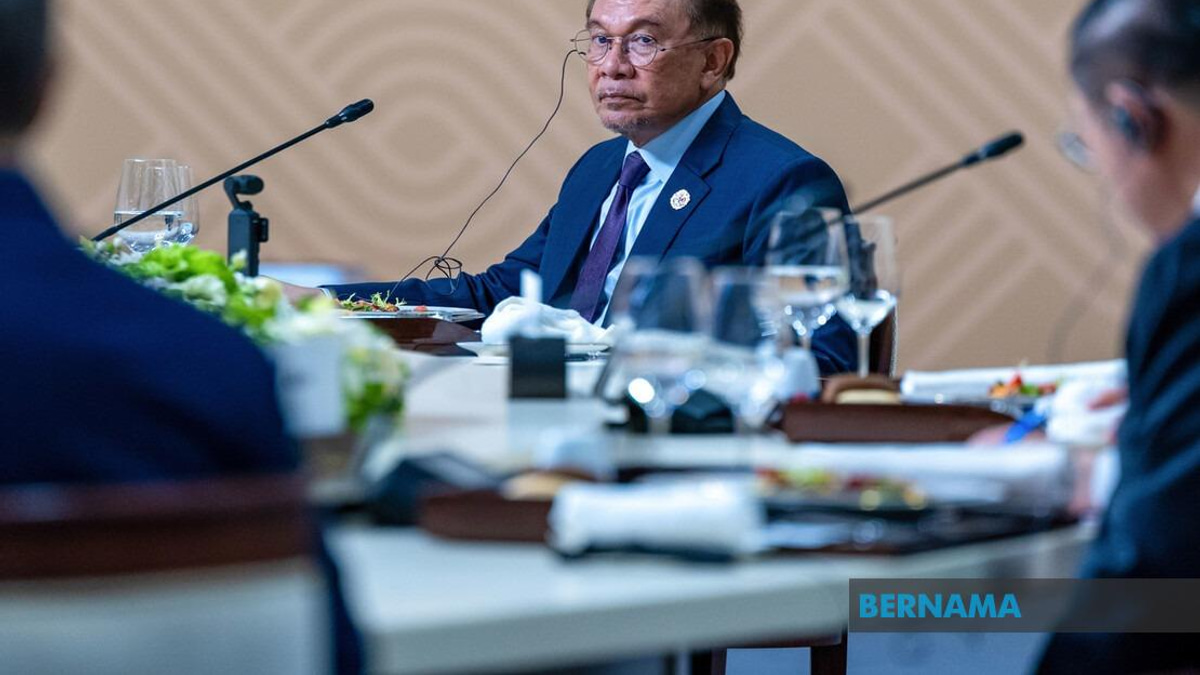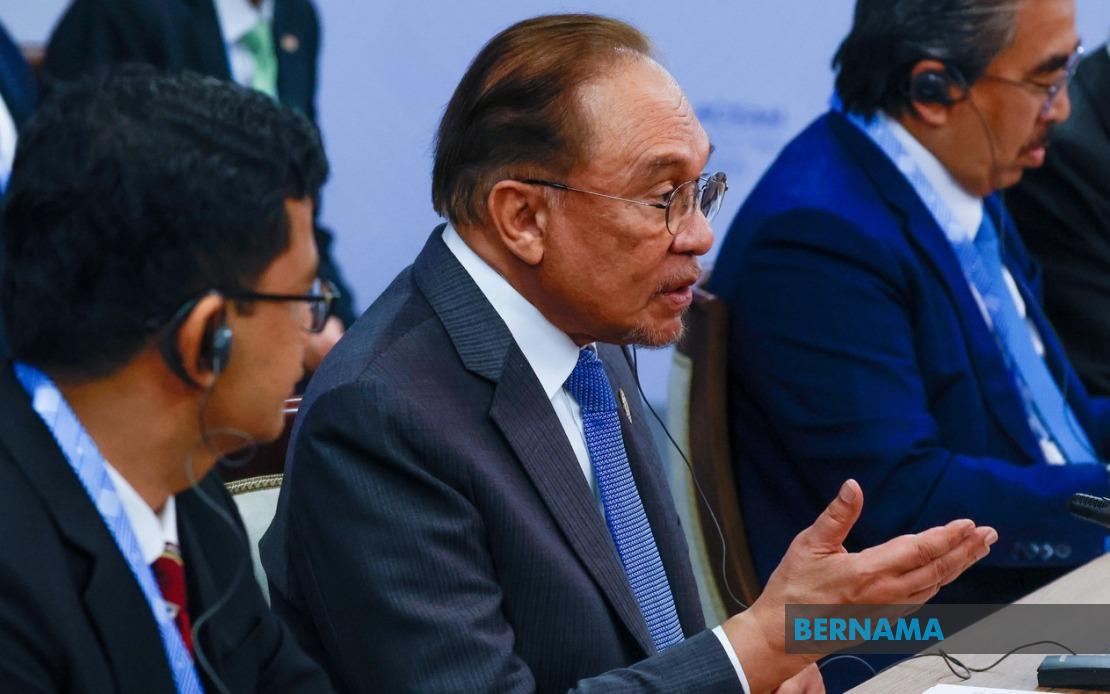
Prime Minister Datuk Seri Anwar Ibrahim travelled to Kazan this week to hold bilateral talks with Russian President Vladimir Putin, using the occasion to express Malaysia's appreciation for Moscow's approach to two of the most pressing geopolitical flashpoints in the Middle East. During their Wednesday evening meeting, Anwar made clear that Malaysia views Russia's diplomatic stances on Gaza and the broader Iranian crisis as exemplars of principled international conduct, even as these issues continue to divide the global community along increasingly rigid ideological and strategic lines.
In his opening remarks, Anwar emphasised that Russia has not wavered from its position on these interconnected crises, a consistency that he suggested reflects deeper values shared by Malaysia and many other nations. The Prime Minister's explicit gratitude suggests a deliberate effort to signal Malaysia's broader alignment with Russian foreign policy objectives at a time when Western nations have grown increasingly critical of Moscow's actions. By publicly commending Putin's "tenacity and conviction" on these matters, Anwar was not merely engaging in diplomatic courtesy but rather staking out Malaysia's independent position on Middle Eastern conflicts, one that diverges notably from the West's approach.
Gaza remains at the centre of global diplomatic tensions following the October 2023 escalation and the subsequent military campaign that has devastated the territory and displaced hundreds of thousands of civilians. The conflict has become a litmus test for international solidarity, with nations forced to choose between supporting Palestinian rights or maintaining alignment with traditional Western allies. Russia has positioned itself as an advocate for Palestinian interests, consistently calling for humanitarian corridors, ceasefire agreements, and sustainable political solutions rather than military dominance. Moscow's position resonates with Malaysia, a Muslim-majority nation with longstanding support for Palestinian self-determination, making this common ground a natural basis for diplomatic appreciation.
The Iranian dimension adds another layer of complexity to the conversation between Anwar and Putin. Tensions surrounding Iran's nuclear programme, its regional military activities, and international sanctions have created competing visions for regional stability. Russia, as a neighbour and trading partner of Iran, has historically advocated for dialogue over confrontation, supporting multilateral negotiations rather than unilateral pressure or military intervention. This approach aligns with Malaysia's own preference for diplomatic solutions and its reluctance to join Western-led coalitions that seek to isolate Tehran through economic or military means. By highlighting Russia's consistency on Iran, Anwar was signalling Malaysia's preference for inclusive diplomacy.
The bilateral meeting itself reflects the strategic importance both nations place on deepening their relationship during a period of significant global realignment. Malaysia, as a key Southeast Asian power and a nation with significant Muslim and Arab populations, occupies a unique position in global affairs. Russian engagement with Malaysia is part of a broader effort to build influence in Asia-Pacific while counterbalancing Western dominance. Conversely, Malaysia benefits from diversifying its international partnerships and avoiding overdependence on traditional Western allies, a consideration that becomes more pressing as geopolitical competition intensifies.
Moscow's consistent support for ceasefire initiatives in Gaza reflects a broader Russian diplomatic strategy that emphasises sovereignty, non-interference, and the primacy of negotiated solutions. This contrasts sharply with approaches favouring military pressure or regime change, which Russia associates with Western interventionism. When Anwar explicitly thanks Putin for this consistency, he is implicitly endorsing this framework and positioning Malaysia alongside nations that reject what they view as imposed solutions to regional conflicts. This public statement carries implications for Malaysia's diplomatic posture beyond just Russia relations.
The geopolitical significance of Gaza and Iran extends far beyond the Middle East itself. Both issues serve as proxies through which major powers—the United States, Russia, and China—contest for influence and credibility among developing nations. Malaysia's public alignment with Russia's positions on these matters suggests the country is hedging its bets internationally, maintaining relationships across competing blocs rather than locking itself into Western-led frameworks. This strategy reflects Malaysia's historical non-aligned tradition and its current effort to maximise diplomatic flexibility as the global order becomes increasingly multipolar.
For the broader Southeast Asian region, Malaysia's cultivation of relations with Russia carries implications for regional stability and unity. The Association of Southeast Asian Nations has long prided itself on maintaining dialogue with all major powers and avoiding bloc politics. However, intensifying great power competition makes this balancing act increasingly difficult. Malaysia's explicit commendation of Russian positions signals that at least one influential ASEAN member is willing to publicly differentiate itself from Western approaches, potentially influencing how other regional nations calculate their own foreign policies.
The timing of Anwar's visit to Kazan also matters. Russia, facing Western sanctions and isolation over Ukraine, has been actively cultivating relationships in Asia, Africa, and Latin America to demonstrate that it retains global influence despite Western attempts to marginalise it. Malaysia's willingness to host high-level engagements and publicly endorse Russian diplomatic positions serves Moscow's narrative of maintaining relevance and support from significant developing nations. Reciprocally, Malaysia benefits from positioning itself as a nation that refuses to follow Western lead uncritically and instead pursues independent foreign policy based on its own interests and values.
The emphasis on Gaza and Iran in Anwar's remarks reflects Malaysia's prioritisation of Middle Eastern stability and Palestinian rights in its foreign policy. These are issues that resonate deeply with Malaysia's domestic constituencies, particularly its Muslim majority population. By publicly crediting Russia with principled consistency on these matters, Anwar is demonstrating to Malaysian voters that his government is actively championing causes they care about on the international stage. This domestic political dimension should not be overlooked when assessing the significance of his statements in Kazan.
Looking forward, Malaysia's deepening engagement with Russia on these diplomatic matters could influence how ASEAN as a collective approaches Middle Eastern conflicts and international sanctions regimes. While ASEAN members maintain diverse foreign policies, Malaysia's voice carries weight in regional forums. Should Malaysia continue advocating positions aligned with Russia's diplomatic approach, it could contribute to the region becoming a more contested space for great power influence, with implications for everything from trade arrangements to security partnerships. The stakes of diplomatic positioning in the contemporary global system extend far beyond ceremonial meetings.