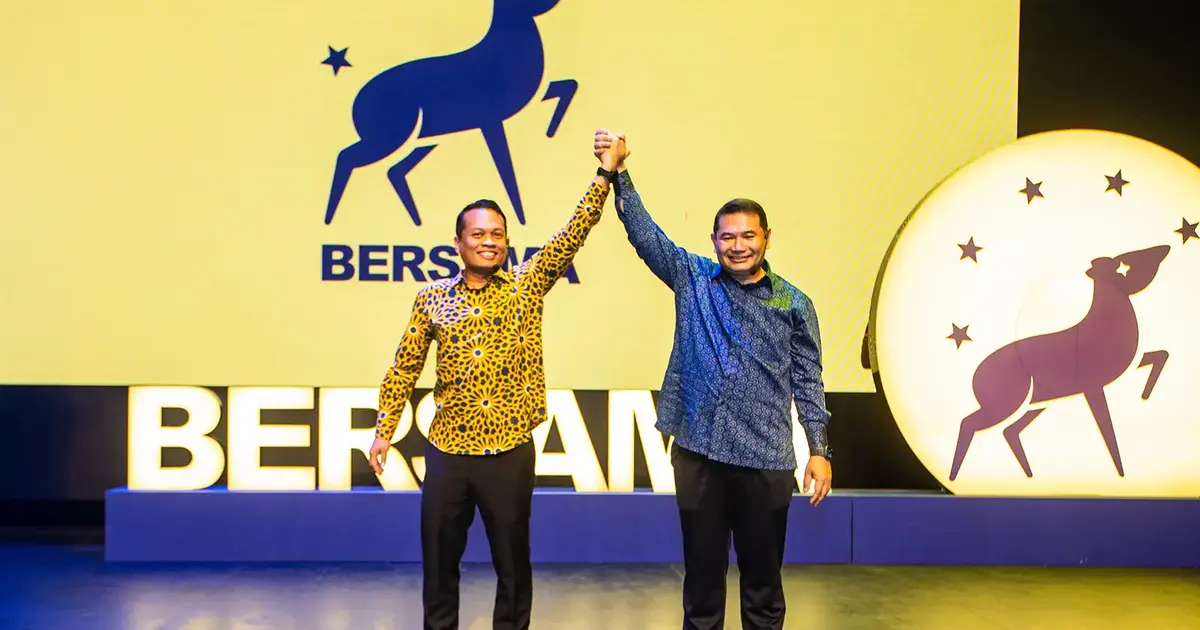
Bersama, the political party co-founded by Economic Affairs Minister Rafizi Ramli, is capitalising on strong interest from former senior bureaucrats willing to stand as candidates in the forthcoming Johor and Negeri Sembilan state elections. The influx of experienced administrative professionals reflects a deliberate strategy to bolster the party's profile and appeal to voters seeking proven governance credentials in crucial swing states.
Rafizi disclosed that the response from retired civil service veterans has been unexpectedly robust, indicating that Bersama's recruitment efforts have resonated with a demographic typically sceptical of partisan politics. This interest among ex-bureaucrats—who command respect for institutional knowledge and administrative track records—offers the nascent party a potential advantage in attracting swing voters who value competence and non-partisan credentials. The move underscores how newer Malaysian political entities are actively repositioning themselves by recruiting candidates with established credibility outside traditional party machines.
For Johor, Malaysia's most populous state and a consistent kingmaker in national politics, the availability of experienced administrative talent could prove decisive. The southern state has historically been a battleground where governance narratives strongly influence voter preferences. By fielding former civil servants who understand the machinery of state administration intimately, Bersama aims to differentiate itself from established competitors and present itself as a repository of practical governance experience rather than merely ideological positioning.
Negeri Sembilan, meanwhile, presents distinct political dynamics where administrative competence carries particular weight among an increasingly urbanised electorate. The state's development trajectory and reputation for efficient governance make it fertile ground for candidates leveraging previous public sector accomplishments. Former senior civil servants contesting from Bersama could effectively communicate their track records in executing policy and managing state resources—narratives that resonate strongly in this constituency.
The strategy reflects broader trends in Malaysian politics where professional credentials and administrative experience increasingly function as electoral currency. Voters fatigued by party-political theatre and factional disputes often respond positively to candidates positioned as technocrats committed to delivering tangible improvements in public services, infrastructure, and governance standards. Bersama's recruitment approach taps directly into this voter sentiment.
For the ruling coalition, the emergence of a party successfully attracting former top bureaucrats merits careful observation. Many ex-civil servants possessed institutional memories spanning multiple administrations and retain networks throughout the public sector. Their candidacies could influence how traditional government machinery engages with electoral politics, particularly if they maintain relationships spanning party lines. This cross-pollination of administrative and political spheres introduces unpredictable elements into state-level campaigns.
However, Bersama faces the persistent challenge of translating candidate quality into electoral success. Former bureaucrats transitioning into electoral politics often encounter steep learning curves negotiating grassroots constituencies and party machinery. Their administrative expertise, while valuable for governance messaging, does not automatically translate into campaigning acumen or constituent relationship-building skills that determine electoral outcomes. Several precedents in Malaysian politics demonstrate that impressive CVs alone cannot guarantee victory.
The party's reception among former senior civil servants also suggests that significant segments of Malaysia's professional administrative class maintain appetite for political participation outside conventional party structures. This reflects evolving attitudes toward governance and political engagement, particularly among educated professionals who previously might have eschewed partisan involvement entirely. Whether this trend strengthens Bersama or represents temporary opportunism remains to be determined as campaign seasons develop.
For Southeast Asian observers, Bersama's recruitment strategy illuminates how regional democracies increasingly compete for talent and credibility through candidate quality rather than purely organisational muscle. As voters across the region grow more discerning, political parties investing in candidates with demonstrable expertise and clean institutional records gain competitive advantages over those relying primarily on factional networks or incumbency advantages.
The specific electoral outcomes in Johor and Negeri Sembilan will substantially influence whether Bersama's bureaucratic recruitment succeeds in translating potential into performance. If former civil servants perform credibly at the ballot box, the party establishes itself as a serious alternative offering voters genuine governance-focused alternatives. Conversely, if administrative credentials fail to generate sufficient electoral traction, questions will intensify about whether Malaysian voters genuinely prioritise technocratic governance or whether traditional political calculations continue dominating electoral decisions.
Bersama's approach also carries implications for how government institutions themselves navigate electoral cycles. If significant numbers of recently retired or near-retirement senior bureaucrats actively engage in opposition-aligned or independent party politics, this could reshape institutional cultures within the public sector and potentially complicate the traditionally apolitical stance associated with civil service professionalism.
%22%2F%3E%3C%2Fpattern%3E%3C%2Fdefs%3E%3Crect%20width%3D%22100%25%22%20height%3D%22100%25%22%20fill%3D%22url(%23ph5142vg)%22%2F%3E%3Crect%20width%3D%22100%25%22%20height%3D%22100%25%22%20fill%3D%22url(%23ph5142vp)%22%2F%3E%3Ctext%20x%3D%2250%25%22%20y%3D%2250%25%22%20text-anchor%3D%22middle%22%20dominant-baseline%3D%22central%22%20fill%3D%22rgba(255%2C255%2C255%2C0.95)%22%20font-family%3D%22Georgia%2C%20'Times%20New%20Roman'%2C%20serif%22%20font-weight%3D%22700%22%20font-size%3D%22194%22%20letter-spacing%3D%22-0.02em%22%3EBintulu%3C%2Ftext%3E%3C%2Fsvg%3E)