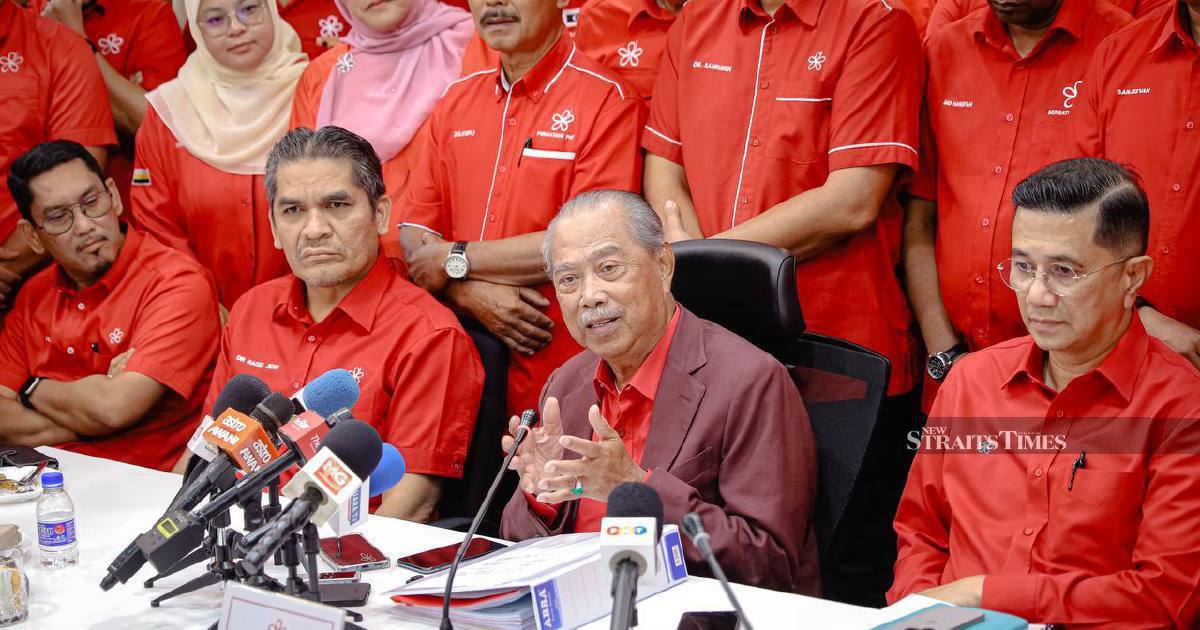
Bersatu president Tan Sri Muhyiddin Yassin has signalled his party's willingness to engage in direct electoral competition with Pas in Johor should the two parties end up pursuing overlapping seat allocations during the state election cycle. The declaration reflects the ongoing complexities within Malaysia's coalition landscape, where alignment at the federal level does not necessarily translate to seamless cooperation at state contests.
The statement comes amid persistent negotiations over seat distributions in Johor, a politically significant state that has experienced considerable electoral volatility in recent years. Bersatu's position suggests the party is not inclined to yield ground unnecessarily, even where coalition partners are involved. This posture indicates that party interests and territorial ambitions may take precedence over broader coalition solidarity when state-level elections materialise.
Johor represents a crucial testing ground for Malaysia's political coalitions. The state has seen dramatic shifts in electoral fortunes, from Umno's historic dominance to periods of opposition strength, making seat allocation particularly consequential for all participating parties. Both Bersatu and Pas have competing claims to voter bases and constituencies, and neither appears keen on voluntary concessions without negotiated compensation.
The Johor electorate encompasses diverse constituencies with varying demographic profiles and political leanings. Rural areas traditionally favour Pas, while urban centres present more competitive terrain. Bersatu has been attempting to consolidate its position across different voter segments, making certain seats strategically important for the party's long-term viability as an independent political force rather than merely a junior coalition member.
Muhyiddin's remarks underscore the delicate balance within Malaysia's governing coalitions. While parties maintain public displays of unity and cooperation, underlying tensions over resource distribution, seat allocation, and political influence remain constant factors. The willingness to contest seats held or claimed by coalition partners signals that parties view electoral opportunities as zero-sum propositions where accommodation comes with political costs.
The Pas-Bersatu relationship has historically been complicated by differing ideological orientations and competing organisational interests. Pas positions itself as an Islamic-based party with grassroots religious constituencies, while Bersatu has sought to present itself as a Malay-centric moderate force. These distinctions translate into different strategic approaches to constituency-level politics and voter mobilisation.
Muhyiddin's readiness to contest against Pas may also reflect calculations about Bersatu's overall political viability. As a relatively newer party with limited organisational depth compared to established counterparts, Bersatu requires visibility and seat gains to maintain relevance. Ceding constituencies to coalition partners could undermine the party's ability to demonstrate electoral returns to its members and supporters, potentially weakening its internal cohesion and external credibility.
The Johor election, whenever it occurs, will serve as an important indicator of coalition stability and individual party strength within Malaysia's broader political ecosystem. Observer analysis will likely focus on whether parties honour traditional allocations or pursue competitive strategies that undermine coalition messaging. The outcome will have implications for federal-level coalition dynamics, as poor performance by any coalition partner in a crucial state election could trigger reassessments of political arrangements.
For Malaysian voters, particularly those in Johor, the prospect of coalition parties contesting identical constituencies creates an unusual electoral situation. Voters would face choices not just between opposing coalitions but between competing factions within the same governing alliance, potentially complicating electoral decision-making and creating incentives for tactical voting strategies. This fragmentation within government coalitions raises questions about the coherence of political messaging and the effectiveness of coalition-based governance models in the Malaysian context.
Muhyiddin's statement also reflects the broader challenge facing Malaysia's political system: the tension between coalition necessity and party autonomy. Parties require coalition partners to achieve and maintain governing majorities, yet they simultaneously compete for votes, resources, and political space. This inherent contradiction periodically surfaces during state elections, where parties must balance federal partnership obligations against state-level competitive interests and survival instincts.