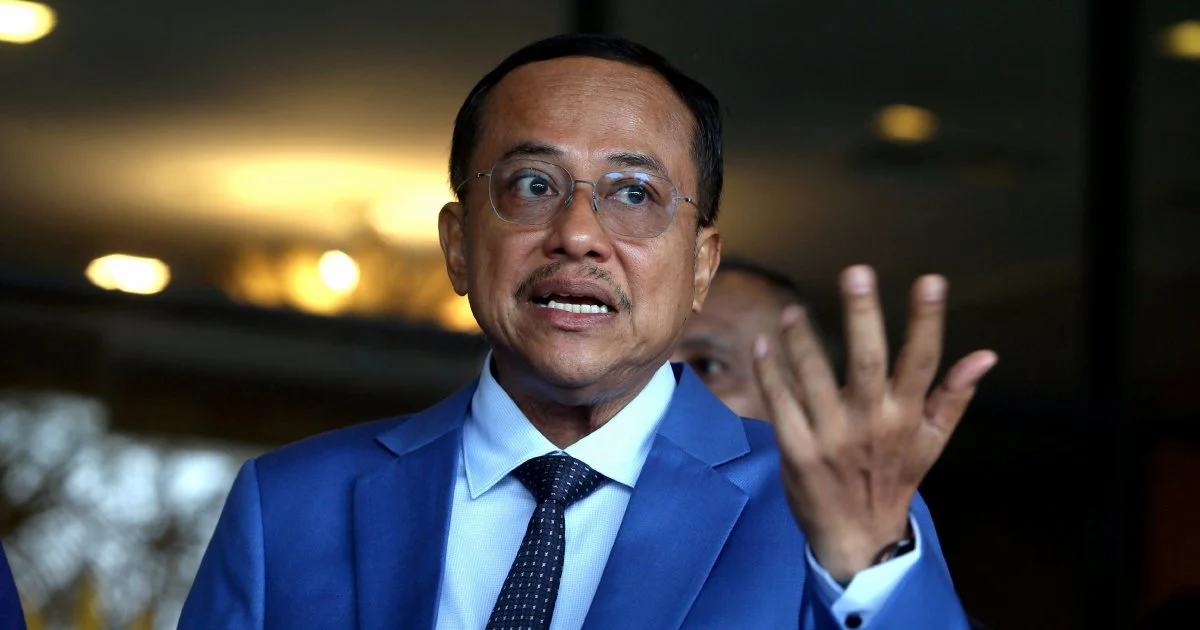
The internal fractures within the Perikatan Nasional coalition have deepened significantly, with Bersatu's top communications officer delivering a scathing rebuke of the alliance's leadership structure. Datuk Tun Faisal Ismail Aziz has called out PN chairman Datuk Seri Dr Ahmad Samsuri Mokhtar for what he characterizes as grossly negligent stewardship during a critical juncture for the coalition, suggesting that Samsuri appears to have lost sight of his primary responsibility as coalition steward.
The tension reveals a fundamental governance problem within Perikatan Nasional, where the chairman's role has come into question. Rather than functioning as a neutral arbiter or active coordinator of the alliance's constituent parties, Samsuri appears to be prioritizing his position within the Islamic Party of Malaysia, according to Bersatu's interpretation of recent developments. This distinction matters enormously, as coalition chairmanship traditionally demands impartiality and focus on collective interests rather than factional positioning.
Bersatu's critique strikes at the heart of why multi-party coalitions often struggle in Malaysian politics. When a coalition chairman simultaneously holds significant power within one of its member parties, conflicting loyalties inevitably emerge. The accusation that Samsuri has blurred these lines suggests that PAS interests may be overshadowing broader PN concerns, a dynamic that threatens the viability of the entire arrangement. This structural vulnerability has plagued Malaysian political alliances for decades.
The context of this dispute matters considerably for understanding the coalition's trajectory. Perikatan Nasional formed as an alternative bloc following the 2022 general election, positioning itself as distinct from the long-standing Barisan Nasional arrangement. Yet internal cohesion has proven elusive, with ideological and strategic differences between its components—particularly between PAS's Islamic agenda and Bersatu's more pragmatic orientation—creating persistent friction. These fault lines are now manifesting openly through leadership disputes.
Faisal's willingness to publicly air grievances about Samsuri's performance indicates that Bersatu feels its position within the coalition is being marginalized. In Malaysian politics, such public criticism from senior party figures typically signals that behind-the-scenes negotiations have failed to resolve underlying tensions. The decision to escalate the matter into the public domain suggests both sides may be preparing for potential reorganization or realignment of political forces.
The implications extend beyond immediate coalition dynamics. If Perikatan Nasional fractures, the resulting political landscape would shift dramatically across multiple states and at the federal level. Several state governments rely on PN as their governing configuration, and any destabilization at the federal coalition level could trigger cascading effects in state-level politics. For regional observers, Malaysia's coalition stability remains crucial to maintaining predictable governance in Southeast Asia's third-largest economy.
Bersatu's position as a relative newcomer to coalition politics, having departed from Barisan Nasional only recently, informs its frustration. The party likely expected clearer protocols and more professional coalition management when it joined PN. Instead, it appears to have encountered the same interpersonal and factional problems that plagued Barisan Nasional, suggesting that Malaysian coalition governance requires systemic reforms rather than simply reshuffling member parties.
The accusation that Samsuri has functionally abandoned his coalition chair responsibilities implies that PN has been left without effective central coordination during its period of difficulty. When a coalition lacks active leadership from its chairman, individual parties revert to pursuing their own interests, which paradoxically weakens the collective bargaining power that justifies their membership in the alliance. This dynamic ultimately harms all members, though not equally—larger or more resourced parties may weather the instability better than smaller components.
For observers tracking Malaysian politics, the Bersatu-PN friction exemplifies a broader pattern: coalitions formed around shared opposition to another bloc tend to lack the positive binding force necessary for long-term stability. Perikatan Nasional emerged partly as a reaction to perceived inequities within Barisan Nasional, but without positive institutional reforms or shared programmatic goals, such negative coalitions struggle to maintain discipline. Unless these underlying structural issues receive sustained attention, further deterioration appears likely.
The immediate question facing PN members involves whether Samsuri can effectively address these criticisms or whether his position becomes untenable. Coalition chairs require the confidence of member parties' leadership, and when that trust erodes publicly, reorganization usually follows. How Samsuri responds—and whether other PN members publicly weigh in on this dispute—will largely determine whether the coalition can recover from this credibility crisis or whether it has entered a terminal phase requiring reconfiguration.