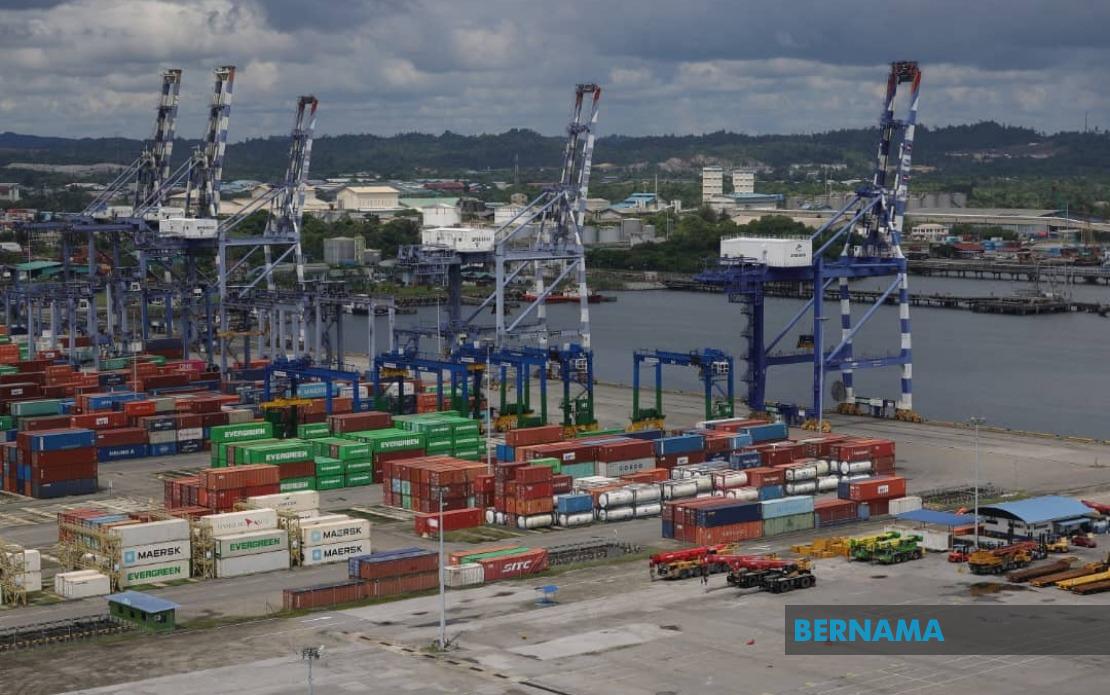
The handover of Bintulu Port's regulatory control to Sarawak marks a watershed moment in the implementation of the Malaysia Agreement 1963, according to Minister in the Prime Minister's Department (Sabah and Sarawak) Datuk Mustapha Sakmud, who attended a formal ceremony in Bintulu today alongside Prime Minister Datuk Seri Anwar Ibrahim and Sarawak Premier Tan Sri Abang Johari Tun Openg. This shift in authority, which transforms the facility from a federal to a state port, represents far more than a mere administrative restructuring; it crystallises the federal government's recognition of Sarawak's constitutional standing as one of Malaysia's three founding partners, a status that has been contested or overlooked in numerous policy spheres since 1963.
Mustapha framed the transfer within a broader narrative of cooperative federalism, arguing that devolving control over Bintulu Port demonstrates how the Malaysia Agreement can be honoured through mechanisms that benefit all stakeholders rather than diminish any. He explicitly rejected the notion that ceding regulatory authority amounts to a weakening of federal power, instead characterising it as a means of unlocking the true economic and strategic potential inherent in a properly balanced federation. For Sarawak, which has long maintained that certain federal encroachments on state prerogatives contradict the spirit of MA63, this represents tangible progress on a diplomatic front that has generated considerable tension over decades.
The Bintulu facility occupies an outsized role in Malaysia's export economy and geopolitical positioning. Historically, the port has functioned primarily as the nation's principal liquefied natural gas export terminal, channelling vast quantities of the country's hydrocarbon wealth into global markets. However, Mustapha's comments suggest that the incoming state administration intends to catalyse a broader economic transformation, reorienting the port away from dependence on fossil fuel exports toward a more diversified, technology-intensive profile encompassing industrial manufacturing, logistics operations, and clean energy production. Such ambitions reflect global trends toward decarbonisation and circular economies, movements that are reshaping investment priorities across Asia.
Sarawak's comparative advantages in pursuing this pivot are formidable, grounded chiefly in its abundant hydroelectric resources. The state generates substantial surplus renewable energy, a strategic asset that low-carbon manufacturing ventures and energy-intensive industries increasingly demand as prerequisites for new investments. Coupled with Bintulu's natural deep-water harbour and established port infrastructure, this renewable energy endowment positions the location as potentially attractive to multinational corporations seeking to establish regional hubs for green manufacturing, battery production, electric vehicle components, and similar forward-facing sectors. For Malaysia and the broader Asia-Pacific region, such a transformation could yield significant competitive benefits during a period of rapid energy transition and industrial relocation.
The timing of this handover carries particular weight within Sarawak's domestic political landscape and its relationship with Kuala Lumpur. The state has invested considerable diplomatic capital in MA63 implementation over the past several years, with questions around state autonomy, resource rights, and constitutional interpretation persistently featuring in bilateral negotiations. By delivering concrete outcomes such as port authority transfer, the federal government—particularly under Anwar Ibrahim's administration—signals willingness to move beyond rhetorical commitment toward substantive action. Nonetheless, observers note that numerous other MA63-related grievances remain unresolved, suggesting that today's ceremony, while symbolically significant, represents only one chapter in a longer process.
For Malaysian readers, the implications extend beyond Sarawak's borders. The precedent established through this transfer may influence how other devolved powers are negotiated and administered across the federation. Should Bintulu succeed in establishing itself as a green energy and manufacturing hub under state stewardship, it could vindicate arguments that decentralised decision-making, freed from federal bureaucratic constraints, generates superior economic outcomes in certain sectors. Conversely, if the transition proves chaotic or the anticipated economic transformation fails to materialise, it may strengthen arguments for federal coordination in critical national assets. The outcome will likely reverberate through future discussions about regional economic development policy across Malaysia.
Mustapha emphasised that the federation's strength derives not from centralised control but from the constructive engagement of its constituent partners, each contributing according to its particular strengths and circumstances. This philosophy, if genuinely embraced, represents a departure from post-independence governance patterns characterised by incremental federal accumulation of power. Sarawak's geographic remoteness, resource wealth, and distinct colonial history have always rendered it somewhat anomalous within the Malaysian system, and proponents of genuine federalism contend that respecting this distinctiveness yields better policy outcomes than imposing uniform federal frameworks. The port handover can be read as a vindication of this perspective, though sceptics will await concrete evidence before revising longstanding assessments.
The ceremony's attendance by both Anwar Ibrahim and Abang Johari underscores the political capital invested in this moment by both the federal administration and the Sarawak state government. Their joint presence signals alignment between two significant power centres within Malaysian politics and suggests that, despite occasional friction over specific issues, a working consensus on MA63 implementation has taken shape. For Sarawak, this reflects the state government's sustained advocacy for constitutional rights and resource autonomy. For the federal government, it demonstrates responsiveness to legitimate regional grievances and commitment to strengthening the federation through accommodation rather than coercion.
The economic potential of Bintulu's transformation should not be overstated, but neither should it be dismissed. Global supply chains are in flux, major corporations are actively seeking new manufacturing locations with reliable power supplies and robust logistics infrastructure, and renewable energy advantages are increasingly valuable. If Sarawak can position itself effectively within these currents, the state could attract substantial inward investment and generate employment across multiple sectors. Success would validate the case for state-level autonomy in economic development strategy; failure would require careful analysis of whether constraints were internal, external, or a function of the transition process itself.
Looking ahead, the Bintulu Port handover will likely feature in future discussions about MA63 implementation, whether as evidence of progress or as a baseline from which to measure further achievements. Other outstanding matters—including revenue-sharing arrangements, immigration controls, education policy, and resource rights—remain contested or unresolved. The federal government's willingness to surrender control over a strategically important asset suggests openness to addressing additional grievances, though the pace of movement will depend on broader political dynamics and the specific merits of individual cases. For now, the handover ceremony represents a moment of reconciliation between federal authority and regional autonomy, with the months and years ahead determining whether this transaction proves merely symbolic or genuinely transformative.
%22%2F%3E%3C%2Fpattern%3E%3C%2Fdefs%3E%3Crect%20width%3D%22100%25%22%20height%3D%22100%25%22%20fill%3D%22url(%23ph5iv51g)%22%2F%3E%3Crect%20width%3D%22100%25%22%20height%3D%22100%25%22%20fill%3D%22url(%23ph5iv51p)%22%2F%3E%3Ctext%20x%3D%2250%25%22%20y%3D%2250%25%22%20text-anchor%3D%22middle%22%20dominant-baseline%3D%22central%22%20fill%3D%22rgba(255%2C255%2C255%2C0.95)%22%20font-family%3D%22Georgia%2C%20'Times%20New%20Roman'%2C%20serif%22%20font-weight%3D%22700%22%20font-size%3D%22320%22%20letter-spacing%3D%22-0.02em%22%3E24%3C%2Ftext%3E%3C%2Fsvg%3E)
%22%2F%3E%3C%2Fpattern%3E%3C%2Fdefs%3E%3Crect%20width%3D%22100%25%22%20height%3D%22100%25%22%20fill%3D%22url(%23ph2s5vng)%22%2F%3E%3Crect%20width%3D%22100%25%22%20height%3D%22100%25%22%20fill%3D%22url(%23ph2s5vnp)%22%2F%3E%3Ctext%20x%3D%2250%25%22%20y%3D%2250%25%22%20text-anchor%3D%22middle%22%20dominant-baseline%3D%22central%22%20fill%3D%22rgba(255%2C255%2C255%2C0.95)%22%20font-family%3D%22Georgia%2C%20'Times%20New%20Roman'%2C%20serif%22%20font-weight%3D%22700%22%20font-size%3D%22320%22%20letter-spacing%3D%22-0.02em%22%3EData%3C%2Ftext%3E%3C%2Fsvg%3E)