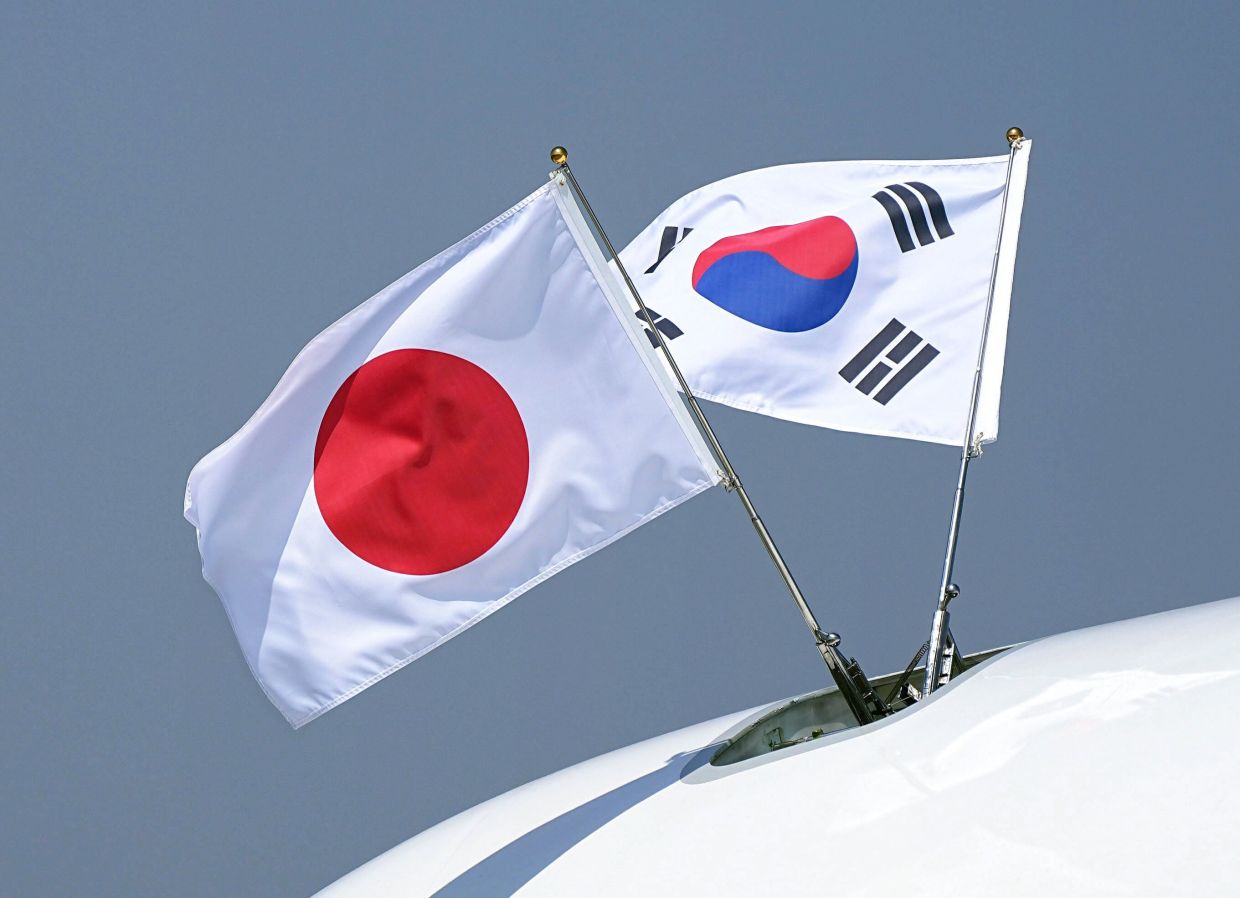
A new assessment from the Washington-based Center for Strategic and International Studies has identified a critical vulnerability in Northeast Asia's nuclear architecture: the potential for cascading weapons development if either Japan or South Korea abandons its non-nuclear posture. Despite current elite opposition to atomic weapons in both nations, researchers warn that the region's delicate strategic balance could unravel rapidly should neighbouring countries alter their nuclear policies, with consequences potentially more destabilizing than any reduction in United States military presence in the region.
The CSIS survey, released Thursday and led by Victor Cha, the think tank's geopolitics and foreign policy president, and Kristi Govella, the Japan chair, paints a striking picture of restraint among decision-makers. Roughly 75 percent of South Korea's strategic leadership and nearly 80 percent of Japan's elite expressed opposition to or ambivalence about their countries developing nuclear capabilities. These figures encompass current and former government officials, parliamentarians, academic researchers, policy analysts, and business executives, providing a comprehensive snapshot of establishment thinking across both nations.
Yet this elite consensus masks a profound disconnect in South Korea between policymakers and the broader population. A 2024 survey by the Chey Institute for Advanced Studies, conducted through the Gallup consultancy, found that over 72 percent of ordinary South Koreans favour their country acquiring nuclear weapons. This gap between top-down caution and bottom-up enthusiasm reflects deepening anxieties about North Korea's advancing weapons programmes and questions about America's long-term commitment to the peninsula's defence. Japan presents a different picture: public opinion aligns more closely with official restraint, with roughly 80 percent of Japanese citizens opposing nuclear weapons development. Observers note that recent media coverage may have exaggerated the weight of nuclear advocates within Tokyo's bureaucracy and political establishment.
The survey's most unsettling finding concerns this fragile equilibrium's vulnerability. Researchers identified a critical tipping point: should one country pursue nuclear weapons, support in the other could climb dramatically. This domino-like escalation mechanism poses unique risks for a region already contending with shifting great-power dynamics, economic interdependence, and a complex network of defence treaties centred on Washington. The implications extend far beyond bilateral tensions, potentially reshaping security calculations across Southeast Asia and the broader Indo-Pacific as nations reassess their own strategic positions in a nuclearly-armed Northeast Asia.
Motivations for nuclear development differ meaningfully between the two nations. South Korean respondents supporting nuclear weapons focused primarily on countering North Korea's military threat and the approximately 30,000 American troops stationed on the peninsula. Japanese advocates, by contrast, expressed concern about the durability of American security guarantees and what they perceive as insufficient long-term commitment to Tokyo's defence. These divergent rationales suggest that addressing nuclear proliferation pressures requires tailored approaches rather than uniform policies, since remedying Seoul's security dilemma with Pyongyang differs fundamentally from reassuring Tokyo about American reliability.
The strategic environment has shifted markedly in recent weeks, underscoring the survey's timeliness. The United States conducted bilateral nuclear cooperation consultations in Seoul earlier this month, followed by an extended deterrence dialogue with Japan in Tokyo. These engagements aimed to deepen Washington's security commitments and demonstrate the credibility of American nuclear protection, essentially attempting to satisfy allied anxieties about abandonment. Such diplomatic theatre remains essential for managing proliferation pressures, yet the CSIS research suggests that reassurance efforts must be sustained and tangible to prevent elite consensus from eroding under sustained threat perceptions.
Beijing's rhetoric complicates the regional picture considerably. China has repeatedly characterized Japan's military modernization as "remilitarisation" and has expressed alarm at Tokyo's defence spending increases and technological acquisitions. These accusations, whether fairly grounded or not, contribute to a security spiral in which Japanese defence investments trigger Chinese concerns, which in turn drive Japanese threat perception upward. Should Japan move toward nuclear weapons, Beijing would likely amplify such critiques, potentially justifying its own weapons expansion and creating cascading instability across the region.
America's own nuclear posture simultaneously influences allied calculations. Brandon Williams, the Department of Energy's under secretary for nuclear security, announced Thursday that the United States intends to accelerate nuclear weapons production to counter unnamed adversaries—a statement widely understood to reference China. The administration plans to invest US$600 million in artificial intelligence systems designed to streamline nuclear weapons design and production, compressing the traditional 10 to 15-year development timeline. Concurrently, defence analysts at CSIS have argued that Washington should equip hypersonic missiles with nuclear rather than conventional warheads, expanding strike options and complicating adversarial response calculations.
Heather Williams, who directs CSIS's nuclear issues project, articulated a perspective directly relevant to Asian proliferation dynamics: credible and diversified American nuclear forces reassure allies, and reassured allies prove less inclined toward weapons development. This logic underpins current diplomatic efforts to demonstrate robust American commitment through consultation dialogues, joint exercises, and explicit declaratory policies. However, the approach faces limits if Chinese weapons modernization accelerates faster than allied perceptions of American commitment can keep pace, or if Washington's political will to maintain regional deployments appears uncertain.
Washington continues pressing Beijing to participate in arms control negotiations, but China has repeatedly refused to join agreements between Washington and Moscow, citing its inferior arsenal and insisting that the United States reduce its own stockpile first. This stalemate creates an unstable foundation for regional security, since Chinese weapons growth remains essentially unconstrained while American and allied planners struggle to thread a needle: maintaining sufficient deterrent capability while avoiding triggering an arms race that could push Japan and South Korea across their current nuclear thresholds.
The CSIS survey ultimately reveals that Northeast Asia's nuclear restraint depends less on principled opposition to weapons development than on sustained confidence in existing security arrangements. This confidence remains fragile. Should Washington's commitment appear doubtful, should Beijing's threat escalate perceived, or should one nation take the leap into weapons development, the consensus against proliferation could collapse with remarkable speed. For Malaysia and Southeast Asian nations dependent on regional stability, the stakes extend well beyond Korean and Japanese security concerns, potentially reshaping the broader order within which ASEAN operates and the great-power competition that frames the region's strategic future.