Cambodia is charting an ambitious course to transform its economic foundation by pursuing partnerships with South Korean manufacturers in sophisticated industries including automotive components, electric vehicle systems and healthcare technology. The strategy represents a deliberate departure from the country's historical dependence on garment production and low-skill labour-intensive operations that have dominated for decades. Deputy Prime Minister Sun Chanthol, acting as first vice-chairman of the Council for the Development of Cambodia, led a high-level delegation through South Korea in mid-June to showcase investment opportunities and strengthen bilateral business ties, underscoring the government's determination to attract capital-intensive, technology-driven ventures.
The investment promotion mission culminated in the 2026 Incheon-Cambodia Investment Roadshow, where Cambodian officials presented their country as a destination for Korean companies seeking manufacturing bases and market opportunities. Through a series of carefully orchestrated corporate visits and sector-focused discussions, Cambodian policymakers met directly with established Korean enterprises already operating domestically in industries the government wants to expand. This tactical approach—what officials termed a "door-knock mission"—paired relationship-building with concrete demonstrations of Cambodia's existing industrial capability, signalling to potential investors that the Kingdom possesses both regulatory frameworks and operational experience in target sectors.
A cornerstone of the mission involved reconnecting with Daejoo KC Group, a diversified South Korean conglomerate with substantial footprints in metallurgy, chemicals, logistics and energy. The group's existing presence in Cambodia through subsidiaries like Camko Motor demonstrates the viability of Korean investment in the Kingdom. Camko Motor assembles Hyundai vehicles for domestic consumption and manufactures automotive wire harnesses for export, generating approximately 500 jobs. This established operation provides government officials with a concrete example to present to prospective investors, illustrating that Cambodia can support complex, multi-layered manufacturing operations and integrate effectively into Korean corporate networks.
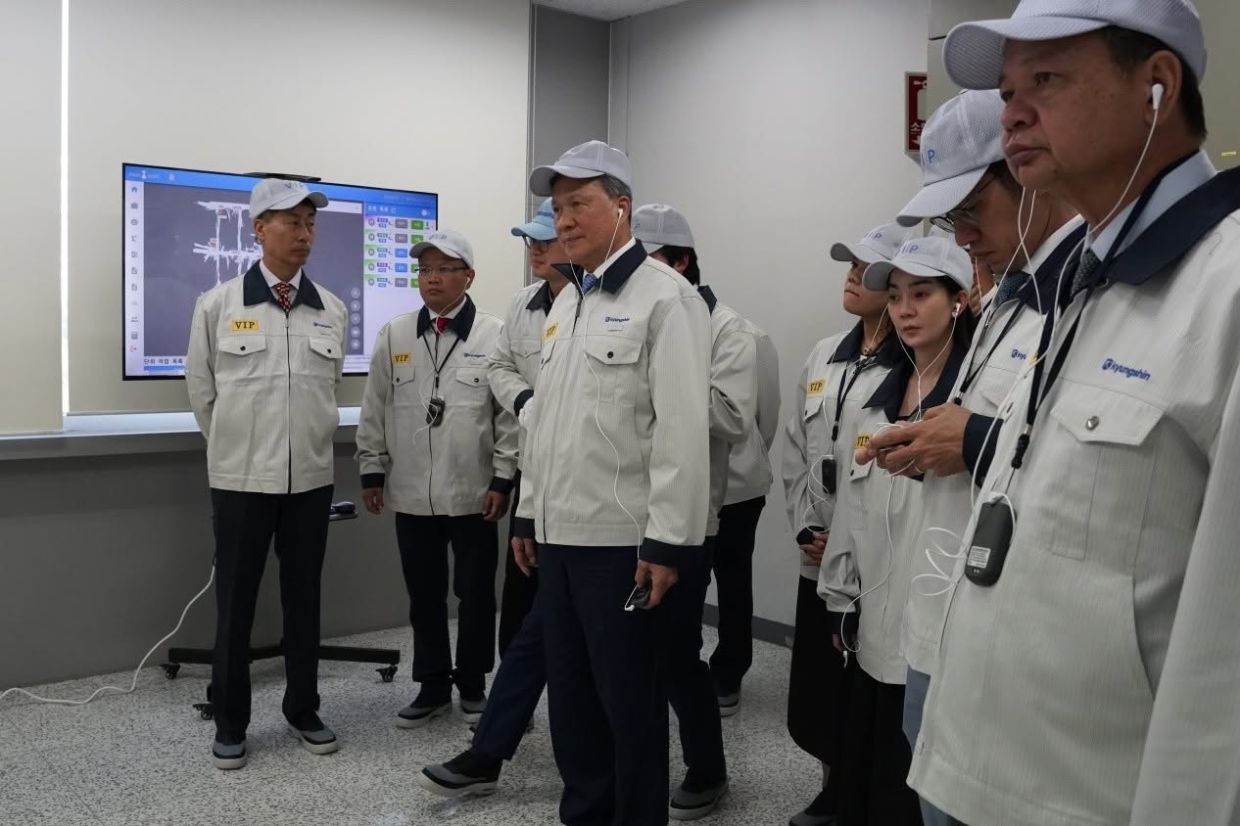
The automotive sector featured prominently in Chanthol's itinerary, reflecting Cambodia's recognition that the global automotive industry is undergoing fundamental transformation toward electric propulsion and digitised systems. Kyungshin Co., Ltd., a specialist in automotive electronic components and wire harness production, represents precisely the type of advanced manufacturer Cambodia wishes to attract. The company, established in 1974, produces sophisticated electrical systems for electric vehicles alongside conventional automotive wiring. Kyungshin's Cambodian operations, established in 2012 within Kandal province, represent approximately US$20 million in committed capital and directly employ 1,467 workers in wire harness manufacturing. For Cambodia, hosting such operations provides technical spillovers and integration into supply chains that extend across East Asia and globally.
Cambodia's pivot toward automotive electronics and EV components signals strategic positioning within regional manufacturing networks at a critical juncture. As global automakers accelerate the transition from internal combustion engines to battery-powered vehicles, the demand for electronic components, control systems and sophisticated wiring architectures is surging. Countries that establish manufacturing hubs for these products before the transition fully consolidates will capture significant market share and employment opportunities. Cambodia's efforts to attract Korean EV-related manufacturers suggest policymakers understand this window of opportunity and are competing for investment against Thailand, Vietnam and Indonesia, all pursuing similar strategies.
Beyond automotive manufacturing, the government's investment vision encompasses logistics, energy infrastructure and construction—sectors where Korean companies maintain substantial technical capabilities and investment capital. The diversification across multiple industrial domains reflects a sophisticated understanding that economic resilience requires exposure to multiple growth engines rather than dependency on single sectors. Moreover, these industries generate significant employment while building physical infrastructure that benefits broader development. By positioning Cambodia as an attractive destination across these interconnected sectors, officials aim to create ecosystems where Korean parent companies might consolidate multiple operations rather than establishing isolated facilities.
The mission's inclusion of Incheon Baek Hospital signalled Cambodia's ambitions extending beyond manufacturing into advanced services and technology transfer. Government officials explicitly requested technical assistance in digital healthcare management systems and advanced medical technologies. This dimension reveals that Cambodia envisions Korean partnerships not merely as production ventures but as conduits for knowledge transfer, professional training and capability-building in the health sector. The emphasis on international-standard hospitals and digital health infrastructure suggests that policymakers recognise healthcare quality as both a public welfare priority and a determinant of broader economic competitiveness.
Cambodia's revised investment law provides the regulatory framework through which these ambitions will be operationalised. Officials highlighted incentive packages, fiscal benefits and investment protection mechanisms designed to attract and retain foreign capital. The combination of regulatory certainty, existing Korean corporate presence and government commitment through high-level diplomatic engagement creates conditions that Korean companies find comparatively attractive. However, Cambodia must compete against established manufacturing hubs like Vietnam and Thailand, which offer longer operational histories, more developed supply chains and larger domestic markets. The Cambodian government's targeted approach—focusing on companies already established domestically and seeking expansion opportunities—represents a pragmatic strategy that builds on existing relationships rather than attempting wholesale attraction of new entrants.
The breadth of participation in the investment roadshow—including representation from the Cambodian ambassador's office, CDC officials, the Ministry of Commerce, the Korean Chamber of Commerce in Cambodia, the Cambodian Oknha Association and the Cambodia Chamber of Commerce—underscores the alignment of diplomatic, regulatory and business dimensions behind the investment promotion effort. This coordination suggests that economic diversification is not merely a commercial objective but a nationally prioritised strategy with sustained governmental support. The involvement of prominent Cambodian business associations signals that domestic private sector leadership recognises the necessity of structural economic transformation and is actively participating in attracting the foreign partnerships that will facilitate such change.
For Cambodia's domestic economy, success in attracting advanced manufacturing investment carries substantial implications. The garment and footwear sectors, while historically crucial to employment and export revenues, face long-term structural challenges including wage pressures, automation and competition from lower-cost producers in Bangladesh and other South Asian countries. Automotive components and EV systems manufacturing offer higher value-added and greater insulation from labour-cost competition. Workers employed in these sectors typically develop more specialised technical skills and command higher wages than garment factory operatives. Over time, successful diversification could raise average productivity and wages across the manufacturing workforce, enhancing living standards and reducing Cambodia's vulnerability to sector-specific downturns.
Regional implications of Cambodia's strategy merit consideration alongside domestic objectives. A successful Cambodian manufacturing sector in automotive electronics and EV components would integrate the Kingdom more deeply into East Asian value chains centred on Korean, Japanese and Chinese manufacturers. This deepened integration could strengthen Cambodia's geopolitical and economic relationships within the ASEAN community and broader region, while potentially reducing historical dependency on individual partnerships. The competition between Cambodia, Vietnam and Thailand for Korean investment in these sectors reflects broader regional dynamics in which countries seek to position themselves as preferred destinations for advanced manufacturing as global supply chains continue restructuring.
The sustainability of Cambodia's diversification strategy depends on consistent execution of regulatory commitments, investment in human capital development and infrastructure improvements. While existing Korean investments like Camko Motor and Kyungshin demonstrate feasibility, scaling up significantly will require expanded vocational training, reliable electricity supply, transportation infrastructure and skilled management capacity. The government's willingness to facilitate these requirements will ultimately determine whether the investment roadshow initiates a sustained transformation or remains an isolated diplomatic initiative. South Korean companies evaluating long-term expansion in Cambodia will assess not only current incentives but also confidence that the regulatory environment, infrastructure and workforce capabilities will support competitive manufacturing operations over coming decades.