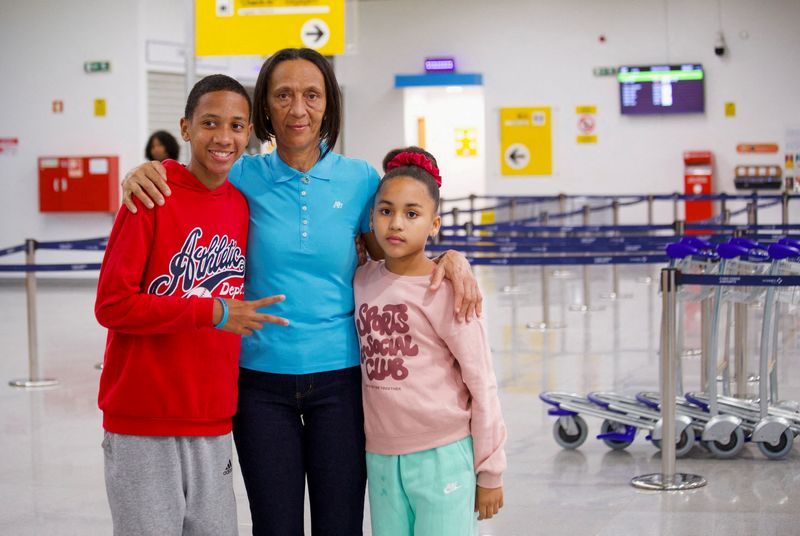
Ana Candida Evora will finally witness her son in action at the World Cup after securing a visa to enter the United States, marking a triumphant resolution to a story that tugged at hearts across the football world. The breakthrough comes just days after Vozinha, the 40-year-old goalkeeper for Cape Verde, tearfully disclosed that his mother had been unable to attend his dazzling tournament debut against Spain, thwarted by bureaucratic obstacles and financial constraints that made international travel seem impossible.
Vozinha delivered an extraordinary performance in Cape Verde's opening match against the European champions in Atlanta, producing seven crucial saves that earned him the distinction of being named his team's outstanding player in a memorable goalless draw. The achievement represented a career-defining moment for the experienced custodian, yet his celebration was shadowed by the absence of the person who had supported him throughout his footballing journey. When he publicly shared his disappointment about his mother's inability to witness this milestone, the emotional narrative resonated widely, drawing sympathetic attention to the intersection of immigration policy and human stories.
The intervention by the U.S. State Department demonstrated the machinery of diplomatic channels responding to public sentiment and individual circumstance. Officials confirmed that their visa processing team in Praia, the capital of Cape Verde, had maintained active engagement with Evora and ensured she received all necessary assistance throughout the application procedure. The approvals process moved with expedited momentum, signalling both the political sensitivity surrounding the World Cup and the recognition that visa complications were preventing ordinary supporters from attending the tournament.
A State Department representative articulated the resolution to media personnel, emphasising that all established regulations, administrative procedures, and official benchmarks had been observed while facilitating her travel authorisation. The phrasing underscored that Evora's case had been handled through proper channels rather than circumventing standard practice, reinforcing institutional legitimacy despite the accelerated timeline. This careful communication reflected awareness that the situation had attracted public scrutiny and required transparent explanation.
The timing proves significant, as Evora will now be able to attend Cape Verde's second group-stage encounter against Uruguay in Miami on Sunday, providing her with an immediate opportunity to cheer her son's continued involvement in the tournament. This match represents a crucial fixture in the small island nation's World Cup campaign, with points desperately needed against formidable opposition. The presence of a supportive family member in the stands carries psychological weight for players, particularly at pivotal moments in competitions of this magnitude.
The broader context of Evora's predicament illuminates the immigration climate that has shaped international travel during this World Cup. Cape Verde citizens, like residents of numerous countries deemed higher-risk under contemporary American policy, had initially faced requirements to post substantial financial bonds ranging up to $15,000 merely to cross the United States border. These prerequisites created substantial barriers for ordinary individuals seeking to attend the tournament as supporters, effectively pricing out many fans from participating countries with lower average incomes.
Although the Trump administration eventually rescinded this bonding requirement specifically for individuals holding valid World Cup tickets, the damage had already been inflicted on people like Evora who had made decisions based on the original policy. She had calculated that the combined expenses of visa processing, bond deposits, travel, and accommodation rendered the journey prohibitively expensive, leading her to resign herself to following her son's performances through television and online coverage rather than in person. The financial gatekeeping had threatened to exclude her entirely from witnessing a potentially defining chapter in his career.
Vozinha's emotional revelation about his mother's absence served as a catalytic moment that transcended sport, humanising the effects of stringent immigration procedures on families and highlighting the collateral consequences of border enforcement policies. His willingness to publicly acknowledge his disappointment transformed a personal family matter into a broader conversation about accessibility to international sporting events and the experiences of citizens from smaller, less affluent nations.
The resolution provides more than merely logistical satisfaction; it represents vindication of the principle that exceptional circumstances warrant responsive governance. For Evora, it means redemption after missing one of her son's finest performances, while for Vozinha, it offers the possibility of playing with the knowledge that his mother is finally present to witness his participation in football's greatest stage. Their story exemplifies how individual human narratives can intersect with institutional power in ways that occasionally produce positive outcomes, though it also underscores that such outcomes often require considerable public attention and intervention from high-level officials to override standard administrative barriers.