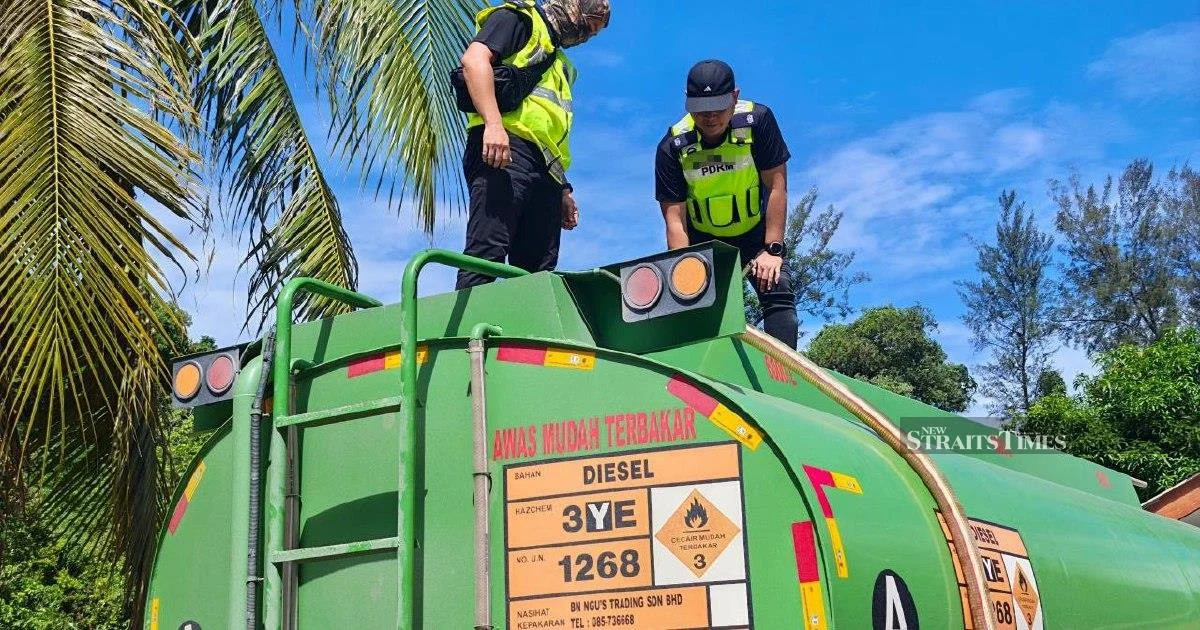
Authorities in Miri have successfully dismantled an organised operation that diverted Malaysia's heavily subsidised diesel fuel through an illicit depot hidden in a residential bungalow located in the Tanjung Lobang area. The operation, which represents a significant breach of the nation's fuel subsidy controls, was uncovered following an investigation that resulted in the seizure of 15,000 litres of fuel and the arrest of four men suspected of orchestrating the scheme. The discovery underscores the persistent vulnerability of Malaysia's fuel distribution network to sophisticated smuggling operations that exploit regulatory gaps and profit from price differentials between domestic and cross-border markets.
The clandestine depot's location within a private residential property demonstrates the resourcefulness of criminal syndicates in evading detection. Rather than operating through legitimate channels or obvious commercial facilities, the operators used a nondescript bungalow in an urban residential neighbourhood as cover for what investigators believe was a substantial diversion operation. This tactic has become increasingly common across Southeast Asia, where criminal networks relocate from easily identifiable industrial zones to mixed-use residential areas where heavy fuel trafficking might appear less conspicuous to casual observers. The deliberate concealment strategy reflects evolving adaptation by smuggling organisations responding to enhanced enforcement at ports and conventional refuelling points.
The quantity recovered—15,000 litres—indicates this was not a small-scale bootleg operation but rather part of a coordinated system designed to move considerable volumes of fuel through unofficial channels. For context, this volume represents the storage capacity of multiple standard vehicle fuel tanks, suggesting the depot may have served as a distribution hub supplying smaller retailers, unlicensed filling stations, or cross-border smuggling networks operating in the region. The Miri location is particularly significant given its proximity to international borders and established smuggling routes that have historically been used to move Malaysian fuel into Indonesia and Brunei, where fuel prices are substantially higher.
Diesel diversion schemes directly undermine Malaysia's carefully calibrated fuel subsidy system, which the government maintains to protect consumers and support the transportation and industrial sectors. When subsidised fuel is illegally diverted to the black market or smuggled across borders, the nation loses both the subsidy cost and revenue that would have been recovered through legitimate taxation and sales margins. Analysts estimate that fuel diversion costs Malaysia billions of ringgit annually in lost revenue and subsidy overspends. This drain has policy implications for the government's fiscal position, particularly as Malaysia attempts to balance its budget and manage inflation in critical economic sectors.
The four individuals detained are now under investigation for various offences related to the fuel diversion conspiracy. Their roles—whether as operators, financial organisers, logistical coordinators, or distribution network managers—will determine the severity of charges and potential sentencing if prosecutions proceed. In Malaysia, fuel smuggling and subsidy fraud can attract charges under the Regulations of Petroleum Products Act and the Customs Act, carrying penalties including substantial fines and imprisonment. The investigation may extend beyond these four individuals if authorities determine that the operation supplied to downstream buyers or if evidence reveals links to larger organised crime networks.
The Tanjung Lobang bust reflects a broader pattern of enforcement activity targeting the fuel diversion supply chain. Authorities have intensified operations across Peninsular Malaysia and East Malaysia, recognising that dismantling fuel smuggling requires coordinated strikes against storage, distribution, and retail points simultaneously. The success of this operation suggests intelligence-gathering mechanisms are functioning effectively, though the continued discovery of large-scale clandestine depots indicates that demand for diverted fuel remains robust and criminal profit margins remain sufficiently attractive to sustain investment in sophisticated distribution infrastructure.
Regional dynamics amplify the challenge facing Malaysian enforcement agencies. The price gap between Malaysia's subsidised diesel and open-market prices in neighbouring countries creates powerful economic incentives for smuggling. Brunei's fuel prices, for instance, are considerably higher, making Malaysian diesel attractive for illegal export despite border controls. This structural price advantage means fuel diversion will persist as long as subsidy policy maintains the differential, unless enforcement capabilities dramatically expand or pricing policies shift significantly. Neighbouring Indonesia has similar challenges, and cross-border cooperation mechanisms, while improving, remain inadequate to intercept most smuggled fuel flows.
The incident also highlights vulnerabilities in monitoring systems that track fuel distribution from refineries and import terminals through retail points. Diversion typically occurs through three mechanisms: falsified documents, theft from legitimate supply chains, and siphoning at bulk storage facilities. The bungalow depot suggests fuel may have been extracted earlier in the supply chain—perhaps through complicit employees at official distribution points—or through systematic theft coordinated with truck drivers and logistics personnel. Subsequent investigation may reveal whether official fuel suppliers were inadvertently facilitating the diversion through lax security or whether deliberate insider participation was involved.
For Malaysian consumers and regional observers, the bust represents an important enforcement success but also reflects the underlying tension in fuel subsidy policy. While subsidies are politically essential and economically justified on grounds of protecting lower-income households and industrial competitiveness, they simultaneously create conditions for organised smuggling that drain resources and incentivise corruption. Policymakers must balance these competing pressures, and some analysts argue that progressive subsidy reduction, coupled with targeted assistance for vulnerable groups, would address root causes of diversion more effectively than enforcement alone.
The arrested individuals face investigation processes that typically take weeks to months as authorities compile evidence, interview suspects, and build prosecution cases. Parallel inquiries will likely examine financial flows, identifying who funded the operation and who purchased the diverted fuel. Such investigations often uncover broader networks linking fuel diversion to other crimes including money laundering and organised trafficking. The Miri discovery thus represents not merely an isolated bust but a potential entry point for intelligence services into larger criminal architectures operating across the region.
Going forward, the incident will inform discussions among ASEAN partners about transnational fuel smuggling. Indonesia, Brunei, Singapore, and Thailand all grapple with similar challenges, and coordinated intelligence-sharing and border enforcement protocols remain underdeveloped. Malaysian authorities' success in this case may generate momentum for regional cooperation frameworks that address the cross-border dimensions of fuel diversion more systematically than current bilateral arrangements allow.