The Paris Vivatech festival has become a window into the future of global innovation, with entrepreneurs and companies from across Europe and Asia presenting technologies poised to transform healthcare, transportation, security and athletic performance. Three floors of exhibits highlight a diverse range of solutions addressing real-world problems, from surgical complications to the emerging threat of synthetic voice fraud. These innovations carry particular resonance for Southeast Asia, where rapid technological adoption, substantial healthcare needs, and growing digital security challenges create fertile ground for emerging technologies.
Berlin-based Blueprint Biomed is reimagining bone graft procedures, which annually affect millions of patients undergoing surgery for fractures, spinal fusion, or dental implants. The company's solution eliminates the need for autologous grafts—bone harvested from patients' own bodies—a procedure that carries significant risks. Chief executive Aaron Herrera explained that traditional bone grafts from patients' own tissue frequently fail, necessitating repeat surgeries that compound patient suffering and healthcare costs. Complications from these procedures remain a persistent challenge in surgical practice, particularly in regions where follow-up care may be limited or expensive. Blueprint's approach uses three-dimensional printing to create customised scaffolding from polycaprolactone, a biodegradable polyester that provides structural support while the body gradually replaces it with natural bone tissue. A collagen matrix integrated into the scaffold further accelerates the healing process. This dual-material system dissolves naturally within three months for collagen and two years for the polymer, leaving no foreign material behind. The company is pursuing $2.5 million in funding as it advances toward human clinical trials, with an ambitious timeline targeting patient implantation by 2028. For Malaysia and Southeast Asia, where orthopaedic trauma and degenerative spine conditions burden public healthcare systems, such innovations could significantly reduce revision surgery rates and improve patient outcomes.
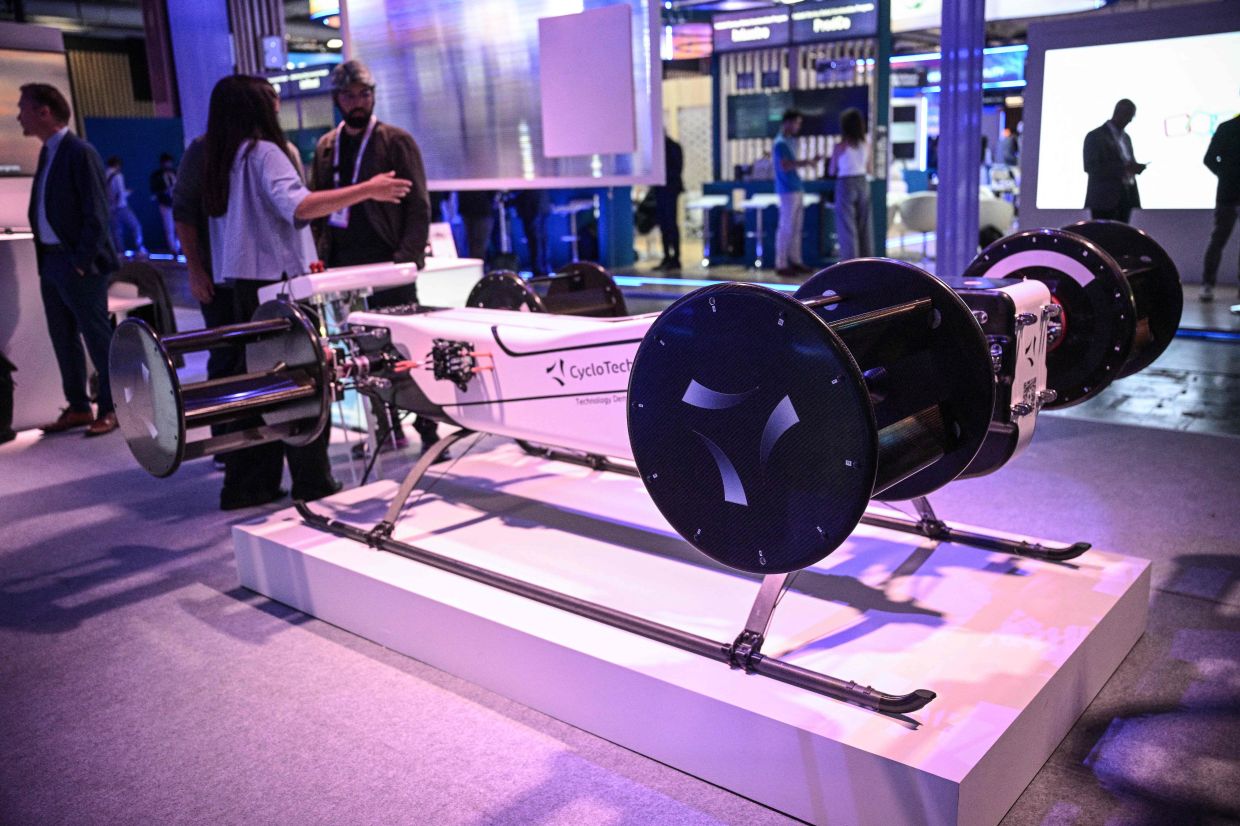
While drone technology already plays essential roles in emergency response, cinematography, and military operations—including documented use in the Ukraine conflict—Austrian startup CycloTech argues it has fundamentally reimagined how these aircraft move through space. The company's distinctive motor design features an open cylindrical shape with multiple wing-shaped blade elements that generate unprecedented manoeuvrability. Marketing director Andrea Marchsteiner outlined capabilities that distinguish CycloTech's approach: vertical hovering like traditional helicopters, forward flight matching fixed-wing aircraft speeds, and critically, the ability to brake instantaneously or reverse direction mid-flight. This combination of attributes opens applications impossible with conventional drone designs. Urban delivery networks in congested cities like Kuala Lumpur or Bangkok could benefit from such agility, allowing package delivery without designated landing zones. The technology also enables more sophisticated search and rescue operations in cluttered environments and industrial inspection of confined spaces. CycloTech, which has already secured €40 million in funding, seeks additional capital and strategic partnerships with established aerospace manufacturers to integrate its motors into commercial platforms. The company's growth trajectory illustrates how specialised component innovation can create value across multiple industries.
As artificial intelligence becomes increasingly sophisticated, new security threats emerge at corresponding speed. Deepfake audio technology can now convincingly replicate an individual's voice within seconds, creating opportunities for fraud that traditional security measures struggle to detect. French company Whispeak began as a voice authentication tool for banking and sensitive services but has pivoted to focus on the more pressing threat of fraudulent audio. Chief executive Florent Van Calster emphasised that voice imitation tools have become extraordinarily accessible, often available for minimal cost or freely online. Whispeak has spent three years developing detection systems powered by its proprietary artificial intelligence models, claiming to have achieved first-place performance in multiple international deepfake detection competitions. The company currently operates with error rates below one per cent on available training data, though Van Calster acknowledges this represents only a snapshot in an ongoing technological arms race. Whispeak is collaborating with French telecommunications giant Bouygues to screen incoming calls for deepfake signatures, providing real-time warnings to users. For Malaysia's financial sector and government agencies increasingly targeted by sophisticated fraud schemes, such defensive capabilities address vulnerabilities that extend beyond traditional password-based security.
Athletic performance monitoring has traditionally relied on expensive, invasive blood tests or sophisticated wearable sensors that provide incomplete information. Hong Kong-based startup PointFit offers a radically simpler alternative through an adhesive skin patch equipped with a miniature sensor that analyzes biomarkers present in human sweat. Chief executive Kenny Oktavius developed the underlying technology beginning in 2019 while still a student, demonstrating the entrepreneurial energy emerging from Asia's tech ecosystem. The sensor measures critical indicators including glucose levels and cortisol—the stress hormone—without requiring needle punctures or laboratory analysis. PointFit's proprietary artificial intelligence system constructs a personalised "sweat index" for each user, adjusting expected values based on demographic characteristics and environmental temperature to account for biological variation. Oktavius highlighted a sobering reality: elite marathon runners equipped with expensive heart rate monitors still collapse during competition, indicating that conventional metrics capture only partial information about physiological state. True understanding of athletic capacity requires biomarker analysis of the type available in hospital settings. PointFit has already partnered with Red Bull's Athlete Performance Centre and Puma's Nitro Labs innovation facility, validating its approach within elite sports environments. The company eyes broader consumer adoption through retailers including Decathlon and optical-retail giant EssilorLuxottica, suggesting a pathway from specialised athletic applications to mainstream health monitoring. For Southeast Asian consumers and athletes, such accessible biomarker monitoring could democratize performance insights previously available only to wealthy professionals.


%22%2F%3E%3C%2Fpattern%3E%3C%2Fdefs%3E%3Crect%20width%3D%22100%25%22%20height%3D%22100%25%22%20fill%3D%22url(%23ph2xpp4g)%22%2F%3E%3Crect%20width%3D%22100%25%22%20height%3D%22100%25%22%20fill%3D%22url(%23ph2xpp4p)%22%2F%3E%3Ctext%20x%3D%2250%25%22%20y%3D%2250%25%22%20text-anchor%3D%22middle%22%20dominant-baseline%3D%22central%22%20fill%3D%22rgba(255%2C255%2C255%2C0.95)%22%20font-family%3D%22Georgia%2C%20'Times%20New%20Roman'%2C%20serif%22%20font-weight%3D%22700%22%20font-size%3D%22136%22%20letter-spacing%3D%22-0.02em%22%3EPAS-Bersa%E2%80%A6%3C%2Ftext%3E%3C%2Fsvg%3E)