%22%2F%3E%3C%2Fpattern%3E%3C%2Fdefs%3E%3Crect%20width%3D%22100%25%22%20height%3D%22100%25%22%20fill%3D%22url(%23ph7elog)%22%2F%3E%3Crect%20width%3D%22100%25%22%20height%3D%22100%25%22%20fill%3D%22url(%23ph7elop)%22%2F%3E%3Ctext%20x%3D%2250%25%22%20y%3D%2250%25%22%20text-anchor%3D%22middle%22%20dominant-baseline%3D%22central%22%20fill%3D%22rgba(255%2C255%2C255%2C0.95)%22%20font-family%3D%22Georgia%2C%20'Times%20New%20Roman'%2C%20serif%22%20font-weight%3D%22700%22%20font-size%3D%22320%22%20letter-spacing%3D%22-0.02em%22%3EDAP%3C%2Ftext%3E%3C%2Fsvg%3E)
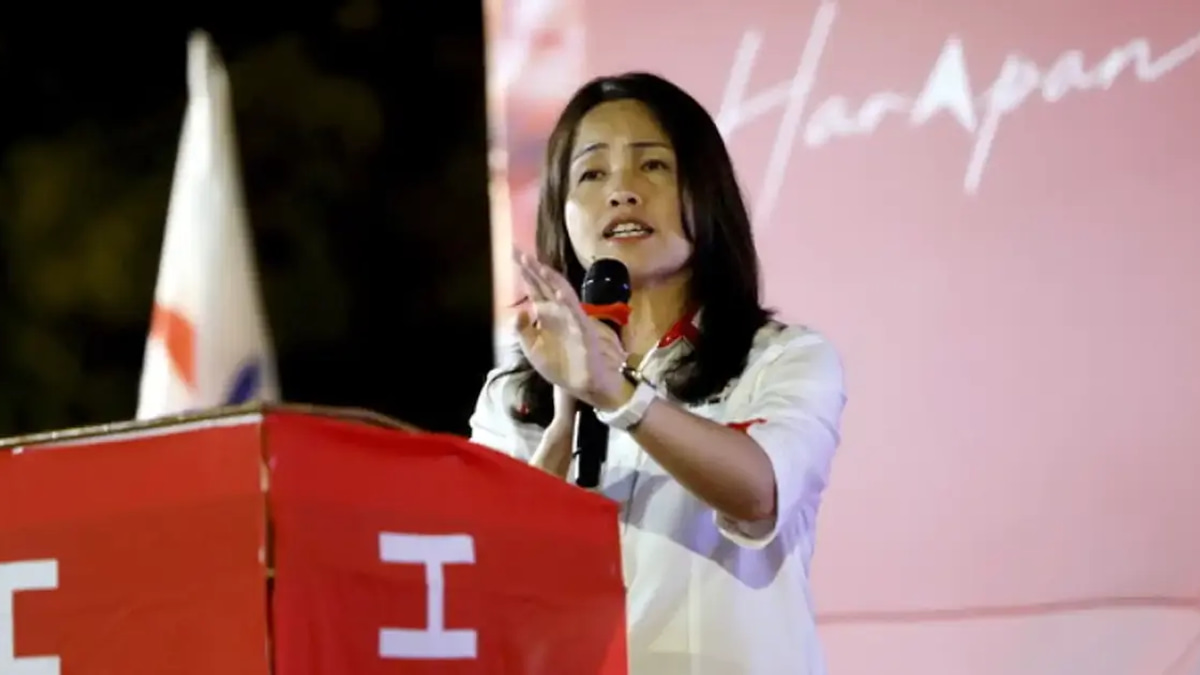
As the Johor state election approaches, the Democratic Action Party has raised fresh concerns about the weaponisation of misinformation in campaign tactics. Johor DAP chairman Teo Nie Ching has publicly cautioned voters against allowing themselves to be manipulated by deliberate distortions and falsehoods circulating in the electoral arena, specifically targeting doctored images of party candidates.
The controversy centres on digitally altered posters depicting potential DAP candidates wearing headscarves in ways that Teo characterises as inappropriate representations. According to the party leader, these manipulated images represent a calculated effort to manufacture fear and division among non-Malay voters, particularly within the Chinese community that historically forms a significant voting bloc in Johor. The timing and specificity of the campaign suggests a coordinated effort to undermine Pakatan Harapan's electoral prospects in the state by exploiting religious and communal sensitivities.
Teo's criticism extends beyond the technical aspects of poster manipulation to encompass what she describes as the underlying intent of such tactics. The deliberate portrayal of candidates in religiously inappropriate contexts, she argues, serves a dual purpose: it attempts to alienate non-Muslim voters by suggesting an Islamic dimension to the party's identity that contradicts its secular positioning, whilst simultaneously seeking to delegitimise candidates by portraying them as disrespectful towards Muslim religious observance. This represents a sophisticated form of wedge politics designed to fracture the multiethnic coalition that Pakatan Harapan depends upon for electoral success.
In her response, the Wanita DAP chief emphasised the party's principled stance on religious matters, noting that DAP maintains deep respect for Islamic traditions and practices. She specifically highlighted that the Muslim headscarf, known as the hijab, carries profound spiritual and cultural significance and should not be trivialised through deliberate misrepresentation in political campaigns. This assertion of respect for religious symbols serves to insulate the party against accusations of Islamophobia whilst condemning the manipulative use of religious imagery by opponents.
The broader context for these concerns lies in the historical relationship between DAP and Malay-Muslim majority constituencies. As a party with origins in the Chinese community, DAP has long faced criticism from conservative political forces who question its commitment to Islam and Malay-Muslim interests. Any campaign that reinforces this perception, regardless of its veracity, carries the potential to suppress voter turnout among non-Malay communities who fear that DAP's presence in government might dilute protections for their own communities' interests.
Teo also drew attention to what she characterised as the misogynistic dimensions of this campaign strategy. The targeting of female candidates through imagery designed to trigger social controversy around religious propriety reflects, in her view, a willingness to weaponise gender against political opponents. This tactic exploits existing societal anxieties around women's roles and religious identity, leveraging these concerns as a tool for electoral manipulation rather than genuine policy discourse.
The Deputy Communications Minister's intervention in this matter underscores the significance the federal government accords to election-related misinformation. Her prominent public statement serves not merely to rebut specific claims but to signal to voters that they should approach sensational claims about candidates with scepticism, particularly those relying on visual manipulation rather than substantive policy critique.
Looking at the electoral landscape, Johor remains a critical battleground for all major political coalitions. The Johor State Legislative Assembly dissolution on June 1 triggered elections for all 56 state seats. Prior to dissolution, Barisan Nasional controlled 40 seats, whilst Pakatan Harapan held 12, Perikatan Nasional secured three, and MUDA retained one. This distribution meant that Barisan Nasional held a commanding majority, though the electoral intervention presents an opportunity for opposition forces to make gains if they can mobilise their voter base effectively.
The Election Commission has established June 27 as the nomination day for candidates, providing a critical window for parties to register their contenders and for voters to assess the quality and background of those standing for election. The polling is scheduled for July 11, allowing roughly two weeks for the formal campaign period. This compressed timeline means that negative campaigns and misinformation can spread rapidly and potentially influence voter behaviour before correction mechanisms have time to function.
The emergence of poster manipulation tactics raises broader questions about election integrity and the adequacy of regulatory frameworks in addressing digital-age political deception. Traditional election law and monitoring mechanisms were designed primarily to address material campaign violations such as overspending or breaches of cooling-off periods. The deliberate creation and dissemination of fabricated imagery represents a category of interference that regulatory bodies struggle to address in real time, even when the falsehoods become apparent to independent observers.
For Malaysian voters, particularly in Johor's multicultural context, the lesson carries particular weight. Electoral decisions should rest upon factual assessment of party platforms, candidates' records, and policy proposals rather than emotional reactions to provocative imagery whose authenticity remains questionable. Teo's call for voters to reject such tactics and instead prioritise harmony, unity and peace reflects an appeal to civic responsibility that transcends the immediate electoral competition.
As the campaign intensifies over the coming weeks, political observers will watch closely to determine whether such misinformation tactics gain further traction or whether voter and media pushback constrains their spread. The incident illustrates the contemporary challenge facing democracies worldwide: maintaining electoral integrity when technology enables rapid dissemination of compelling but false visual content.