%22%2F%3E%3C%2Fpattern%3E%3C%2Fdefs%3E%3Crect%20width%3D%22100%25%22%20height%3D%22100%25%22%20fill%3D%22url(%23ph1gmx8g)%22%2F%3E%3Crect%20width%3D%22100%25%22%20height%3D%22100%25%22%20fill%3D%22url(%23ph1gmx8p)%22%2F%3E%3Ctext%20x%3D%2250%25%22%20y%3D%2250%25%22%20text-anchor%3D%22middle%22%20dominant-baseline%3D%22central%22%20fill%3D%22rgba(255%2C255%2C255%2C0.95)%22%20font-family%3D%22Georgia%2C%20'Times%20New%20Roman'%2C%20serif%22%20font-weight%3D%22700%22%20font-size%3D%22320%22%20letter-spacing%3D%22-0.02em%22%3EDAP%3C%2Ftext%3E%3C%2Fsvg%3E)
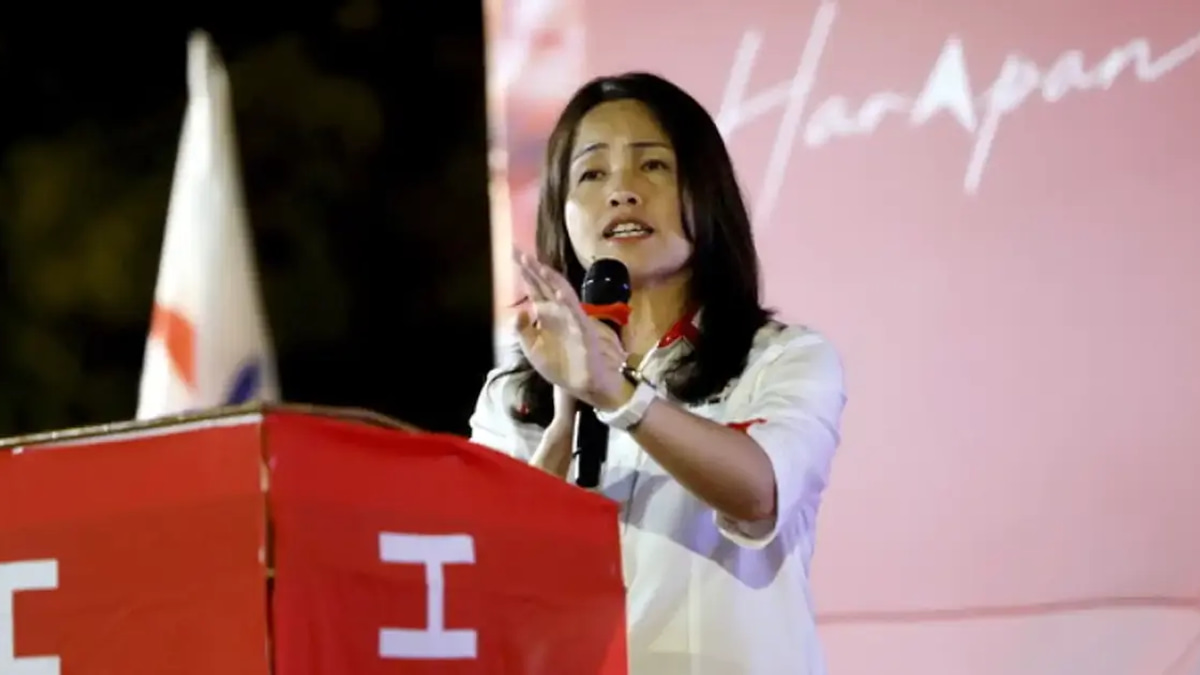
With the Johor state election drawing closer, Democratic Action Party (DAP) figure Teo Nie Ching has issued a public warning about the proliferation of spurious campaign materials bearing the party's branding. The alert, issued in Kuala Lumpur on June 18, underscores mounting concerns within the opposition coalition about disinformation tactics that could sway undecided voters during a critical electoral moment in the southern state.
The circulation of counterfeit DAP posters represents a deliberate attempt to distort the party's messaging and deceive the electorate, according to Teo's statement. Such forgeries typically contain inflammatory language, false policy positions, or fabricated statements attributed to party leaders—all designed to generate negative sentiment without originating from official party channels. The strategy exploits voter confusion and the fragmented information landscape that characterizes modern Malaysian electoral contests, where social media and grassroots distribution make attribution difficult.
Information warfare has become an increasingly sophisticated aspect of Malaysian politics. Competing factions routinely deploy misleading content to undermine rival candidates and parties, taking advantage of the speed at which false claims spread online and through messaging platforms. The Johor context is particularly sensitive given the state's historical significance as a traditional stronghold and the growing competitiveness of recent electoral cycles. In such environments, fake materials can meaningfully shift voter behaviour, especially among less digitally literate demographics or those encountering such content without immediate access to verification resources.
Teo's intervention reflects broader concern within DAP about maintaining control over its public narrative during campaign season. Political parties across Malaysia—whether ruling coalition or opposition—have experienced difficulty preventing misuse of their symbols, logos, and messaging. The challenge intensifies when third parties, whether hostile actors or ambitious individuals seeking to inflame tensions, weaponise party branding to amplify divisive content. Unlike official communications that undergo quality control, clandestinely produced materials face no such scrutiny and can circulate before fact-checkers respond.
The strategic implications for the Johor election are noteworthy. If voters encounter fake DAP materials promoting extreme positions or containing crude attacks, such exposure could either reinforce negative preconceptions among opposition-sceptical voters or generate backlash among DAP supporters who feel their party is being traduced. Either outcome serves those producing the fakes—typically rival political camps seeking to disrupt opposition momentum. This dynamic places DAP in a reactive posture, forced to spend campaign resources clarifying what it genuinely stands for rather than advancing its own agenda.
Malaysian electoral authorities have historically faced criticism for insufficient action against disinformation during campaigns. While the Election Commission maintains rules governing campaign conduct, enforcement remains patchy and late-stage interventions cannot fully contain damage from widespread misinformation. The burden thus falls largely on political parties themselves to police false use of their identities and educate voters about distinguishing authentic from fraudulent materials. This asymmetry advantages better-resourced campaigns but places constraints on smaller parties with limited reach.
Teo's call for public vigilance reflects a recognition that voters themselves must become more discerning consumers of campaign material. The advice carries particular weight in the Malaysian context, where electoral participation typically remains high but media literacy around identifying manipulated or forged content remains inconsistent. By explicitly asking the public not to be swayed by smear tactics and false information, DAP is attempting to inoculate voters against manipulation while simultaneously validating concerns that such tactics are actively being deployed.
The warning arrives amid broader regional trends toward increasing electoral contestation. Across Southeast Asia, opposition parties have grown more assertive in challenging long-entrenched ruling establishments, triggering more aggressive counter-campaigns from establishment actors. Malaysia's political ecosystem has reflected this pattern, with recent elections witnessing more sophisticated information operations and mudslinging than previous cycles. Johor, as a significant electoral prize with symbolic importance, naturally attracts such tactics.
Teo's statement also implicitly raises questions about attribution. Without identifying who produces these fake materials or which rival factions benefit from their distribution, DAP leaves room for speculation. Political observers will interpret the warning through partisan lenses—supporters viewing it as evidence of desperate opposition tactics by ruling parties, while sceptics may question whether DAP itself sometimes exaggerates threats to galvanise supporters. This interpretive divide itself reflects the polarised information environment that makes counterfeit materials effective.
Governance implications extend beyond immediate electoral competition. Persistent vulnerability to disinformation campaigns suggests structural weaknesses in Malaysia's institutional safeguards against electoral manipulation. Media fragmentation, the absence of robust fact-checking infrastructure with official backing, and limited digital literacy programmes all create conditions where false materials flourish. Addressing these vulnerabilities would require sustained investment and cross-party commitment—goals that remain elusive in an increasingly competitive political landscape.
Moving forward, parties contesting the Johor election face pressure to develop rapid-response mechanisms for debunking false materials. Social media platforms, though themselves sometimes complicit in spreading unverified content, can potentially assist through labelling or removal of obvious forgeries—though political sensitivity often constrains such interventions. Ultimately, the health of Malaysian electoral democracy depends partly on voters' capacity to resist manipulation, a capacity that requires not only Teo's warnings but systemic improvements to the information ecosystem.