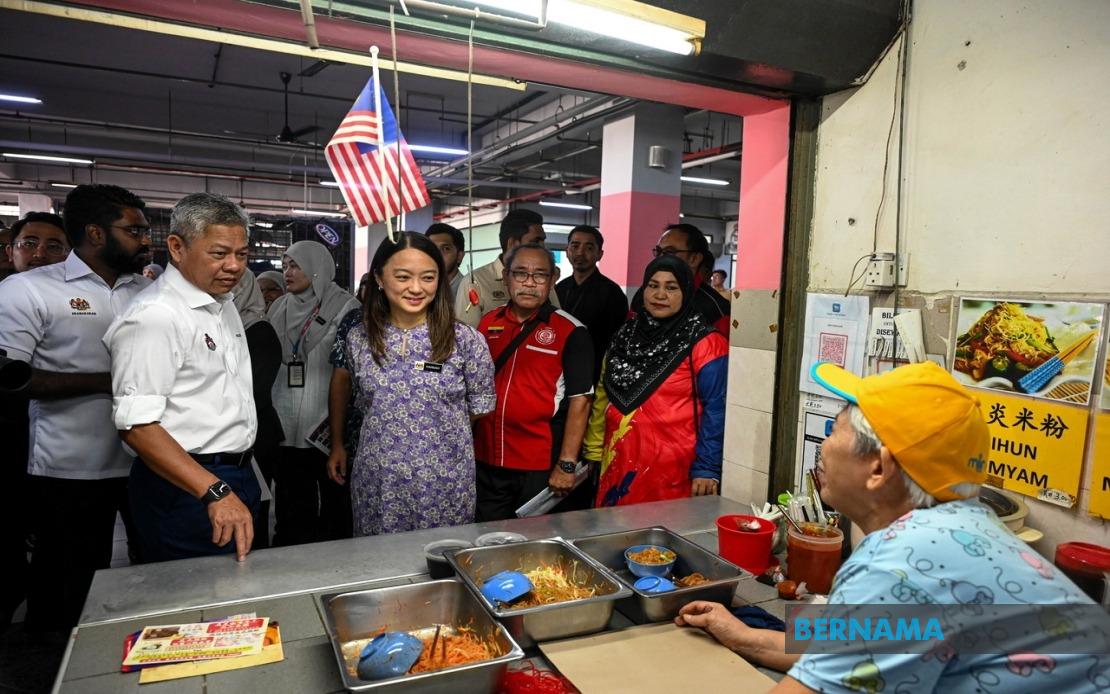
Kuala Lumpur City Hall (DBKL) has unveiled an ambitious RM200 million programme to revitalise hawker trading across the capital, targeting 287 sites in what represents one of the most comprehensive informal sector upgrades in the city's recent history. The initiative, branded Lestari Niaga @ Kuala Lumpur 2026, aims to transform hawker environments while directly supporting the livelihoods of more than 11,000 traders who form the backbone of Kuala Lumpur's street food culture and local economy.
Minister in the Prime Minister's Department (Federal Territories) Hannah Yeoh characterised the programme as a balancing act between competing urban interests. During a site inspection near UTC Sentul, she emphasised that DBKL's approach incorporates feedback from residents concerned about traffic congestion, traders seeking better working conditions, and building tenants operating in affected areas. This multi-stakeholder consultation model reflects growing recognition that hawker modernisation cannot succeed through top-down planning alone; sustainable outcomes require consensus-building among groups with sometimes conflicting priorities.
The UTC Sentul project exemplifies the modernisation approach. Launched on June 15, this RM1.6 million undertaking will replace temporary structures with 20 purpose-built modular kiosks designed to improve hygiene, safety, and operational efficiency. With completion targeted for October, before the year-end festive season, the timeline reflects understanding of the seasonal nature of hawker income. The project follows extensive stakeholder engagement sessions where DBKL gathered input before finalising design specifications, attempting to address earlier criticisms that upgrades sometimes displaced traders without adequate consultation.
A notable innovation addresses the financial vulnerabilities hawkers face during construction disruptions. DBKL is introducing a monthly assistance grant of RM1,500 for the 20 traders directly affected at UTC Sentul during the upgrade period. Kuala Lumpur Mayor Datuk Seri Fadlun Mak Ujud framed this cash transfer as more effective than establishing temporary trading locations, which typically incur substantial costs, occupy poor commercial positions, and consequently suffer from reduced customer footfall. This approach acknowledges that informal traders operate on thin margins and cannot absorb extended revenue losses.
The initial phase focuses on 224 locations representing diverse hawker categories across the city. Within this cohort, over 4,000 operate as street hawkers without permanent structures, approximately 5,000 trade from mayor's assets such as purpose-built hawker centres, and roughly 1,000 represent reapplication cases—individuals seeking to formalise previously unregistered operations. This breakdown reflects the heterogeneity of Kuala Lumpur's informal food sector, where traders range from mobile vendors to semi-permanent stall operators with varying infrastructure needs.
Similar simultaneous projects with comparable financial incentives are being rolled out across multiple neighbourhoods including Jalan Dato Senu, Pudu Ulu, and Bandar Tun Razak. This distributed approach prevents the concentration of construction disruptions in single areas and signals commitment to equitable distribution of modernisation benefits across socioeconomic strata within the city. Deployment across diverse locations also enables DBKL to accumulate learning from each project, refining methodologies before scaling to additional sites.
For Malaysia's broader informal economy, the Lestari Niaga initiative carries significant implications. Hawkers contribute substantially to Kuala Lumpur's food tourism reputation and provide affordable nutrition to lower-income residents, yet they typically operate with minimal regulatory protection and limited access to formal financing. Modernisation that combines infrastructure investment with temporary income support may establish a replicable model for other Malaysian cities facing similar pressures to formalise informal sectors while protecting trader welfare.
The financial assistance component represents a pragmatic recognition of hawker economics. Most street food traders operate on daily cash flows with minimal savings, making even brief income disruptions existential threats. By providing direct transfers rather than relying on alternative trading sites, DBKL acknowledges that survival income matters more to traders than promises of future improved conditions. This cash-first approach may prove more humane and politically sustainable than alternatives that have historically triggered trader resistance and protests.
Coordination between DBKL, the Mayor's office, and the Ministry in the Prime Minister's Department reflects institutional commitment to the programme's success. The participation of Batu Member of Parliament P. Prabakaran at the UTC Sentul inspection signals cross-party recognition of hawker modernisation as a legitimate urban priority. This political consensus, rare in Malaysian development debates, may provide the sustained funding and bureaucratic support necessary to sustain multi-year implementation across 287 sites.
The staged funding approach, where various hawker categories receive support in phases, allows DBKL to manage cash flow and learning curves. Prioritising the 224 locations in the initial phase establishes proof-of-concept before expanding to remaining sites. This staged methodology reduces risks of systemic implementation failures and enables refinement of designs, financial assistance levels, and trader communication protocols based on early project outcomes.
For Malaysian traders contemplating similar modernisation elsewhere, Kuala Lumpur's experience offers both promise and cautionary lessons. The combination of substantial capital investment (RM200 million), direct income support (RM1,500 monthly), and structured stakeholder engagement creates conditions for successful transitions. However, success ultimately depends on consistent follow-through over years and genuine respect for trader agency in redesigning their working environments, not merely imposing aesthetically pleasing but functionally poor infrastructure.
The initiative also reflects evolving urban governance approaches recognising informal traders as stakeholders worthy of partnership rather than obstacles to planning. As Southeast Asian cities grapple with rapid urbanisation and formalisation pressures, models balancing modernisation with trader protection may become increasingly relevant. Kuala Lumpur's RM200 million commitment and three-year timeline suggest this is not merely symbolic rhetoric but a substantive policy undertaking, with outcomes that will inform regional informal sector development strategies.