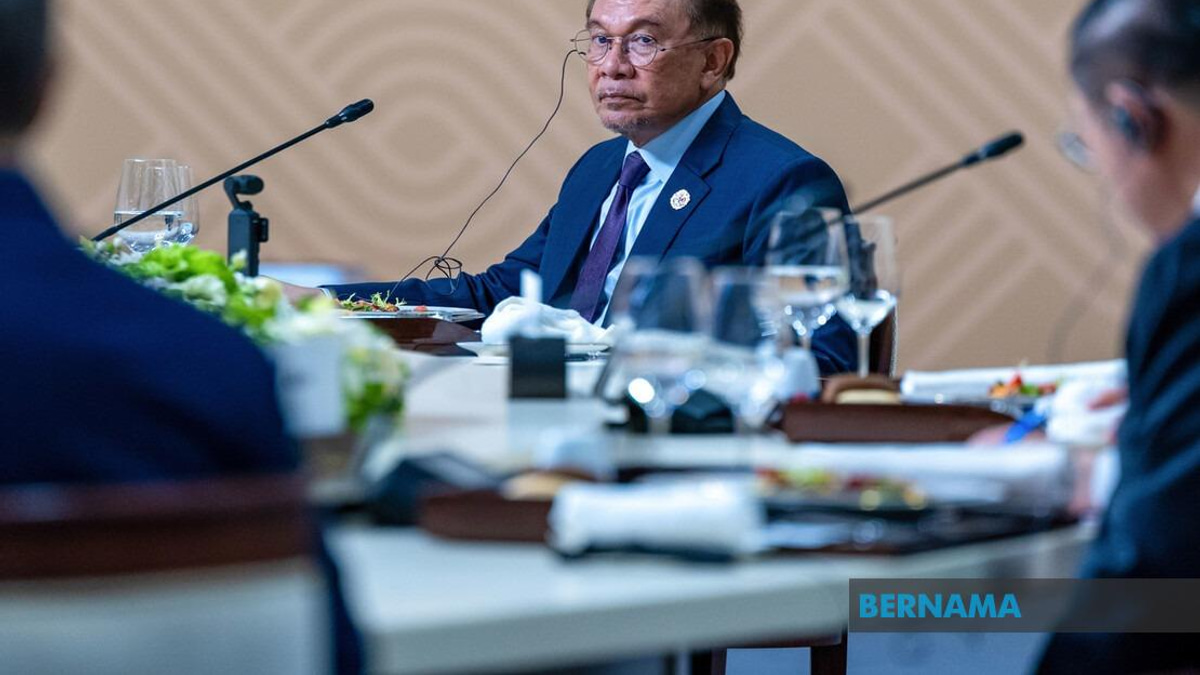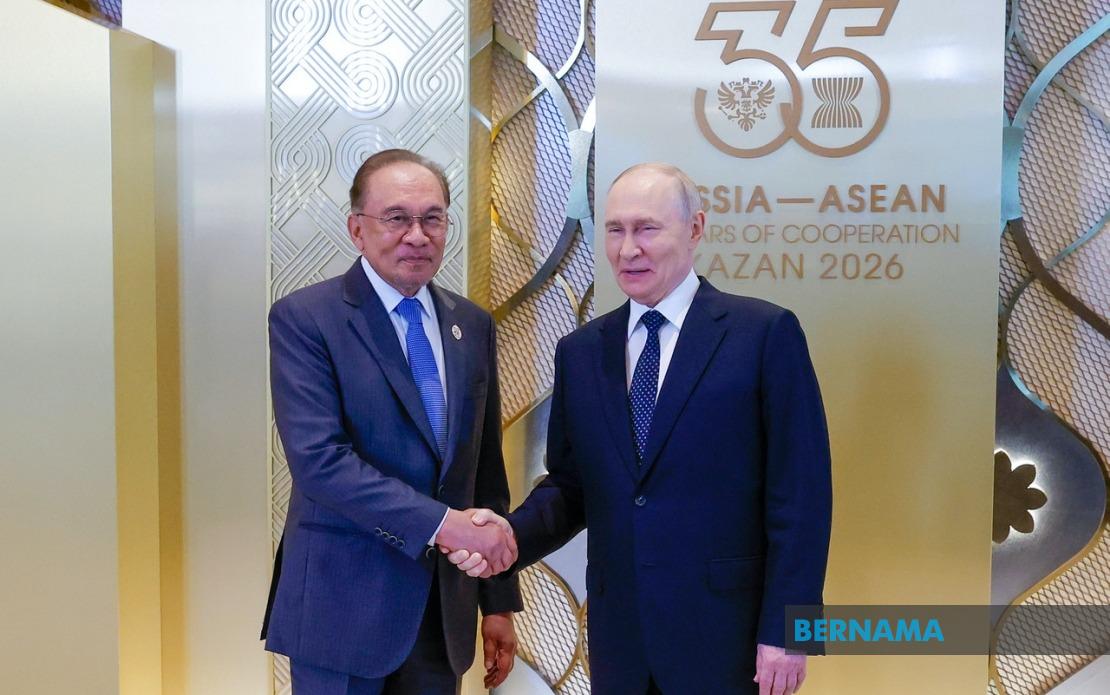
Prime Minister Datuk Seri Anwar Ibrahim has emphasized that structured dialogue platforms represent a critical mechanism for advancing mutual understanding in an increasingly complex global environment. Speaking in Kazan following his attendance at a gala dinner hosted by President Vladimir Putin at the ASEAN-Russia Commemorative Summit, Anwar articulated the significance of such forums in bridging the gap between Southeast Asian nations and Moscow, particularly given the mounting geopolitical uncertainties confronting the international community.
The Prime Minister stressed that formal engagement mechanisms, including both multilateral summits and bilateral channels, serve purposes that extend beyond ceremonial interaction. Rather, these platforms provide substantive opportunities for nations to establish foundations of trust, a prerequisite for meaningful cooperation in areas where interests align. Anwar's comments reflect a diplomatic philosophy that prioritizes sustained dialogue even amid broader regional and global tensions, positioning engagement as a counterbalance to misunderstanding and miscalculation.
For Malaysia and its ASEAN partners, the ASEAN-Russia Commemorative Summit represents a significant opportunity to recalibrate relations with Moscow at a time when geopolitical alignments are shifting. The bloc has long pursued a policy of strategic autonomy, maintaining relationships across multiple power centers rather than aligning exclusively with any single partner. Russia's outreach to ASEAN through such high-level summitry demonstrates Moscow's commitment to maintaining its relevance in Southeast Asia, a region of substantial economic and strategic importance despite historical focus on the Asia-Pacific's eastern and northern dimensions.
Anwar highlighted that the Kazan summit functioned not merely as a diplomatic courtesy but as a genuine window for substantive exchanges between regional leaders. He noted that the gathering facilitated discussions on potential areas of cooperation that could yield tangible benefits for both ASEAN member states and the Russian Federation. This framing suggests that Malaysia views the engagement primarily through an economic and developmental lens rather than as an exercise in balancing power politics, an approach consistent with ASEAN's traditional emphasis on pragmatic cooperation.
The cultural and historical dimensions that Anwar emphasized during his remarks carry particular significance in the context of deepening ASEAN-Russia relations. By acknowledging Russia's rich heritage and the educational value of such exchanges, the Prime Minister was underscoring that engagement transcends narrow interest-based calculations. Building familiarity with Russian history and culture among ASEAN elites can facilitate longer-term relationships and create constituencies within respective governments predisposed toward continued cooperation, even when immediate material incentives may be limited.
Attending the summit in his dual capacity as Prime Minister and Finance Minister, Anwar positioned himself as a key architect of Malaysia's economic and diplomatic strategy. This dual representation reflects Malaysia's effort to leverage the ASEAN-Russia relationship not only for political purposes but for tangible economic benefits. The Finance Ministry's involvement signals that Malaysia is exploring potential avenues for trade, investment, and financial cooperation with Russia, areas that have remained relatively underdeveloped compared to Southeast Asia's engagement with other major powers.
The timing of the Kazan summit merits scrutiny within the broader context of regional dynamics. ASEAN's approach to Russia has necessarily evolved given global developments, particularly Western sanctions targeting Moscow over Ukraine. The region has maintained formal diplomatic neutrality while increasingly recognizing that deeper engagement with Russia requires careful calibration to avoid antagonizing Western partners with whom Southeast Asian nations maintain substantial economic and security ties. Anwar's participation and his emphasis on mutual benefit signals Malaysia's determination to expand the relationship within these diplomatic constraints.
The gala dinner itself served as a symbolic gesture of recognition, with President Putin personally hosting ASEAN leaders. Such direct engagement at the highest levels carries weight in diplomatic circles, suggesting both sides view the relationship as meriting sustained investment. For Malaysia specifically, this engagement provides a platform to advance specific national interests while contributing to ASEAN's collective diplomatic effort to maintain balanced relationships across the international system.
Looking forward, the substantive outcomes of the summit will likely focus on establishing working groups and frameworks for cooperation in areas such as trade, energy, security, and cultural exchange. The creation of such mechanisms transforms high-level summitry from episodic events into sustained processes of engagement. For Malaysian audiences and policymakers, the key takeaway from Anwar's remarks is that the government views structured engagement with Russia as compatible with Malaysia's broader foreign policy objectives, which prioritize economic development, regional stability, and the preservation of ASEAN's autonomy in navigating great power competition.