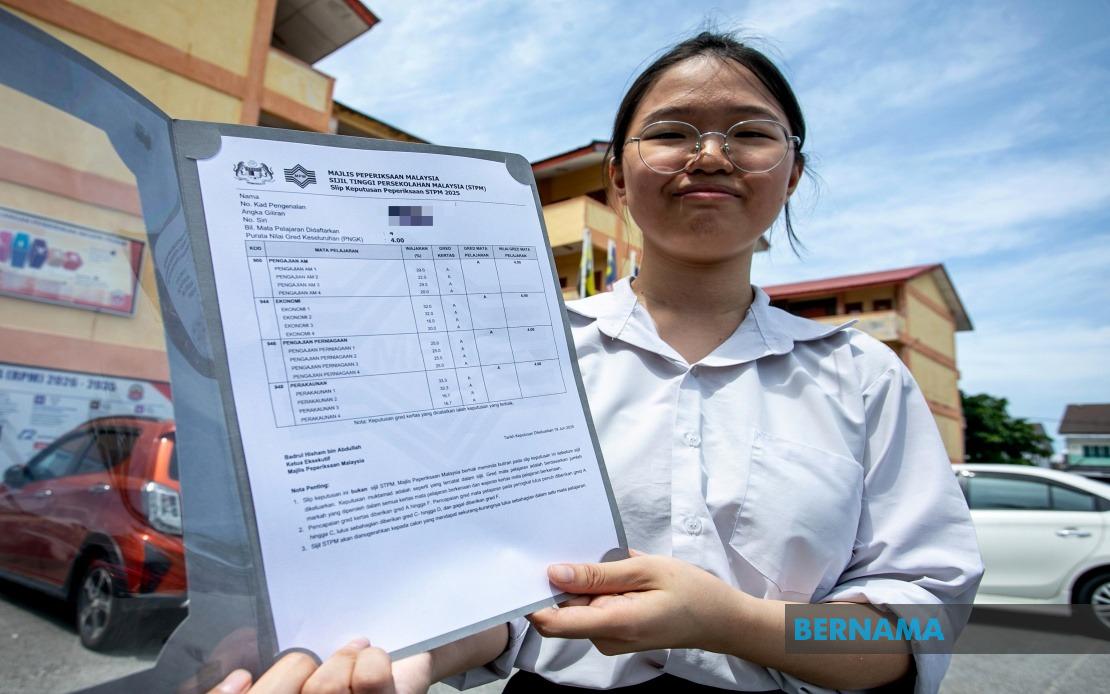
Twenty-year-old Yong Xin Yi from SMK Jalan Tasek in Ipoh has emerged as one of the top performers in this year's Sijil Tinggi Persekolahan Malaysia (STPM) examination, securing a perfect 4As result with a Cumulative Grade Point Average of 4.00. Her outstanding achievement in General Studies, Principles of Accounting, and Economics reflects the intersection of rigorous personal discipline and strategic academic planning that she has cultivated throughout her pre-university studies.
At the heart of Xin Yi's success lies a structured commitment to daily revision that she maintained with consistency throughout her examination preparation. Each evening from 5:00 pm to 10:00 pm, she allocated dedicated study time exclusively for consolidating and deepening her understanding of course material. This five-hour window became her strategic advantage, transforming the hours immediately following school into a productive learning environment where she could revisit concepts, work through practice problems, and strengthen her grasp of complex topics.
However, Xin Yi emphasises that her evening revision schedule cannot be separated from her approach to daytime learning. She credits active engagement during classroom sessions as the foundational element of her academic strategy, arguing that focused attention during teaching periods directly reduced the cognitive burden during later study hours. By concentrating on teacher explanations in real time, she minimised confusion and misunderstanding that might otherwise consume revision time. This philosophy reflects a growing recognition among high-achieving students that classroom presence, when coupled with genuine attentiveness, forms the bedrock upon which independent study builds.
Complementing her classroom focus and evening revision, Xin Yi maintained meticulous completion of all assigned homework. She views homework not as a burdensome obligation but as an integral component of the learning process that accelerates subject mastery. This comprehensive approach—combining attentive classroom participation, thorough homework completion, and structured evening revision—created overlapping reinforcement loops that embedded knowledge deeply rather than superficially.
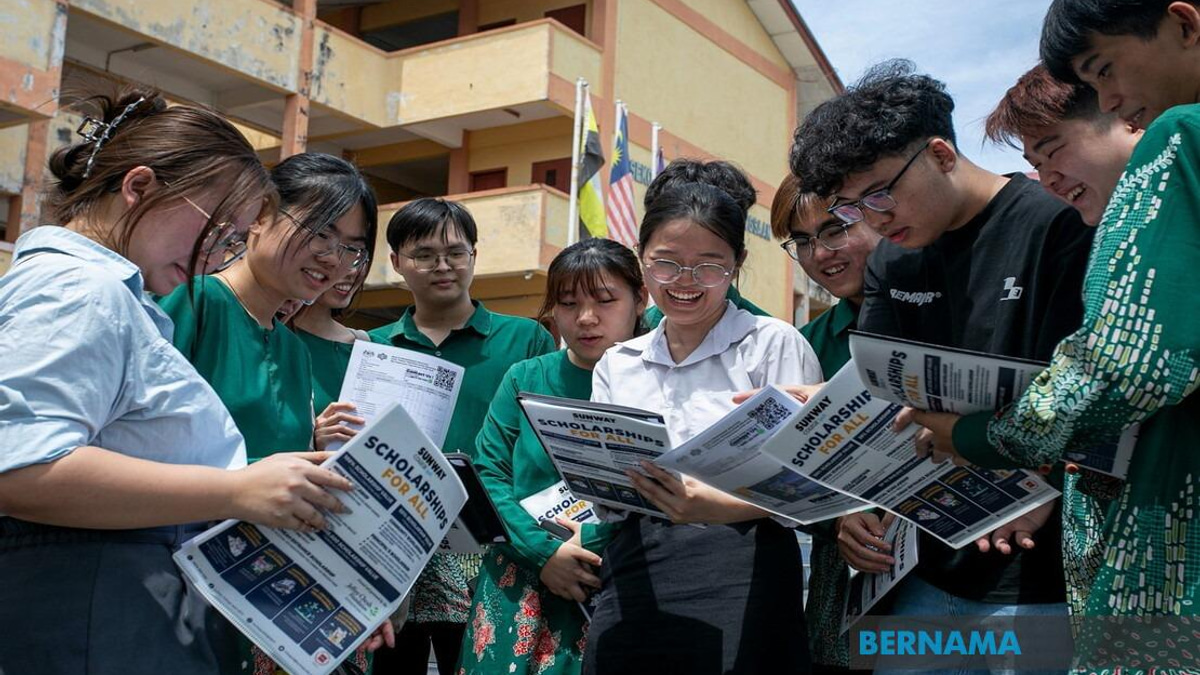
Xin Yi was among five students from SMK Jalan Tasek who achieved the same 4As result this year, suggesting that her success, while individually impressive, also reflects broader institutional strengths within the school's academic programme. Her distinction as an exceptional performer within a cohort of high achievers underscores the competitive nature of contemporary STPM performance, where 4As has become an increasingly elite achievement.
Among her three subjects, General Studies presented the most formidable challenge. This subject demands not merely content knowledge but sophisticated writing abilities, precise adherence to prescribed formats, and intimate familiarity with examiner expectations and marking rubrics. Recognising this weakness early, Xin Yi consciously invested disproportionate effort in General Studies relative to her other subjects, allocating additional revision time and practice to overcome her initial vulnerability. This strategic resource allocation demonstrates mature self-awareness and adaptive problem-solving—critical skills that will serve her well in university-level economics.
Beyond the mechanics of study technique, Xin Yi attributes her achievement significantly to emotional and psychological support from her parents. As an only child, she benefited from undivided parental attention and encouragement throughout her academic journey. Her mother works as a clerk while her father is employed in phone sales, positioning the family within Malaysia's lower-middle-income bracket. Despite potential economic constraints, her parents prioritised her educational development and maintained consistent encouragement, creating a home environment that valued academic excellence.
Xin Yi's motivation extends beyond personal achievement or family pride. She articulates a clear social responsibility dimension to her success, expressing determination to leverage her educational attainment to improve her family's economic circumstances. This aspirational framing—viewing academic success as a pathway to intergenerational mobility and as repayment for parental sacrifice—reflects values deeply embedded within Malaysian society, where education has traditionally functioned as a primary mechanism for economic advancement.
Her future trajectory demonstrates purposeful career planning aligned with genuine intellectual interest. Having evaluated her aptitudes and market prospects, Xin Yi has selected economics as her field of study, securing admission to Universiti Putra Malaysia (UPM) to pursue tertiary education in this discipline. Her rationale combines intrinsic interest with pragmatic assessment of career potential, recognising that economics offers diverse employment pathways and sustained demand in Malaysia's expanding knowledge economy. This decision reflects the increasingly strategic approach contemporary Malaysian students adopt toward subject selection, moving beyond parental pressure or tradition toward individuated choice informed by self-understanding and labour market realities.
The trajectory from SMK Jalan Tasek to UPM represents an accessible yet achievement-dependent pathway for academically talented students from middle-income families. Xin Yi's case illustrates how disciplined personal effort, combined with parental support and institutional opportunity, continues to enable educational and social mobility within Malaysia's education system. Her journey from Ipoh to university economics study embodies the persistent promise of meritocratic advancement that characterises Malaysia's academic structures, even as systemic inequalities shape opportunities unequally across different demographic groups.
Xin Yi's achievements carry implications extending beyond individual success to signal broader patterns in Malaysian secondary education. Her emphasis on classroom engagement, homework diligence, and structured revision mirrors pedagogical advice routinely offered to students, yet her execution demonstrates that these principles, when genuinely embraced rather than superficially acknowledged, produce measurable results. For prospective STPM candidates navigating examination preparation, her experience offers a replicable template: excellence emerges not from extraordinary talent or exotic study techniques, but from sustained disciplinary application combined with strategic subject-specific adjustment when weaknesses emerge.
As Xin Yi progresses toward university study and eventual professional work as an economist, her formation illustrates the ongoing capacity of Malaysia's educational institutions to identify, cultivate, and launch talented individuals toward productive contribution to the nation's economic development. Her story, while individually distinctive, participates within a larger national narrative of educational advancement and the enduring aspiration that merit shall determine opportunity.