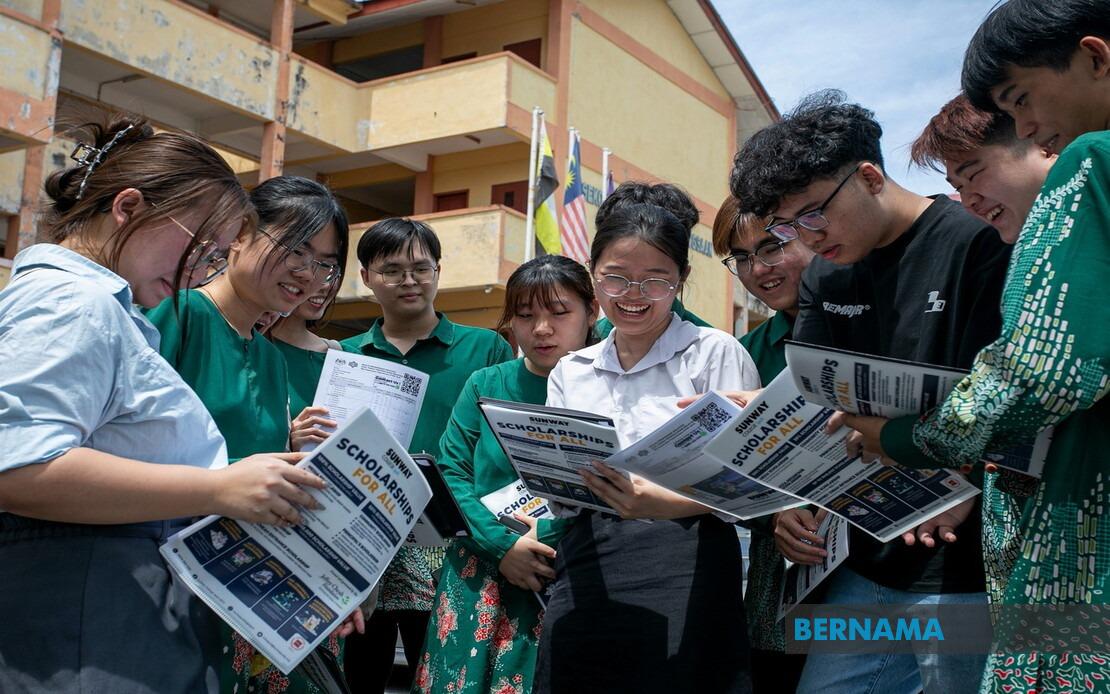
Malaysia's STPM examination continues to establish itself as a credible and accessible route into higher education, with this year's crop of top achievers reflecting the diversity of backgrounds that can succeed within the system. The Sijil Tinggi Persekolahan Malaysia, commonly known as Form Six, has historically competed for enrolment attention against alternative pathways such as matriculation and A-levels, yet recent recognition of perfect scores across distinctly different student cohorts underscores its relevance and competitive standing in an evolving education landscape.
Hazaril Hakimi Hassan, an Orang Asli student from Kampung Paya Mendoi in Kuala Krau, Pahang, secured a flawless 4.00 Cumulative Grade Point Average in the 2025 STPM examination, becoming a symbol of how systemic barriers can be overcome through determination and institutional support. The SMK Temerloh student attributed his achievement to a gradual realisation of Form Six's advantages—benefits that, he candidly noted, had previously attracted less awareness within his community. His journey reveals a critical gap in educational messaging: many students from marginalised backgrounds may remain unaware that STPM can serve as an equally rigorous and recognised platform for pursuing university education. With teacher encouragement and family backing, Hazaril developed the confidence to commit fully to the pathway, subsequently earning recognition from the Malaysian Examinations Council at its headquarters in Kuala Lumpur. His intention to pursue a degree in Malay Language Education at Universiti Putra Malaysia and eventually work as a university lecturer illustrates how STPM can facilitate social mobility and professional aspiration among indigenous communities.
In a distinct context, Ng Yu Yong from SMK Tsung Wah in Kuala Kangsar, Perak, articulated a pragmatic argument for STPM that resonates particularly with cost-conscious Malaysian families. Having also achieved a 4.00 CGPA with five A grades including in Physics and Biology—subjects critical for medical study—Ng positioned Form Six as the more economical option compared to private college pathways or overseas qualifications. This cost advantage cannot be overstated in a nation where family income remains a significant determinant of educational access. Beyond affordability, Ng characterised STPM as inherently more academically demanding, suggesting that students who navigate the system successfully gain a competitive edge in university admissions and, implicitly, in future employment markets. His deliberate pursuit of excellence from the moment of enrolling in Form Six underscores the examination's capacity to attract and retain motivated students willing to invest sustained effort. Now aiming for an MBBS degree at Universiti Malaya, Ng's trajectory demonstrates how STPM can serve as a credible springboard into competitive professional degree programmes that shape Malaysia's future medical workforce.
Equally significant is the experience of Yeoh Chwen Yih from St John's Institution, a visually impaired student who also attained a 4.00 CGPA. Yeoh's success in an academic environment represents a substantive statement about STPM's institutional commitment to accessibility and inclusive learning design. The integration of screen-reading technology within Form Six institutions has fundamentally altered the learning experience for students with visual impairments, enabling faster access to study materials compared to traditional Braille formats and consequently enhancing pedagogical effectiveness. Yeoh's observation that options for visually impaired students remain limited across educational pathways underscores the importance of incremental progress where it does occur. The fact that STPM institutions have begun implementing such assistive technologies speaks to broader recognition that academic excellence should not be gatekept by physical ability. Yeoh's aspiration to pursue law studies and selection of STPM as the suitable vehicle for that ambition reflects confidence in the examination's standing and capacity to support such professional trajectories.
These three exemplars—representing indigenous background, economically constrained circumstances, and physical disability—collectively challenge any perception that STPM serves only a narrow demographic or that it occupies a marginal position within Malaysia's higher education ecosystem. The Malaysian Examinations Council's decision to recognise and celebrate these achievements through formal excellence awards signals institutional validation of STPM's role as a democratising force within tertiary education access. For Malaysian families evaluating educational options, these narratives provide concrete evidence that Form Six can deliver both rigorous academic preparation and pathways into prestigious universities and professional programmes.
The international recognition of STPM qualifications adds another dimension to its competitive positioning. Unlike purely domestic examination systems, STPM credentials are accepted across leading universities globally, potentially opening doors for academically exceptional students to pursue higher education abroad should circumstances permit. This portability of qualification value enhances STPM's strategic worth, particularly for students with international ambitions or those seeking to maximise their options in a globalised education marketplace. The examination thus serves not merely as a domestic gatekeeper but as a legitimate credential with cross-border currency.
For policymakers and education administrators, the emergence of high-achieving cohorts from previously underrepresented backgrounds should prompt investment in further promotional and support infrastructure around STPM. Awareness campaigns targeted at rural and indigenous communities, strengthened guidance counselling within secondary schools, and continued enhancement of accessibility features for students with disabilities would likely expand the talent pool that currently accesses Form Six. The narrative of STPM as an elite pathway or second-choice option deserves active reframing through evidence-based storytelling featuring achievers like Hazaril, Ng, and Yeoh. Such visibility may inspire younger cohorts from similar backgrounds to view STPM as a realistic and rewarding option rather than dismissing it in favour of perceived prestige alternatives. Malaysia's goal of becoming an advanced, inclusive, knowledge-driven economy depends partly on ensuring that talent from all corners of society can access and succeed through the pathways that lead to skilled professional roles.