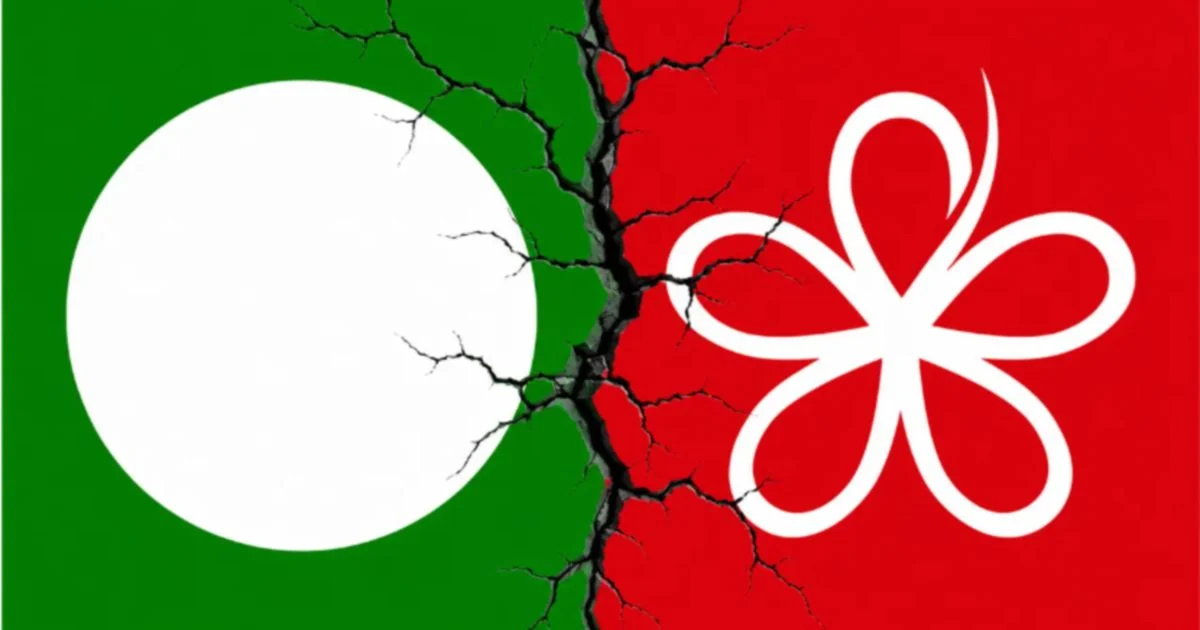
Mounting friction within Perikatan Nasional between its two principal constituents, PAS and Bersatu, carries significant ramifications for the opposition coalition's viability as it approaches Malaysia's 16th General Election. The deteriorating relationship between these heavyweight parties risks fragmenting voter confidence in the bloc and could prove decisive in determining which coalition governs Malaysia in the coming electoral cycle.
The partnership between the Islamist PAS and the multiracial Bersatu has always operated under considerable strain, rooted in fundamentally different political philosophies and organisational cultures. Whilst PAS operates from a position of Islamic revivalism and grass-roots religious mobilisation, Bersatu emerged from former Prime Minister Mahathir Mohamad's faction within UMNO and maintains a more secular, centrist orientation. This ideological mismatch has historically complicated cooperation, and recent developments suggest these tensions have reached a critical juncture that threatens the coalition's structural integrity.
The consequences of sustained discord extend beyond mere intra-coalition bickering. Voters observing disharmony within Perikatan Nasional may interpret it as a signal of dysfunction and disunity, characteristics they have come to associate with ineffective governance. Malaysians have demonstrated in successive elections that they reward coherent, stable political arrangements while punishing coalitions perceived as fractious or riddled with personal animosities. The optics of PAS and Bersatu in conflict thus directly translate into electoral disadvantage.
For PAS specifically, the rift creates a dilemma that reflects its broader strategic positioning. The party has cultivated substantial electoral strength in rural Malay-Muslim heartlands and possesses organisational depth that no other opposition party can match. Yet its theological rigidity and resistance to pragmatic compromise have periodically strained relationships with coalition partners who require flexibility on issues spanning from non-Muslim minority concerns to economic policy. The party must weigh its desire for political dominance against the necessity of maintaining coalition cohesion.
Bersatu faces an equally acute predicament. The party was constructed as a vehicle for Mahathir's political resurrection and remains personality-dependent rather than institutionally robust. Its relevance to Malaysian politics hinges significantly on its coalition positioning, whether within Perikatan Nasional or potentially elsewhere. A deteriorating relationship with PAS, the coalition's largest single party, undermines Bersatu's bargaining power and electoral attractiveness to voters seeking a united opposition front.
The timing of this rift merits particular scrutiny. General elections in Malaysia typically occur within predictable windows, and strategic considerations around coalition viability intensify as these windows approach. Both PAS and Bersatu have incentive to resolve differences or publicly justify their positions, yet neither party's leadership has demonstrated the political maturity required for genuine reconciliation. Instead, public recriminations and thinly veiled criticism have become the default mode of engagement.
For Malaysian voters, the PAS-Bersatu tensions present a troubling scenario. Those inclined toward opposition politics must decide whether to reward Perikatan Nasional despite coalition dysfunction, shift support to alternative opposition groupings such as Pakatan Harapan, or express dissatisfaction through protest voting or abstention. Urban and younger voters particularly sensitive to issues of governance competence may find the coalition's discord especially off-putting. Meanwhile, rural constituencies where PAS maintains strongholds might prove more forgiving of internal tensions if party machinery mobilises effectively.
Regional dimensions compound these complications. The stability of federal-level opposition arrangements influences state-level coalition politics, particularly in states where PAS or Bersatu holds significant influence. Perak, Kedah, Terengganu, and Pahang—where PAS maintains substantial presence—could experience spillover effects from national coalition deterioration. State administrations may fragment further if federal tensions calcify into irreparable state-level divisions.
The government coalition's response to these developments merits consideration. Barisan Nasional and its partners possess incentive to exploit opposition coalition weaknesses, positioning themselves as the sole guarantee of stable governance. This narrative gains traction precisely when opposition blocks demonstrate visible discord. Strategic counter-moves by the ruling coalition, including targeted poaching of dissatisfied MPs or state assemblypersons, become more feasible when opposition parties appear internally divided.
Historically, Malaysian voters have shown willingness to punish coalition partners perceived as unreliable or overly focused on internal positioning rather than coherent policy platforms. The 2022 Perikatan Nasional setback, when the coalition's share of seats contracted despite overall opposition strength, illustrated this dynamic. Continued internal friction could replicate or amplify that outcome during GE16.
Resolving the PAS-Bersatu tension requires leadership willing to prioritise coalition interests over party autonomy—a capability neither party has consistently demonstrated. Structural mechanisms for dispute resolution, such as formal coalition councils with enforcement powers, could theoretically prevent disputes from metastasising into electoral liabilities. Yet implementing such mechanisms demands relinquishing autonomy that both parties jealously guard.
Ultimately, Perikatan Nasional's viability as a governing alternative depends substantially on its capacity to present unified public positioning despite inevitable internal disagreements. The current trajectory, characterised by visible acrimony, suggests the coalition risks squandering a genuine electoral opportunity. Whether PAS and Bersatu can arrest this deterioration remains the defining question for opposition politics as Malaysia approaches its next general election.