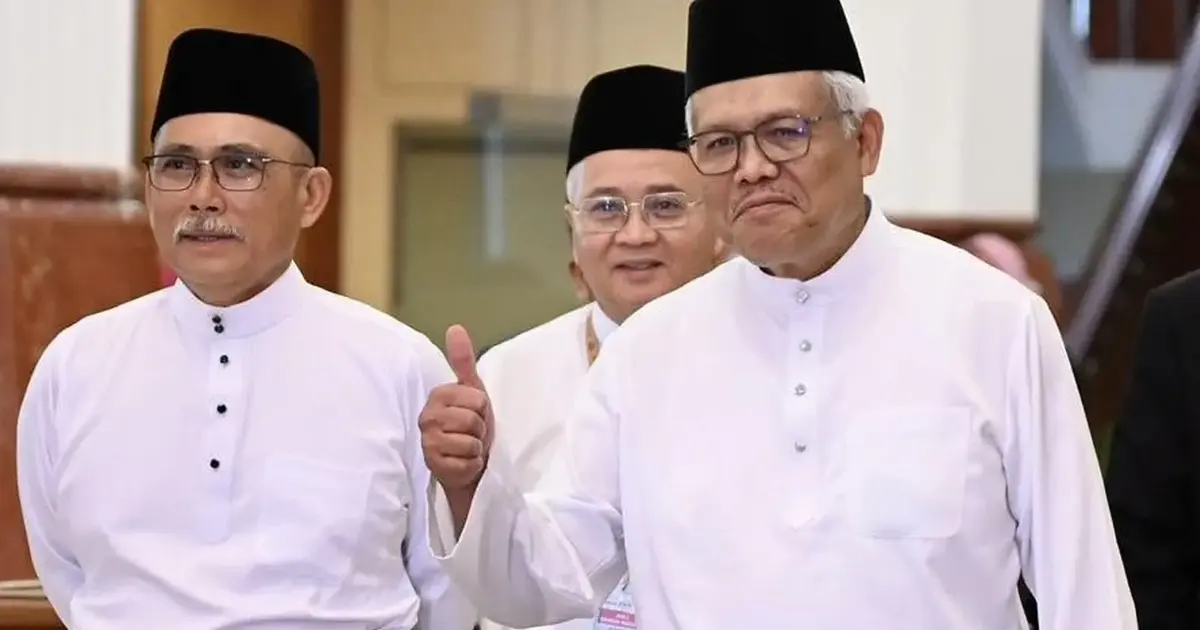
Hamzah Zainudin's elevation to the role of opposition leader rested on a coalition of parliamentary support that cut across party lines, according to Kiandee, a senior Bersatu figure currently suspended from his position as vice-president. The Larut MP secured an en-bloc endorsement from the entire PAS parliamentary contingent alongside majority backing from Bersatu MPs, providing him with the numerical foundation necessary to assume the leading opposition role.
The confirmation from Kiandee carries particular significance given the fractured state of Malaysia's opposition landscape. Following years of political realignment and defections that have reshaped parliamentary mathematics, securing coordinated support from two separate opposition blocs represents a meaningful consolidation of anti-government forces. The ability to unite PAS members collectively with a substantial portion of Bersatu's parliamentary representation underscores the strategic calculations at play within the opposition benches.
PAS's united backing proves especially noteworthy in the Malaysian political context. The Islamic party has historically maintained independent positioning, sometimes cooperating with government coalitions and sometimes with opposition alignments depending on circumstances and electoral calculations. An en-bloc commitment from all PAS MPs represents the kind of bloc voting discipline that opposition coalitions struggle to achieve, particularly in a fragmented parliamentary environment where smaller parties often hold leverage through selective support.
Bersatu's majority support for Hamzah reflects divisions within the party itself, with more than half of its parliamentary members aligning behind his candidacy. This internal split within the second-largest opposition party suggests competing power centres and strategic visions for the opposition's direction. The suspension of Kiandee himself points to tensions simmering beneath the surface, with party leadership apparently displeased by his public explanation of the appointment process.
The appointment of an opposition leader carries both symbolic and practical weight in Malaysia's parliamentary system. While the role lacks the executive authority granted to a government leader, the opposition leader serves as the official voice of parliamentary dissent, shapes legislative debate, and positions their faction as a potential alternative government. The consolidation required to elevate Hamzah to this position demonstrates serious intent among opposition MPs to present a unified front.
For Malaysian readers and political observers in Southeast Asia, this development signals attempts to stabilize an opposition coalition that has experienced considerable turbulence. The region has witnessed numerous instances of opposition fragmentation undermining electoral prospects and parliamentary effectiveness. The coordination between PAS and Bersatu, despite their different constituencies and historical trajectories, suggests at least tactical alignment on certain parliamentary objectives.
Hamzah's background as Larut MP and his ability to attract cross-party support indicates political capital and negotiating ability that transcends individual party loyalties. The Larut constituency, located in Perak, represents a traditional stronghold with significant electoral weight. His emergence as opposition leader potentially reshapes the hierarchy within opposition circles, particularly affecting the positioning of other senior party figures.
The timing of this appointment within Malaysia's broader political cycle remains consequential. Opposition coalitions typically coalesce more tightly approaching electoral contests, when the possibility of returning to government focuses minds on strategic unity. Conversely, appointments made during non-election periods often reveal underlying fault lines when the immediate electoral pressure diminishes. The durability of the PAS-Bersatu alignment backing Hamzah will test the depth of their commitment to coordinated opposition politics.
Kiandee's willingness to publicly explain the rationale for Hamzah's appointment, despite his suspended status, suggests that significant figures within Bersatu view the consolidation as strategically important enough to defend publicly. His suspension likely reflects party leadership's displeasure with his openness, indicating attempts to control the narrative around opposition appointments and internal alignments.
For policymakers and observers monitoring Malaysian political stability, the opposition leadership question directly affects parliamentary dynamics and government vulnerability to legislative defeats or embarrassment. The strength and coherence of opposition ranks influences the government's legislative agenda and the intensity of parliamentary scrutiny. A unified opposition led by a figure with cross-party backing theoretically poses greater challenges to executive initiatives.
The Malaysian parliament continues to reflect the complexity of the nation's multiparty landscape, where coalition-building requires navigating ethnic, religious, and regional interests. Opposition unity frequently proves elusive given these competing pressures. The ability of Hamzah to secure simultaneous backing from PAS's Islamist constituency and Bersatu's Malay-Muslim focused membership highlights either genuine strategic alignment or pragmatic recognition that parliamentary cooperation serves mutual interests.
Moving forward, observers should monitor whether this opposition alliance holds firm or splinters under pressure. Previous Malaysian political alliances have demonstrated surprising resilience and surprising fragility depending on circumstances. The sustainability of PAS and Bersatu coordination, formalized through backing Hamzah, will likely determine the opposition's effectiveness in parliamentary proceedings and its viability as an electoral coalition in the next general election.