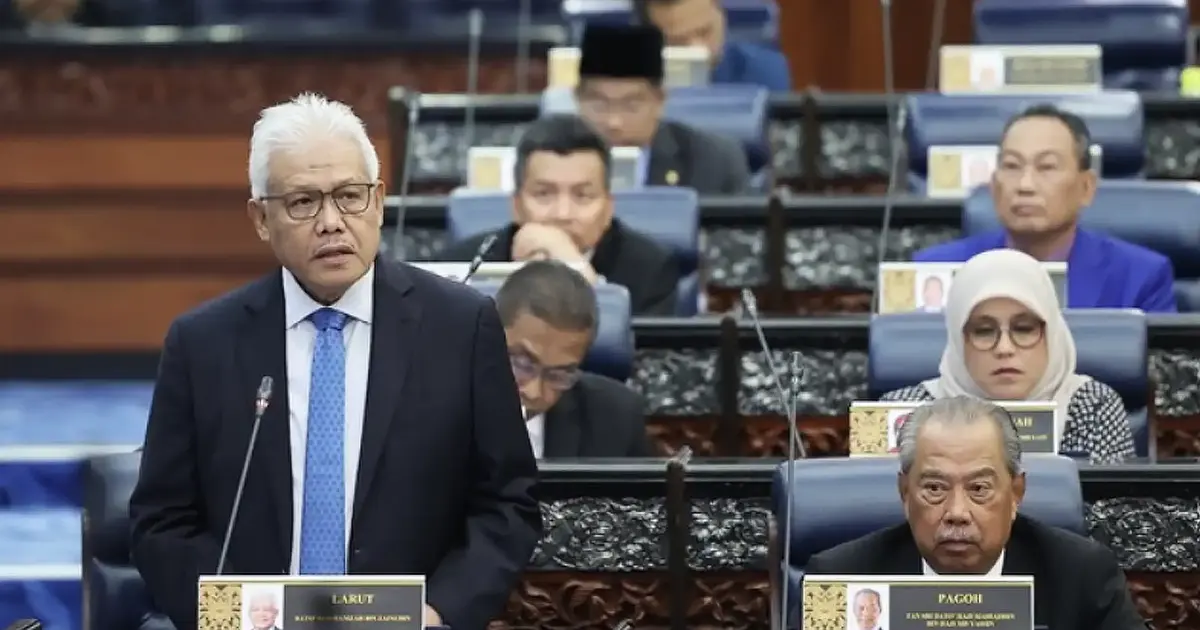
Hamzah Zainudin has resumed his position as the opposition leader in Parliament, a development that marks a significant change in the seating arrangements at the Dewan Rakyat. The repositioning reflects evolving dynamics within the opposition coalition and underscore shifts in parliamentary influence and coalition politics that have unfolded over recent months.
Bersatu president Muhyiddin Yassin, who previously occupied a seat adjacent to the opposition leader, has been moved eight positions further along the front row. This relocation is a notable demotion in terms of parliamentary visibility and proximity to the leadership position, signalling changes in the balance of power within the opposition bloc. The shift in seating arrangements, while procedural on the surface, carries symbolic weight in Malaysia's parliamentary culture, where physical positioning often reflects political standing and negotiating power.
The opposition's internal configuration has undergone considerable recalibration in recent political cycles. The return of Hamzah to the premier position reflects his restored standing as the principal opposition voice in the chamber, a role that carries responsibility for coordinating responses to government legislation and policy pronouncements. This arrangement typically gives the opposition leader significant latitude in orchestrating parliamentary strategy and determining which matters receive scrutiny during debates.
Muhyiddin's transition represents a more complex political narrative. The Bersatu leader has navigated turbulent political waters in recent years, with his party's relationships within the opposition experiencing strain at various points. Despite founding Bersatu and bringing significant parliamentary numbers to different coalitions at different times, his influence within the current opposition configuration appears to have moderated. The movement of his seat symbolizes this recalibration, even as Bersatu continues to hold substantial parliamentary representation.
For Malaysian readers and political observers, such procedural changes carry deeper significance. Parliamentary seating hierarchies influence not merely ceremonial positioning but also speak to coalition negotiation outcomes, internal power balances, and which leaders command the ear of fellow opposition members when critical decisions must be made. The proximity of opposition figures to the leader's seat affects media coverage, parliamentary engagement, and the tactical positioning of their parties within broader political coalitions.
The opposition landscape in Malaysia remains substantially fragmented, comprising multiple parties with distinct ideological orientations and strategic interests. Within this environment, the reconstitution of leadership arrangements becomes a barometer for coalition stability and the relative influence of constituent parties. The seating change involving Hamzah and Muhyiddin may signal internal discussions about the opposition's direction and which figures or parties the bloc has decided should be most prominent in public-facing parliamentary roles.
Hamzah's restoration to the opposition leader position also comes at a time when Parliament continues to grapple with legislation affecting multiple sectors of Malaysian life. As opposition leader, he will be positioned to provide counterargument to government initiatives and articulate alternative perspectives on policy matters ranging from economic management to social issues. The prominence of this role in the chamber means that his interventions during parliamentary proceedings will receive heightened attention from both fellow members and the broader public.
Bersatu's repositioning within the opposition hierarchy reflects broader questions about the party's strategic direction following years of shifting coalition allegiances. Under Muhyiddin's leadership, Bersatu has moved between government and opposition configurations, a trajectory that has both enhanced and complicated its standing depending on political circumstances. The current seating arrangement may represent stabilization of the party's position within the opposition, even if at a reduced proximity to the leadership role.
The implications for Southeast Asian readers interested in Malaysian politics are notable. Malaysia's opposition dynamics carry significance for broader regional political trends, particularly regarding coalition-building, party competition, and the contestation of power in an era of substantial fragmentation. The movement of parliamentary positions reflects how opposition forces continue to negotiate their collective identity and strategic priorities amid shifting electoral fortunes and public expectations.
These administrative changes at Parliament also underscore the ongoing complexity of Malaysian political alignment. Unlike systems where opposition positioning is straightforward, Malaysia's multiparty environment requires continuous negotiation about who speaks for the bloc and which figures occupy prominent roles. The seating rearrangement involving Hamzah and Muhyiddin exemplifies how even technical parliamentary procedures become windows into deeper political realignments and coalition recalibration.
Moving forward, observers should monitor whether this repositioning presages further internal restructuring within the opposition or represents a more stable configuration for the remainder of the parliamentary term. The opposition's ability to present unified messaging and coordinate effectively on legislative matters depends partly on such internal clarity about roles and prominence. As Malaysia continues to navigate post-pandemic economic recovery and evolving political preferences among voters, the composition and leadership structure of the opposition coalition will remain crucial to understanding the trajectory of national politics.