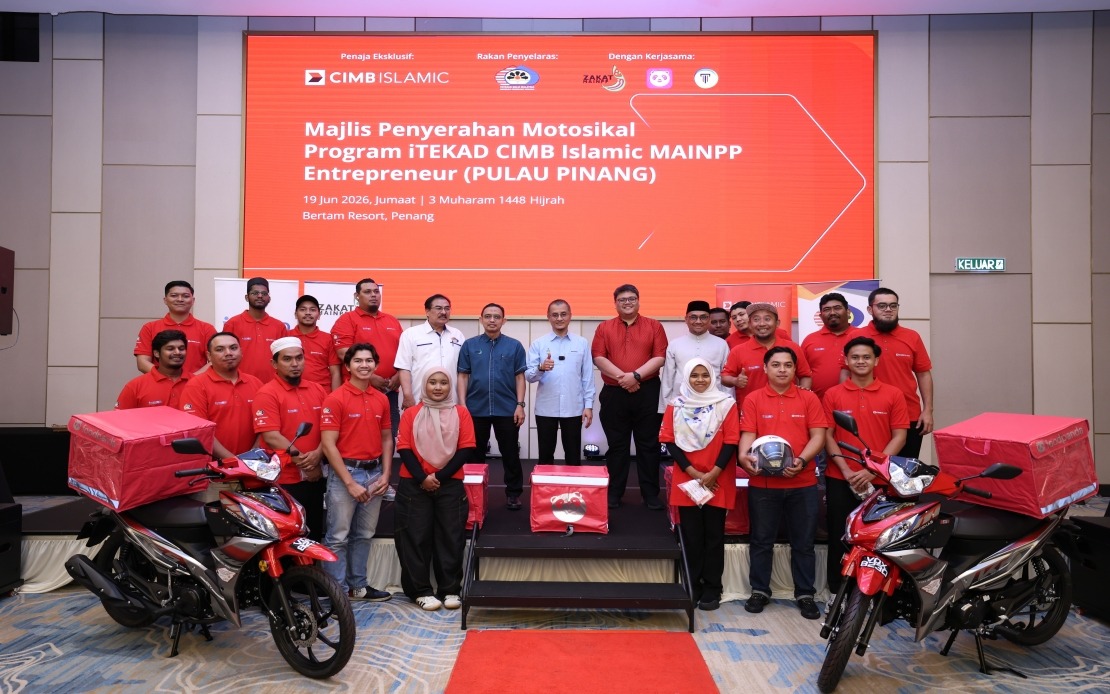
Twenty carefully selected entrepreneurs have received motorcycles as part of the iTEKAD CIMB Islamic-MAINPP Entrepreneur programme, a significant step forward in efforts to empower low-income groups through dignified employment and financial independence. The ceremony took place at Bertam Resort in Kepala Batas, where participants formally took possession of their vehicles—a critical asset for those looking to establish delivery and logistics-based income streams in the gig economy.
The programme represents a strategic partnership that brings together multiple stakeholders with distinct expertise and resources. CIMB Islamic Bank Berhad collaborated with the Penang Islamic Religious Council (MAINPP) via its Zakat division to create a comprehensive support ecosystem. Additional implementation partners—the Malaysian Youth Foundation (YBM), Taylor's Community, and foodpanda Malaysia—each contributed specialized knowledge, from financial literacy coaching to platform access for logistics work. This multi-party approach reflects a growing recognition that poverty alleviation requires coordinated effort rather than siloed charitable interventions.
The initiative was seeded with RM400,000 in matching grant funds, demonstrating significant institutional commitment. The funding split equally between CIMB Islamic Bank Berhad's Wakalah Zakat fund and Bank Negara Malaysia (BNM), with each contributing RM200,000. This dual-source arrangement illustrates how regulatory bodies and financial institutions can align resources toward social objectives, though it also highlights the modest scale of per-participant investment relative to the long-term sustainability of such programmes.
Selecting the final cohort proved competitive. Zakat MAINPP initially received 151 applications from interested entrepreneurs, indicating substantial hunger for such support in the community. Rather than simple first-come-first-served allocation, authorities conducted a rigorous vetting process. Candidates participated in interviews and a four-day residential Entrepreneurship Camp from May 31 to June 3, 2026, where their attitudes, aptitudes, and commitment could be assessed under controlled conditions. Only the top 20 performers advanced to receive the motorcycles and associated support.
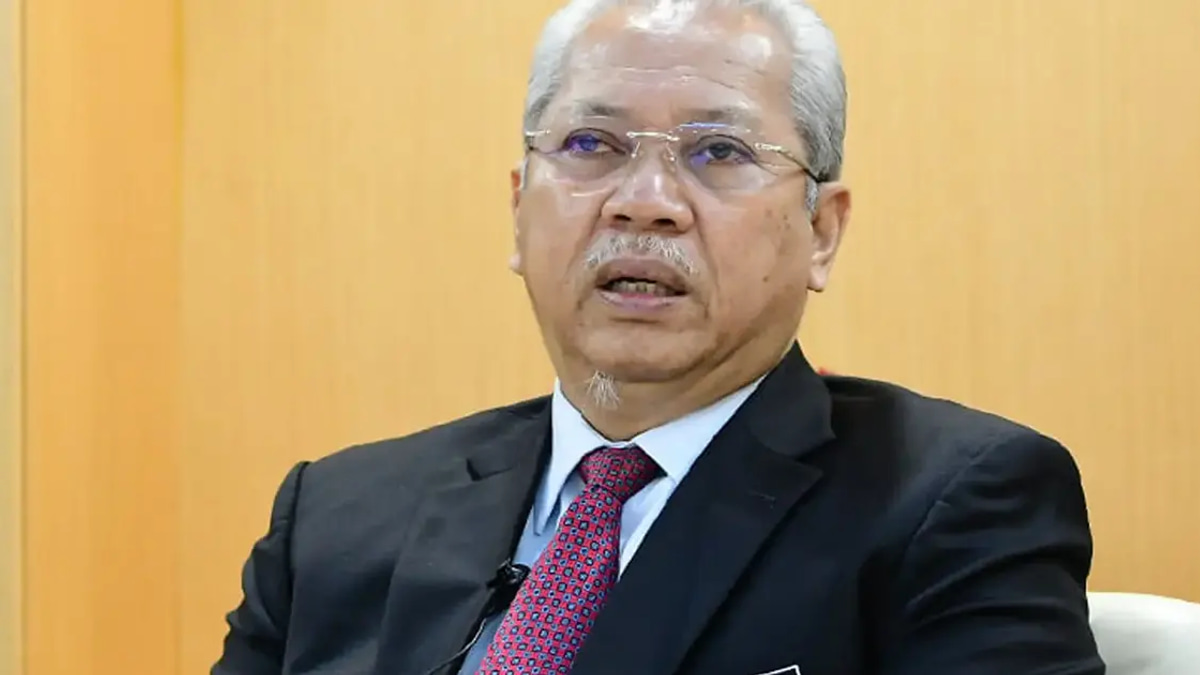
Datuk Dr Mohamad Abdul Hamid, Penang's Deputy Chief Minister I and MAINPP president, emphasized that the programme transcends mere asset provision. Recipients obtain motorcycles and delivery equipment suitable for food delivery services, but equally crucial are the non-material components: training modules covering basic financial management, workplace discipline, and foundational entrepreneurial principles. This holistic design acknowledges that motorcycles without financial literacy often lead to boom-bust cycles rather than sustainable wealth accumulation. The asnaf recipients emerge with structured knowledge to generate income methodically rather than haphazardly.
The motorcycle handover carries symbolic weight beyond the practical value of the vehicles themselves. In Malaysia's context, where the asnaf category (poor, needy, and vulnerable groups eligible for zakat) often faces systemic barriers to asset acquisition, the transfer of motorcycles represents institutional confidence in participants' potential. This psychological validation—the signal that established organizations believe they can succeed—should not be dismissed as secondary to the material benefit.
Programme design reflects alignment with broader governmental frameworks. The Penang Islamic Religious Development Agenda 2030 (APAI2030) prioritizes holistic ummah development across education, economics, family structures, and youth engagement. The iTEKAD initiative operationalizes these aspirations by targeting economic empowerment specifically, providing a practical mechanism through which religious institutions can fulfil their vision for community transformation. Such integration ensures that individual assistance efforts contribute to coordinated state-level strategies rather than operating ad hoc.
The deployment of zakat funds toward entrepreneurial asset grants reflects evolving interpretations of how Islamic charitable principles can drive development. Traditionally, zakat distributions focused on consumption needs—food, shelter, medical care. Modern applications recognize that zakat can catalyze productive capacity, funding the tools and training necessary for sustainable income generation. This reframing transforms zakat from emergency relief toward long-term poverty interruption, a philosophically significant shift that elevates its developmental potential.
For foodpanda Malaysia's participation, the programme creates a steady pipeline of potential service providers. Delivery platforms in Southeast Asia rely on substantial gig worker networks, many of whom face irregular income and minimal benefits. By embedding platform access within an entrepreneurship programme, the arrangement benefits both sides: workers gain connection to steady-demand work, while the platform expands its service capacity. The ecosystem thus exhibits mutual advantage rather than unilateral charity.
Longer-term success hinges on factors beyond initial programme completion. The 20 recipients must navigate challenges inherent to delivery work—fuel costs volatility, traffic safety risks, seasonal demand fluctuations, and physical wear on equipment. The emphasis on continuous support suggests authorities recognize that the handover ceremony marks a beginning rather than completion. Follow-up mentoring, access to refinancing if motorcycles require repairs, and periodic financial reviews could determine whether participants sustain income growth or gradually exit the programme.
This initiative offers lessons applicable across Southeast Asia's broader asnaf and informal worker populations. Malaysia's experience demonstrates that scalable poverty reduction requires combining three elements: immediate asset support, skills training, and platform access. Replicating such programmes in other states or contexts would require similar institutional alignment and sustained funding commitments, resources not universally available. The competitive selection process, while meritocratic, also means that many applicants remain unserved, pointing toward the structural limitation that targeted programmes can never fully address demand.
The iTEKAD programme ultimately reflects both the potential and constraints of collaborative social enterprise in Malaysia. It showcases genuine institutional innovation and multi-sectoral coordination, yet its scope—20 beneficiaries from 151 applicants—underscores that even well-resourced initiatives struggle to match the scale of need among vulnerable populations. Sustainable poverty interruption likely requires complementary policies addressing education access, healthcare affordability, and wage floor standards alongside asset transfer programmes.