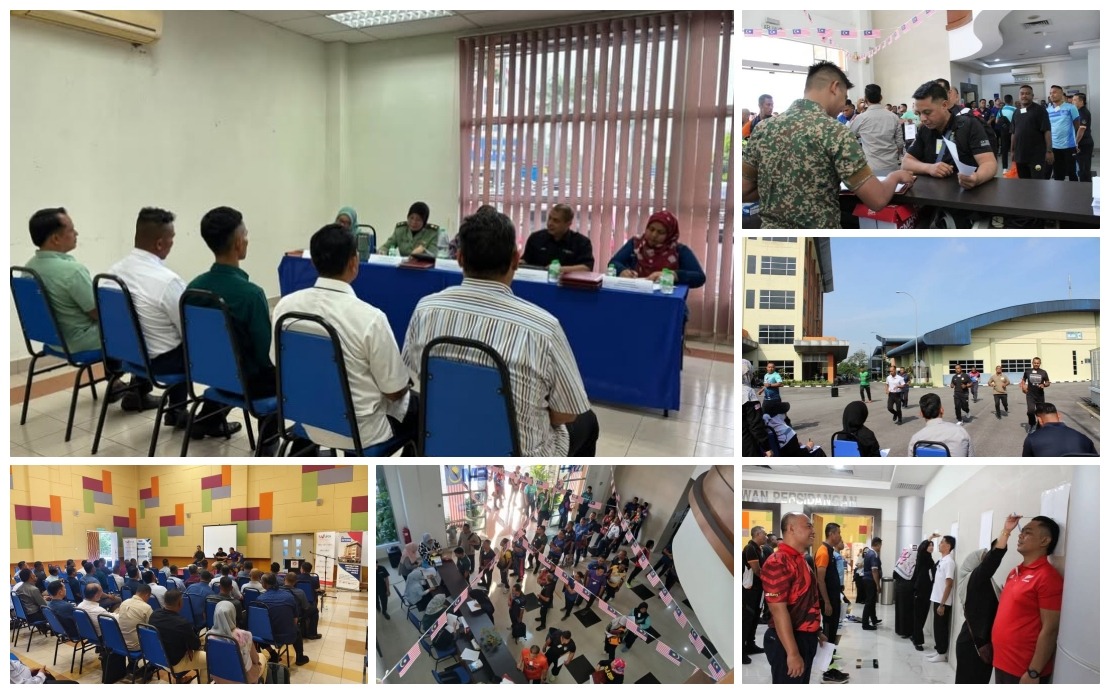
MARA has progressed further with its recruitment drive for Full-Time External Wardens at MARA Junior Science Colleges (MRSM), having concluded physical interview sessions for 147 former military personnel last Monday and Tuesday. The assessment took place at the MARA Food Technology Incubator in Kepong, marking a critical juncture in the selection process for candidates who will assume dormitory leadership roles beginning July 1.
The cohort of 147 candidates represented a filtered pool drawn from a substantially larger applicant base, according to MARA Chairman Datuk Dr Asyraf Wajdi Dusuki, who announced the development through social media. All interviewed candidates had previously advanced through two phases of rigorous online screening before securing their places in the physical assessment round, indicating a competitive recruitment environment despite the military background requirement.
The evaluation framework employed by MARA demanded that each candidate demonstrate fitness across multiple dimensions. Beyond the face-to-face interview—a standard component assessing interpersonal skills, motivation, and suitability for the role—candidates underwent Body Mass Index (BMI) screening and completed the Bleep Test, a multi-stage aerobic fitness assessment commonly used by security and uniformed services. This tri-component structure reflects MARA's determination to appoint wardens capable of maintaining the physical demands inherent in residential college management.
The warden position carries significance that extends well beyond administrative oversight. According to Asyraf Wajdi's statement, wardens function as custodians of MARA's educational philosophy while maintaining the safety and discipline necessary for residential college operations. The role represents a professional responsibility shaped by the understanding that wardens serve as parental substitutes for students living away from home—figures expected to guide, mentor, and instil values alongside their governance responsibilities.
This emphasis on holistic mentorship aligns with MARA's broader institutional objectives. The organisation recognises that boarding college environments present both opportunities and vulnerabilities, and the appointment of capable, committed wardens directly influences whether students thrive academically and socially or encounter problems. By recruiting former military personnel, MARA appears confident that candidates with service experience will bring discipline, organisational acumen, and institutional commitment to the role.
The initiative carries explicit preventive aims beyond operational efficiency. MARA has signalled that strengthening warden capacity represents a strategic intervention against multiple social concerns affecting Malaysian youth—particularly bullying, disciplinary lapses, and broader social ills that can flourish undetected within boarding environments. By investing in quality personnel at the residential management level, the organisation seeks to create an MRSM ecosystem characterised by safety, conducive learning conditions, and positive peer dynamics rather than one marked by unchecked misconduct.
The recruitment exercise demonstrates substantial ambition in scope. Beyond the 147 male candidates who completed interviews last week, MARA has scheduled physical assessment sessions for 162 female former military candidates in the following week. This gender-balanced approach suggests recognition that female wardens are essential to creating comprehensive residential support structures within MRSM colleges, where students of both genders require accessible role models and mentors aligned with their specific needs and backgrounds.
The July 1 commencement date imposes a compressed timeline for finalisation of recruitment, candidate notification, and transition planning. Successful candidates will inherit responsibility for multiple residential halls and hundreds of students accustomed to existing management structures, making a smooth handover critical to operational stability. The urgency of the timeline may also reflect prior capacity gaps within MRSM residential management or expanded enrolment necessitating additional staffing.
For Malaysian educational stakeholders, the recruitment initiative carries broader implications for residential college quality across the secondary and tertiary sectors. MRSM colleges represent flagship institutions within MARA's portfolio, serving high-achieving students from diverse socioeconomic backgrounds. The calibre of warden appointments directly influences retention rates, student welfare outcomes, and the institution's reputation as a safe, nurturing environment—factors increasingly scrutinised by parents and policymakers amid growing awareness of boarding school challenges in Malaysia and regionally.
The emphasis on former military personnel reflects confidence in service experience as preparation for institutional management roles requiring hierarchy, accountability, and crisis response capability. However, success will ultimately depend on whether these candidates can translate military discipline into educational leadership that balances structure with compassion—a distinction that may separate effective wardens from merely authoritarian ones.
Mara's commitment to transparent recruitment processes, evidenced by public announcements and structured assessment frameworks, signals organisational responsiveness to concerns about leadership quality in student-facing roles. As Malaysia continues debating student welfare standards and institutional accountability, the outcome of these warden selections will offer insight into whether targeted recruitment of experienced personnel can meaningfully improve residential college environments for one of the nation's most academically promising cohorts.