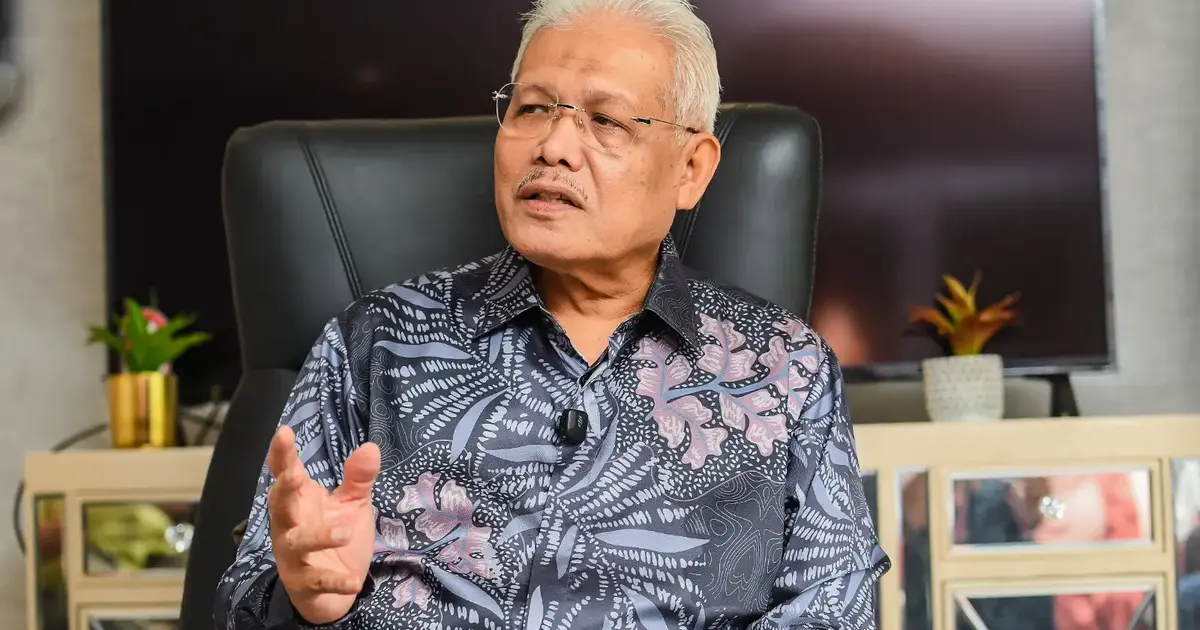
Hamzah Zainudin's political rehabilitation marks a significant recalibration within Malaysia's opposition landscape, with political observers noting that his prominence within Perikatan Nasional fundamentally reshapes how the coalition presents itself to voters. The strategic positioning of Hamzah as a leading figure reflects the PAS-dominated alliance's deliberate effort to broaden its electoral appeal beyond its core supporters and establish itself as a moderate, mainstream political force capable of governing across diverse constituencies.
Analysts closely monitoring the coalition's internal dynamics suggest that Perikatan Nasional has identified Hamzah as their optimal choice to lead campaign messaging and drive the narrative around moderation during the run-up to the sixteenth general election. This calculation rests on Hamzah's established track record in government, his cross-community engagement style, and his ability to appeal to centrist voters who might harbour reservations about PAS's ideological direction. His return effectively provides the coalition with a more palatable public face that can navigate the complexities of Malaysian electoral politics.
The implications of this strategic choice extend beyond simple image management. By elevating Hamzah's profile, Perikatan Nasional signals its commitment to inclusive governance and positions itself as a counterweight to perceptions that the coalition leans too heavily towards religious conservatism or narrow sectarian interests. This move is particularly consequential in a Malaysian political environment where swing voters in urban and semi-urban areas have demonstrated sensitivity to how coalitions balance ideological principles with pragmatic governance.
Hamzah's political journey has been turbulent, marked by periods of prominence and setbacks that have tested his resilience within party structures and broader political circles. His return to active prominence suggests that both he and his party coalition have calculated mutual benefits from his elevated role. For Hamzah, it represents rehabilitation and a pathway to significant executive responsibility; for Perikatan Nasional, it provides credibility that extends beyond their existing support base.
The PAS-led coalition's reliance on Hamzah as their preferred campaign frontrunner also reflects broader structural realities within Malaysian opposition politics. With limited historical governance experience at the federal level, coalitions must strategically deploy individuals with executive credentials and cross-community appeal to convince fence-sitting voters that they possess the competence and temperament necessary for national leadership. Hamzah's previous ministerial experience positions him as someone who can articulate substantive policy positions rather than merely ideological rhetoric.
Regional observers note that this development carries implications for Southeast Asian political dynamics more broadly. Malaysia's electoral trajectory influences regional perceptions of democratic competition and coalition-building practices. A moderate-positioned opposition offering genuine policy alternatives to incumbent coalitions strengthens democratic competition and provides voters with meaningful choices about governance direction and implementation capacity.
The coalition's explicit push towards moderate positioning also suggests internal negotiations and consensus-building have occurred among PAS, Perikatan's largest component, and smaller coalition partners. This suggests that despite surface-level unity claims, the coalition maintains robust internal discussions about strategic direction and campaign approach. Hamzah's elevation appears to represent a successful negotiation outcome that satisfies multiple stakeholder interests within the alliance.
Going forward, Hamzah's visibility and messaging will shape public perception of Perikatan Nasional considerably. His communications strategy, policy pronouncements, and engagement with diverse stakeholder groups will largely determine whether the coalition successfully crystallises its moderate positioning into sustained voter confidence. Media coverage of his activities and statements will significantly influence how the broader electorate interprets the coalition's ideological centre of gravity and governance intentions.
The success of this rebranding exercise ultimately depends on whether voters perceive Hamzah's moderation as authentic representation of coalition values or merely cosmetic positioning designed to secure temporary electoral advantage. This distinction between substantive ideological evolution and calculated image management remains the central tension in how Malaysian voters will evaluate Perikatan Nasional's credibility as a moderate governing alternative when they cast ballots in the next general election.